What you'll learn
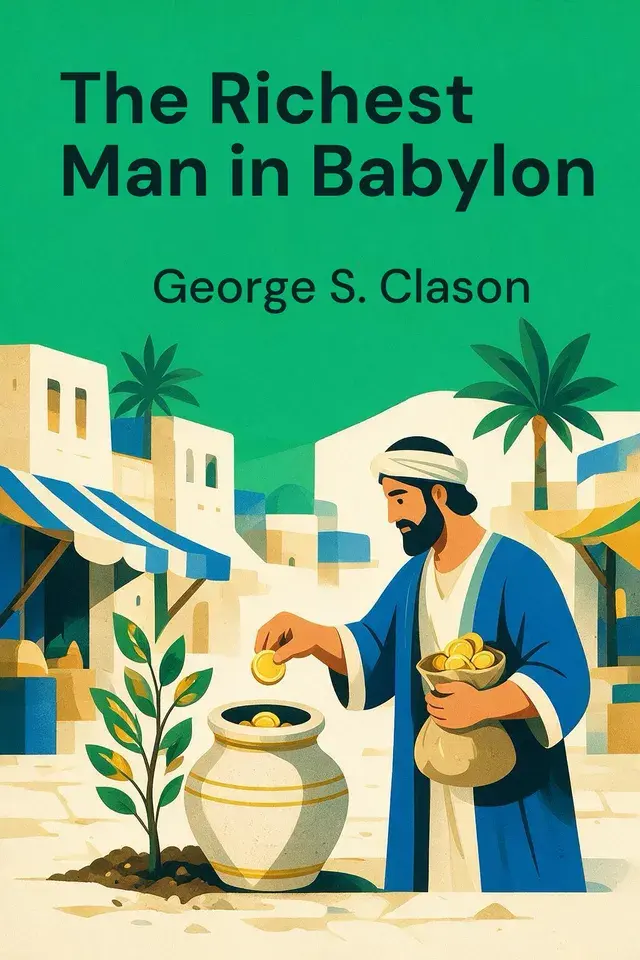
Key ideas from The Richest Man in Babylon
These ideas compress the book's argument without treating the author's view as settled fact. Use them as an orientation before reading the full work or listening in Wiseley.
Savings become wealth when their returns are reinvested, allowing one generation of earnings to produce the next.
The first cure preserves at least one coin from every ten, with the egg basket illustrating how a recurring surplus accumulates.
The second cure separates necessities from multiplying desires and uses a self-designed budget to protect savings, necessities, and worthwhile enjoyment.
Preparation for old age and dependents combines regular reserves with definite goals, developing skills, self-respect, and continual learning.
The merchant’s pleasures and the animal buyer’s caution show how procrastination can turn genuine openings into missed results.
The remaining laws make preservation depend on experienced advice, competence, and skepticism toward impossible returns.
One-tenth of income is retained, seven-tenths support living, and two-tenths are distributed fairly among creditors.
How The Richest Man in Babylon builds its case
Follow how the book develops its argument. Each note is a brief orientation, not a replacement for the chapter.
The Lean Purse Problem
The opening question of The Richest Man in Babylon is not simply how to earn more. It is how a person turns effort into lasting prosperity.
Arkad Learns to Grow Wealth
Arkad’s path from a poorly paid scribe to a wealthy teacher begins with a decision that sounds simple but changes the direction of his life. He will learn how wealth is built, then apply what he learns.
The First Three Cures
Babylon became wealthy because its citizens learned how to acquire money, keep it, and make surplus money earn more. The Seven Cures grow from that idea.
Security, Home, and Future Income
Saving, in Arkad’s teaching, is not the end of the financial story. It is where money can begin another kind of work.
When Luck Meets Action
When people speak of luck, they often imagine a favor that arrives without warning or effort. In Babylon, that desire is treated as universal.
The Five Laws of Gold
Gold alone is not enough to make a person wealthy. George S. Clason presents wealth as a relationship between capital and judgment. Kalabab compares people who possess gold without wisdom to hungry dogs that consume what is before them and make no provision for tomorrow. The point is not that gold lacks value. It is that gold needs a capable owner. Wisdom teaches a person how to preserve money, put it to work, and keep it from being carried away by excitement or inexperience. Someone with wisdom can regain gold;…
Lending Without Losing
Lending can look like an act of generosity, but Mathon presents it as a responsibility that demands judgment. Rodan discovers this after the king rewards him with fifty pieces of gold for designing a new spear point.
Walls Against Financial Ruin
Babylon’s walls first appear as a literal answer to ruin. The city is unexpectedly attacked while its king and main army are away, leaving relatively few defenders.
A Plan for Repaying Debt
Debt need not be a cloud of obligations to escape by avoiding them. It becomes manageable when it is named, divided, and paid according to a plan.
Work as a Path to Freedom
Sharru Nada, now a wealthy merchant prince, is troubled by Hadan Gula, grandson of his former partner, Arad Gula. Hadan’s family fortune has been damaged by his father, yet Hadan still treats inherited status as his chief possession.
What Babylon Leaves Behind
Babylon leaves behind an unusual kind of inheritance. The city itself disappeared, but its practical intelligence survived.