Choose by failure point
Personal finance advice usually fails at a specific step, not everywhere at once. Some people have never held a surplus; some clear debt and slide back; some run a working system that still feels pointless. Naming the breakdown in one sentence does more than any listicle ranking, because each of these books assumes a different starting condition. This is a selection of five books, not the whole Wealth catalog on the money topic page, and it stops where markets begin: the investing list takes over there. Nothing here is financial advice, only a description of what each author argues.
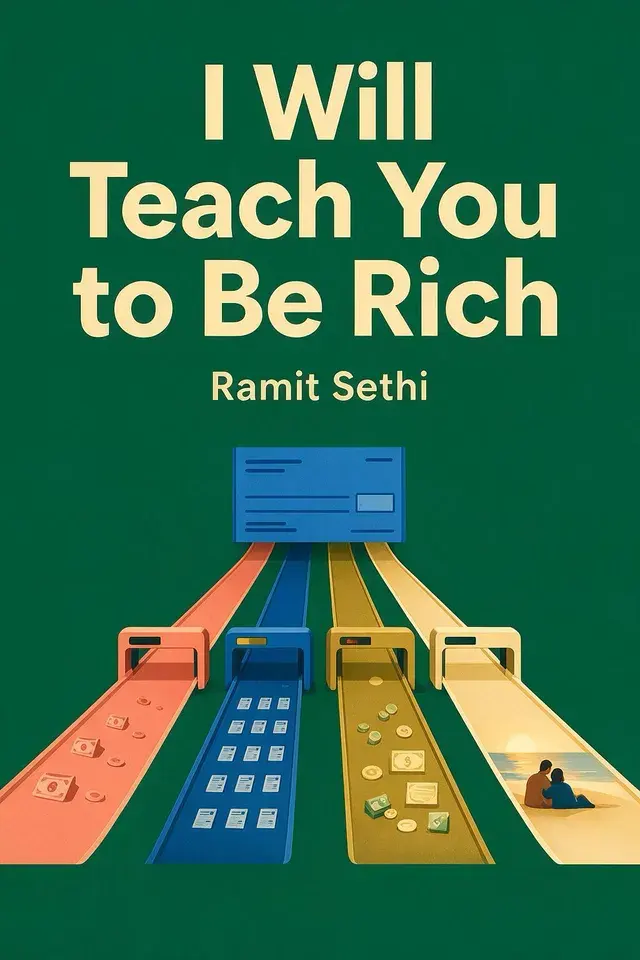
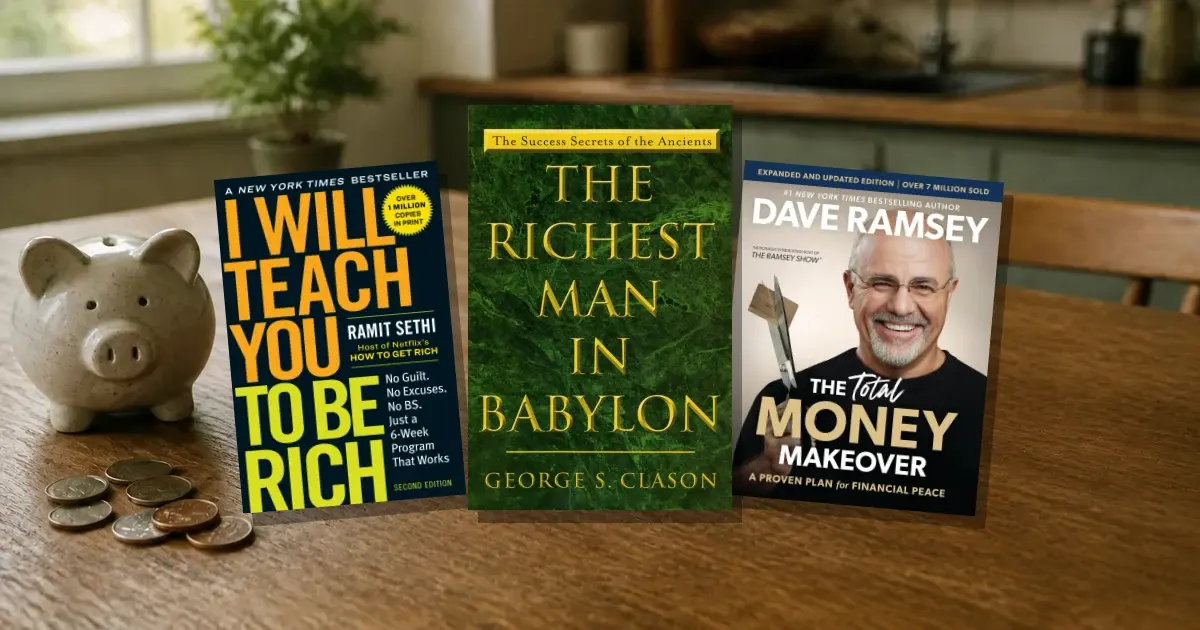
If you are starting from zero, with no surplus, no system, and no clear picture of where the money goes, three of the five make a route. Clason's The Richest Man in Babylon is the shortest and the most forgiving: keep one coin of every ten before anything else claims it. Sethi's I Will Teach You to Be Rich then turns that first surplus into an automatic flow, so the habit no longer depends on remembering. Housel's The Psychology of Money comes last, because temperament decides whether the system survives a bad year.
- No surplus has ever survived a month: The Richest Man in Babylon.
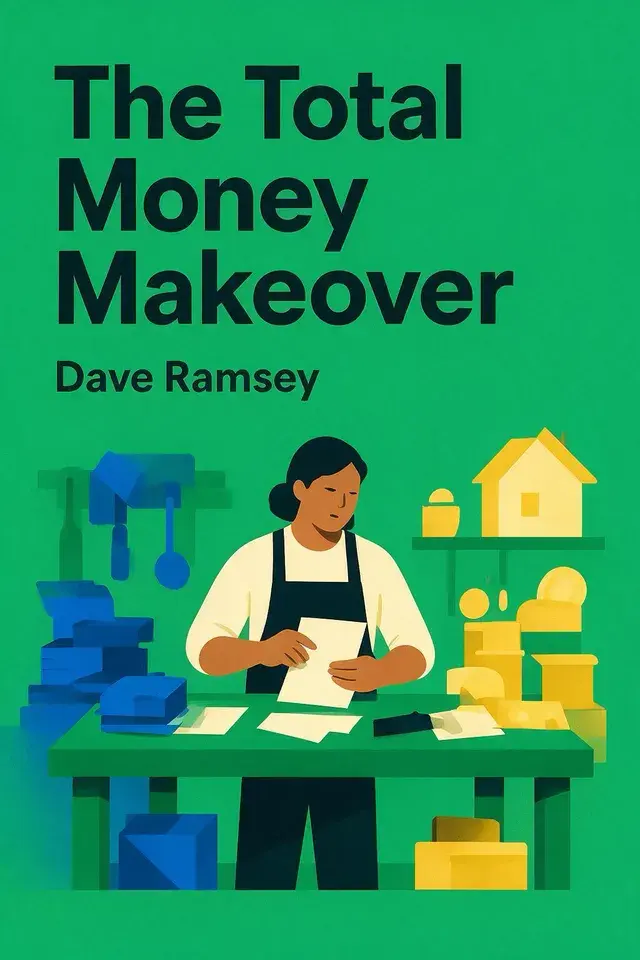
- Debt feels permanent and shame keeps it quiet: The Total Money Makeover.
- Good intentions collapse by mid-month: I Will Teach You to Be Rich.
- Saving works but has no destination: Die With Zero.
- Progress keeps eroding under fear and market noise: The Psychology of Money.
What each book adds
Clason teaches the first cure through parable: keep one coin of every ten, then separate necessities from multiplying desires with a budget you write yourself. Ramsey supplies the behavior-first sequence for crisis cases — a zero-based budget, a starter reserve, then debts ordered by balance with each freed payment rolled into the next target. Sethi builds the infrastructure that removes willpower from the loop: conscious spending buckets, an automatic money flow, and an investing ladder that starts with the employer match. Housel explains why temperament, luck tolerance, and a definition of enough decide outcomes that spreadsheets cannot. Perkins finishes the arc by asking what the saved money is for: memory dividends, timely gifts, and experiences with expiration dates.
- Best first system: automate pay, saving, and bills once, then stop renegotiating monthly.
- Best momentum plan: order non-mortgage debts by balance and roll freed payments forward.
- Best long-horizon reframe: treat surviving long enough to compound as the core skill.
A reading order that compounds
Start where the leak is. Read the summary matching your failure point and run its central move for thirty days: the tenth-coin surplus, the debt snowball, or the automatic money flow. Only after a mechanism is running should you add the temperament layer, then the allocation question. Reading all five before changing anything is a sophisticated way of staying exactly where you are.
- One mechanism per month beats five books per quarter.
- Write down the number each book is meant to move.
- Re-read only the chapter that matches the next breakdown, not the whole book.
Sources and scope
Book ideas are attributed to their authors. External evidence is linked directly when a claim needs more than the source book.
- The Richest Man in Babylon: Source for the first-cures framing, the tenth-coin surplus, and the budget separating necessities from multiplying desires.
- I Will Teach You to Be Rich: Source for the conscious spending plan, automatic money flow, and investing ladder beginning with the employer match.
- The Total Money Makeover: Source for the zero-based budget, starter reserve, and debt snowball ordered by balance with rolled payments.
- Die With Zero: Source for memory dividends, giving while alive, time buckets, and decumulation as a deliberate phase.
- The Psychology of Money: Source for luck and risk, the role of enough, surviving long enough to compound, and control of time as money's highest dividend.
To report a factual, attribution, rights, or accessibility concern, email hello@wiseley.app.
Questions readers ask
Which personal finance book should I read first?
If unpaid debt is the emergency, start with The Total Money Makeover and its ordered payoff plan. Otherwise The Richest Man in Babylon is the shortest path to a first surplus, and I Will Teach You to Be Rich turns that surplus into a system that runs without weekly effort.
Do these books work outside the United States?
The behavioral cores travel well: paying yourself first, ordering debts, automating transfers, and defining enough are not country-specific. Ramit Sethi and Dave Ramsey name American account types such as 401(k)s and Roth IRAs, so readers elsewhere substitute local equivalents while keeping the sequence.
How is personal finance different from investing books?
Personal finance governs the daily machine: income, spending, debt, reserves, and automation. Investing books assume that machine exists and address markets, temperament, and portfolio decisions. If household cash flow is still unstable, fixing it returns more than any market strategy.