
Separate explanation, association, and prescription
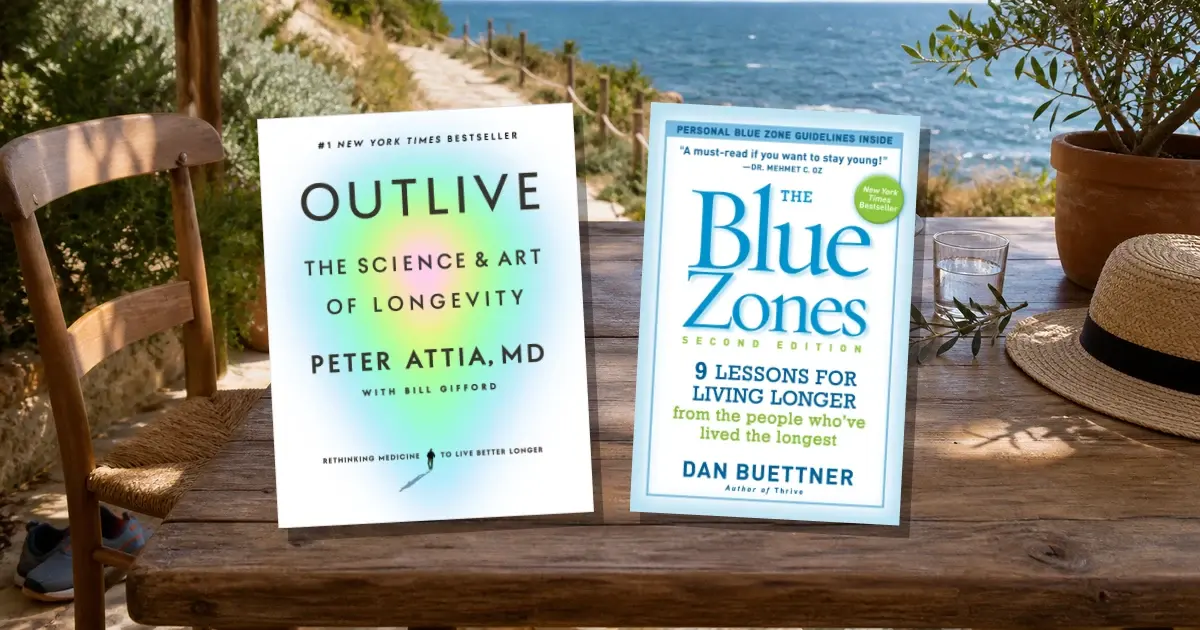
Write each claim in one of three columns: how the body may work, what an observed pattern is associated with, and what the author recommends doing. A plausible mechanism does not establish a useful treatment, and an association does not prove that changing one factor will cause the outcome. Bad Science supplies tools for spotting overreach; Outlive organizes a preventive framework; In Defense of Food offers broad eating principles. Evaluate each claim at the level it actually occupies instead of letting a coherent story turn every observation into a prescription.
- Mark whether the evidence comes from people, animals, or laboratory work.
- Distinguish an outcome that matters from a surrogate measurement.
- Do not upgrade a mechanism or correlation into advice.
Inspect the study behind the strongest sentence
For the recommendation most likely to change your behavior, find the cited source and record the study type, number and characteristics of participants, duration, comparison group, effect size, harms, and funding. The National Center for Complementary and Integrative Health recommends asking whether research involved people, whether enough people were studied, whether the result was meaningful, what limitations existed, and whether one study has been replicated. Missing answers should lower confidence rather than become proof that the recommendation is wrong.
- Read past the headline to the original source when possible.
- Compare absolute effects and harms, not only relative percentages.
- Look for systematic reviews, guidelines, or independent replication.
Match the decision to its risk
Sort possible actions into low-risk observation, reversible habit change, and decisions that can interact with a condition, medication, supplement, or treatment. MedlinePlus advises checking who produced health information, its purpose, review process, sources, and date, then discussing information with a health care provider before relying on it. Track only one low-risk change at a time and define why you are testing it. Do not stop prescribed care, start a supplement, or use a book to diagnose symptoms without qualified guidance.
- Prefer a small reversible test when the expected benefit and risk are modest.
- Bring the exact claim and source to a clinician or pharmacist when stakes are meaningful.
- Stop when symptoms worsen or the action conflicts with professional advice.
Sources and scope
Book ideas are attributed to their authors. External evidence is linked directly when a claim needs more than the source book.
- Bad Science: Grounds the checks on mechanisms, study design, statistics, publication, and exaggerated health reporting.
- Outlive: Grounds the distinction between a broad preventive framework, individual risk, testing, and clinical decisions.
- In Defense of Food: Grounds the example of translating broad food principles without treating one narrative as individualized treatment.
- Evaluating Health Information — National Library of Medicine — MedlinePlus
- Checklist for Understanding Health News Stories — National Center for Complementary and Integrative Health
To report a factual, attribution, rights, or accessibility concern, email hello@wiseley.app.
Questions readers ask
Does a doctor author make a health book reliable?
Credentials matter, but they do not replace evidence, transparent sourcing, relevant expertise, disclosure of conflicts, and appropriate limits on recommendations.
Can I safely test advice from a health book on myself?
Some low-risk behavior changes may be reasonable, but personal experiments cannot establish safety or causation. Discuss changes involving symptoms, conditions, medications, supplements, restrictive diets, or treatment with a qualified professional.