What you'll learn
Key ideas from The Mountain Is You
These ideas compress the book's argument without treating the author's view as settled fact. Use them as an orientation before reading the full work or listening in Wiseley.
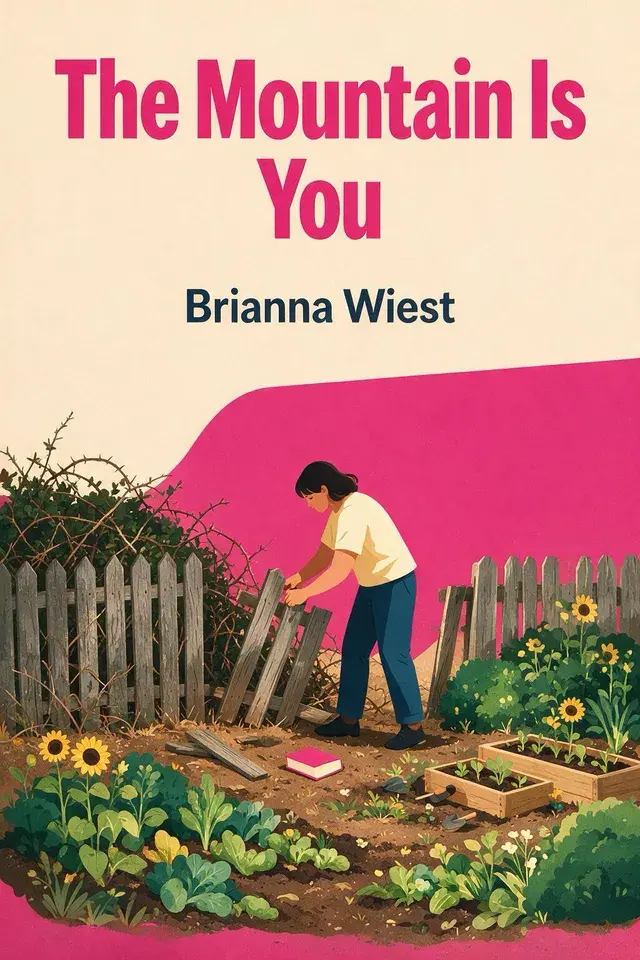
The mountain is an internal block shaped by conflicting needs, accumulated adaptations, and coping mechanisms between a person and a desired life.
Change is described as requiring the protected need to be met without preserving the harmful pattern.
Feelings and bodily responses can reveal present needs, boundaries, grief, and values without serving as final verdicts about reality.
Faulty inferences turn limited evidence into catastrophic predictions, while gradual exposure rebuilds confidence in coping.
The chapter links a durable future to an envisioned identity expressed through repeated daily conduct.
Self-mastery separates conscious response from emotional suppression: feelings remain present, while behavior becomes deliberate and accountable.
How The Mountain Is You builds its case
Follow how the book develops its argument. Each note is a brief orientation, not a replacement for the chapter.
The Mountain Within
The phrase “the mountain within” names the obstacle between a person and the life they want. The book argues that this obstacle is often internal: an unstable foundation made from conflicting needs, accumulated adaptations, and coping mechanisms.
Decode the Hidden Need
Once self-sabotage is understood as protective coping, the central question changes. Instead of asking why someone keeps hurting their own progress, the chapter asks what the behavior is doing for them.
Feelings as Information
Feelings are information, not instructions or forecasts. A bodily reaction, heavy mood, or urge to withdraw may point toward a need, a crossed boundary, grief, or a value that deserves attention.
Safety, Worry, and Release
Threat often grows through a story about the future. The mind takes a painful past or stressful present as the sum of who we are, then assumes the pressure will last forever.
Become Through Practice
Once a person has begun releasing the past, the work changes direction. The question becomes: who am I becoming, and what will that person do repeatedly?
Climb by Choosing
The book's final movement is from understanding self-sabotage to practicing self-mastery. Once a person recognizes that protective patterns may also hold life back, responsibility changes meaning.