What you'll learn
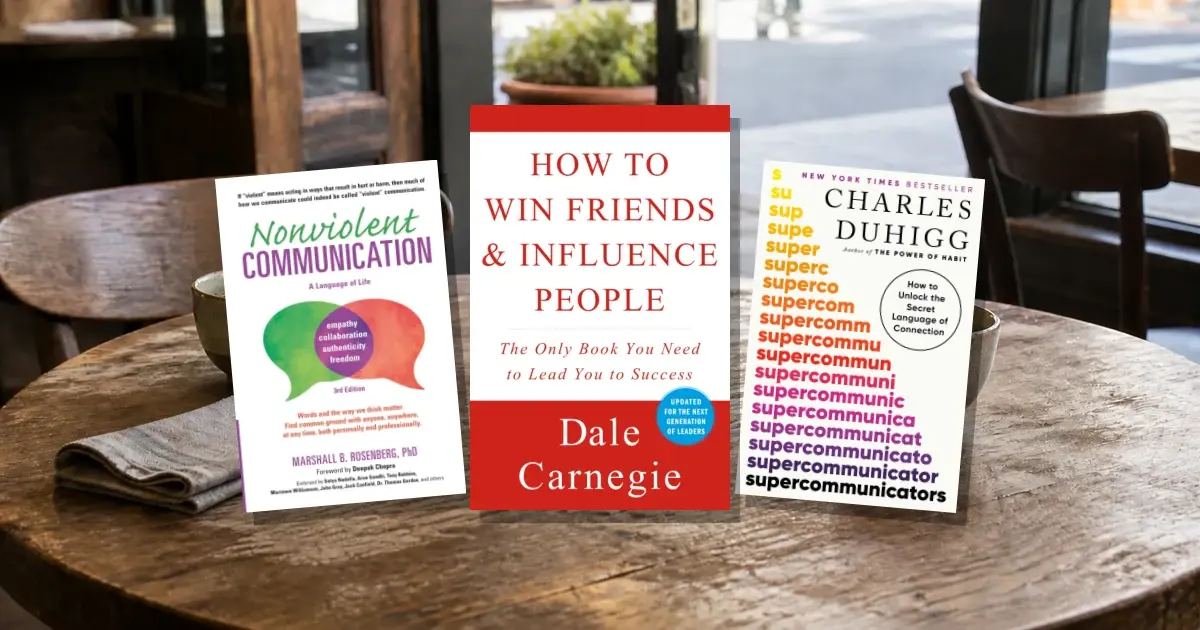
Key ideas from Supercommunicators
These ideas compress the book's argument without treating the author's view as settled fact. Use them as an orientation before reading the full work or listening in Wiseley.
Practical, emotional, and social mindsets can shift within one conversation, and mismatches can make attentive people feel unheard.
Practical decisions begin by negotiating a shared topic, discussion process, and method for making choices together.
Open-ended questions and follow-ups move conversation from biographical facts toward values, experiences, beliefs, and feelings.
Matching may mean acknowledging a feeling and adjusting appropriately, rather than mirroring its intensity.
Conflict becomes more workable when participants pursue understanding of causes and feelings rather than victory or forced agreement.
Who Are We? conversations broaden one-dimensional labels by making people’s histories, affiliations, relationships, and multiple roles visible.
Identity threat can make ordinary feedback feel like an attack on belonging, so difficult conversations require preparation for goals, risks, and likely reactions.
How Supercommunicators builds its case
Follow how the book develops its argument. Each note is a brief orientation, not a replacement for the chapter.
Connection Before Communication
Communication is easy to mistake for a delivery system: one person sends information, another receives it, and success means the message arrived. Charles Duhigg begins somewhere else.
Negotiate the Conversation First
Most practical conversations seem to begin with a question: Which treatment should we choose? Who is guilty?
Ask, Listen, and Open Up
Emotional connection is easy to confuse with silent attention. Someone can stay quiet, nod, smile, and maintain eye contact while missing the emotional meaning of what another person is saying.
Make Emotion Legible
Communication has a spoken channel, but it also has an implicit one. Feelings often travel through posture, facial expression, gestures, sighs, laughter, vocal tone, speed, and timing rather than emotional labels.
Turn Conflict into Understanding
Conflict is not an abnormal interruption in human communication. Debate and dissent belong to democracy and relationships, and Duhigg describes peace as the ability to cope with conflict rather than its disappearance.
Identity Shapes What We Hear
The book has already shown that people do not hear a conversation as a stream of facts alone. This chapter follows that insight across group boundaries.
Make Hard Talks Safer
Hard conversations rarely feel hard only because facts are complicated. They become risky when a comment seems to judge who someone is, where they belong, or whether their experience counts.