What you'll learn
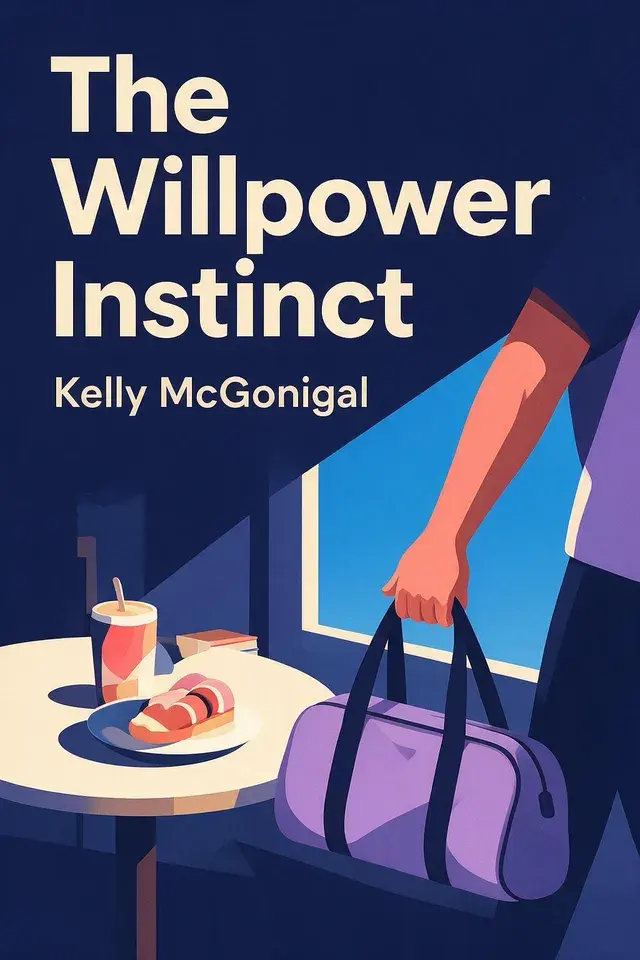
Key ideas from The Willpower Instinct
These ideas compress the book's argument without treating the author's view as settled fact. Use them as an orientation before reading the full work or listening in Wiseley.
Willpower combines resisting impulses, beginning difficult actions, and remembering the deeper goal that gives effort meaning.
Exercise, steady nourishment, breathing, relaxation, and sleep support the conditions in which self-control can operate.
Moral licensing turns past, planned, or imagined virtue into psychological credit that can justify behavior against a larger goal.
A lapse becomes a relapse risk when guilt and self-criticism create a what-the-hell spiral; self-forgiveness supports responsibility and persistence.
Precommitment protects long-term intentions by limiting the options available to a future tempted self.
Accurate social proof, respected role models, pride, and accountability can reinforce long-term control.
Urge surfing treats cravings as changing bodily events that can be observed without either fighting them or obeying them.
How The Willpower Instinct builds its case
Follow how the book develops its argument. Each note is a brief orientation, not a replacement for the chapter.
Willpower Has Three Voices
Willpower is often treated as a single quality: you either have enough of it or you do not. McGonigal offers a more useful definition.
The Body's Pause-and-Plan
Willpower begins before the visible choice. A craving is not merely an argument in the head; it is a bodily event involving excitement, anxiety, tension, and desire.
When Virtue Grants Permission
Self-control can fail for a counterintuitive reason: success at one good behavior can make us feel entitled to abandon the larger goal. The chapter distinguishes this psychological surrender from involuntary depletion.
Wanting, Stress, and Relapse
Temptation often feels like evidence that the thing we want will make us happy. This chapter separates those experiences.
Make the Future Hard to Sell
People often know the rational choice before a temptation appears. Yet when the reward is visible, preference can reverse.
Willpower Is Socially Contagious
Willpower can look like a private contest between desire and long-term intention. McGonigal shifts the lens outward: choices are also shaped by people whose actions, goals, moods, and expectations enter the situation.
Acceptance Beats Inner War
Willpower’s final lesson begins with a limit: you can choose what to do, but you cannot reliably choose which thought, feeling, or craving enters awareness. Trying to control the inner world with an I-won’t command can become its own trap.