What you'll learn
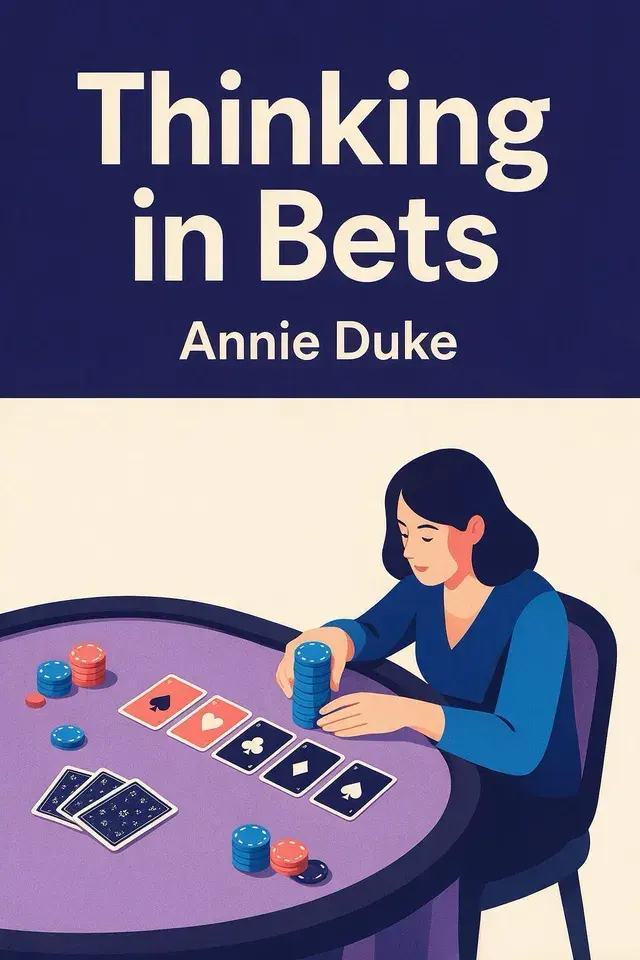
Key ideas from Thinking in Bets
These ideas compress the book's argument without treating the author's view as settled fact. Use them as an orientation before reading the full work or listening in Wiseley.
The chapter separates process quality from outcome quality and presents deliberate reasoning as a guide for automatic behavior.
Every choice, including inaction, selects among uncertain futures and gives up the possible value of alternatives.
Calibrated probabilities and the question of whether one would bet expose assumptions, invite evidence, and support belief updates.
Outcomes become useful feedback only after their causes are examined across skill, luck, hidden information, and competing explanations.
A decision pod turns accountability and social approval into incentives for admitting mistakes, giving credit, and examining decisions beyond their outcomes.
Scenario planning and expected value compare possible branches by probability and payoff rather than by headline appeal.
Backcasting maps the route to a desired future, while premortems expose obstacles that optimistic planning can miss.
How Thinking in Bets builds its case
Follow how the book develops its argument. Each note is a brief orientation, not a replacement for the chapter.
Luck Makes Outcomes Noisy
Poker gives Annie Duke a model for decisions made without full knowledge. It matters here not because life is gambling, but because poker combines hidden information, changing conditions, other people’s choices, and chance.
Make Every Choice a Bet
Once decisions are understood as choices made amid luck and incomplete information, the next step is to treat every choice as a bet. A bet is not limited to casinos, sports, or lotteries.
Learn From Uncertain Feedback
Experience is often called a teacher, but it does not teach by itself. An outcome is only feedback.
Engineer Truth-Seeking Together
Truth-seeking can fail even when someone notices something important. When David Letterman asked Lauren Conrad whether she had contributed to her own drama, Duke regarded the question as perceptive.
Rehearse the Possible Futures
Earlier chapters separate decision quality from result quality. This chapter asks how to improve a decision while its result is hidden.