Malcolm Gladwell
Explore Wiseley summaries of books credited to Malcolm Gladwell.

Blink
Blink asks when a first impression is wiser than prolonged analysis. It explores how unconscious minds extract patterns from brief encounters, why expertise can sharpen or bias those reactions, and how stress, stereotypes, and decision settings can distort them—then shows how training and better-designed systems can make judgment more reliable.
7 chapters

David and Goliath
David and Goliath asks why apparent advantages can conceal vulnerabilities, and when disadvantages become strategic freedom. Through sport, education, medicine, civil rights, policing, punishment, and forgiveness, it examines how relative position, productive difficulty, legitimacy, and unconventional action shape what people and institutions can achieve.
7 chapters

Outliers
Outliers asks why exceptional success is rarely self-made. Moving from Roseto and hockey birth dates to musicians, lawyers, pilots, mathematicians, KIPP students, and a Jamaican family history, it traces how practice, timing, culture, institutions, and inherited opportunity shape achievement—and why redesigning those conditions can widen who gets to flourish.
13 chapters
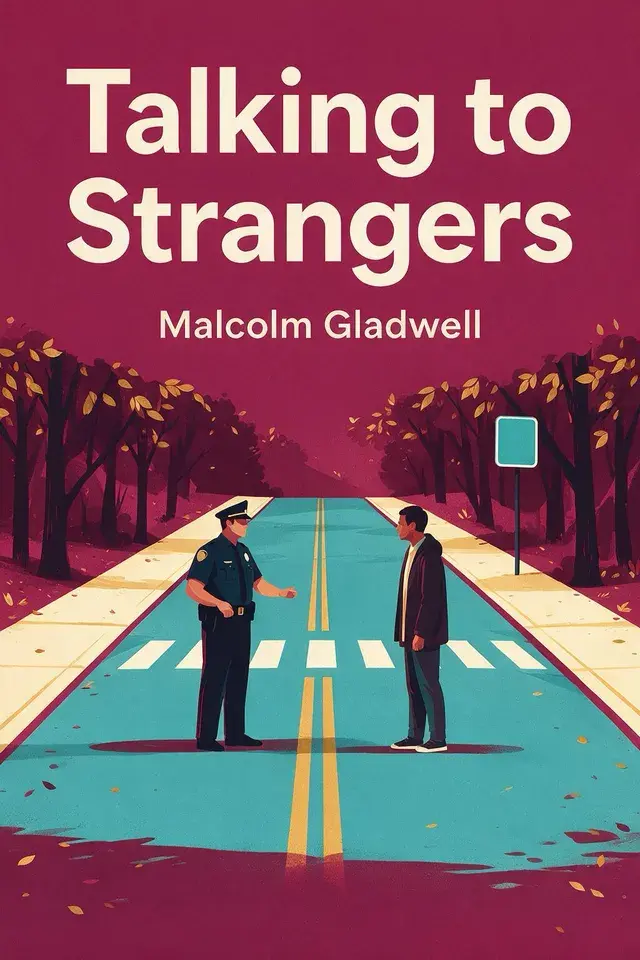
Talking to Strangers
Talking to Strangers examines why people and institutions misread unfamiliar others. Through deception, diplomacy, sexual consent, interrogation, suicide, crime, and Sandra Bland’s traffic stop, it asks how truth-default, assumptions about visible emotion, and neglected context distort judgment—and how humility, restraint, and safeguards can reduce the damage.
10 chapters

The Bomber Mafia
The Bomber Mafia follows the dream that aircraft and precision technology could make war faster, more selective, and less deadly. It asks what happens when that dream meets weather, machinery, institutions, and human judgment—and offers a way to think about the gains of precision alongside the conscience required to restrain power.
8 chapters

The Tipping Point
Why do fashions, diseases, crimes, and habits sometimes surge or collapse after a small change? Malcolm Gladwell’s framework explains social epidemics through influential people, memorable messages, and immediate context, using cases from Hush Puppies to smoking to show how small, targeted changes can redirect collective behavior.
11 chapters