
What you'll learn
Key ideas from The Science of Rapid Skill Acquisition
These ideas compress the book's argument without treating the author's view as settled fact. Use them as an orientation before reading the full work or listening in Wiseley.
Breaking a complex skill into prioritized subskills makes its early learning demands clearer.
Active recall and deliberate practice expose weak points; focused repetition works best when practice stops before it becomes sloppy.
Short reviews spread across time can revisit material repeatedly, with a schedule suited to attention, the task, and recovery.
The Feynman method tests understanding through plain explanation, targeted study, and an analogy that carries an idea into another context.
A purposeful combination of complementary abilities can create a useful profile without elite rank in one skill.
Role models offer observable examples, while mentors add individualized correction, challenge, and encouragement.
Expectations grounded in current ability, prerequisites, and effort help distinguish ordinary difficulty from proof of inability.
Inside The Science of Rapid Skill Acquisition
Read the first chapter in full here. The other 6 continue in the Wiseley app.
Chapter 1 of 7 · 6 min · Audio & text
Choose and Deconstruct a Skill
The Science of Rapid Skill Acquisition, by Peter Hollins.
Learning a skill can change what you are able to do, and sometimes the circumstances you can shape. Self-directed learning puts more of that process in your hands: you choose a goal, find a way forward, and take responsibility for your progress. Hollins illustrates this with a friend who, after a divorce, had no marketable job skills and could not afford a class. She taught herself to make jewelry, practiced for five years, and eventually started a custom jewelry business and bought a home. Her story shows how learning can support practical change, though it does not promise that every effort will produce the same outcome.
Hollins’s own piano experience offers a different caution. He was pushed toward lessons, practiced and focused too little, and after seven years could play only simple songs at an average level. A friend who began at roughly the same time advanced further and reached advanced recitals. Hollins allows that talent may have played a part, but believes his friend’s more disciplined practice also mattered. His account does not isolate the cause of their different progress. It does suggest that being drawn to a skill, and giving it focused effort, matters more than assuming talent alone will carry you.
Choosing a goal begins with asking what the skill is for. It might support income, recreation, health, relationships, or a larger ambition. If earning more or improving career prospects matters, consider which abilities may be useful in the work you want. If money is not the point, personal value is enough: if you love Mexican food, learn to make it rather than worry about mastering French cuisine. Knowing the payoff can also make demanding work feel more worthwhile.
Then consider your strengths and circumstances. A natural aptitude may make a skill easier to develop, while existing opportunities can reduce the cost of beginning. Perhaps an employer will reimburse study, a skilled acquaintance can offer guidance, or a job will let you learn while earning. Also weigh the time, attention, money, and tools the skill requires. A complex or expensive goal may not fit your current life as well as another one. Life changes can create new priorities, too: a new parent may need to learn to cook, for example, while a change in work may call for budgeting skills. These questions help narrow a long list of interests to a few meaningful choices. Hollins suggests that two or three skills may be a practical limit during a given period, not a rule for everyone.
Once you choose, use the four learning stages as a map of your present abilities, not a verdict on your potential. In unconscious incompetence, you do not yet know what you do not know, so mistakes or missing skills may be invisible. In conscious incompetence, you can see the gaps, but cannot yet perform reliably. Conscious competence means you can do more of the task correctly, but still need attention and effort. In unconscious competence, the skill has become fluent enough to perform with little conscious thought, while still allowing you to adjust when needed.
A piano learner might first know only what the keys do, then recognize notes and scales while struggling with technique. With more ability, the learner can play pieces through deliberate practice, though still relies on the sheet music. A highly proficient player may perform rapidly, play by ear, and learn pieces with less conscious effort. The stages help explain why early errors are ordinary and why each stage calls for different next steps. Seeing a gap is useful information, not evidence that you lack ability.
Before beginning, sketch a flexible plan: picture the result you want, note what you will need to learn, and identify a sensible first step. The plan is a guide, not a script; new information may show that it needs changing. Large skills become less daunting when you examine their component parts and how those parts contribute to the whole. Building a house, for instance, involves planning and drawing as well as carpentry, electrical work, cement work, and tiling. The point is not to master every component at once, but to understand what the larger task depends on.
Hollins applies the Pareto principle as a prioritization heuristic: some subskills contribute more to progress than others, so identify the high-impact ones and develop them first. The exact priorities depend on the skill and the learner’s level. In German, he recommends going beyond textbook basics to work on commonly used words, including a suggested set of three hundred, and to practice them in chunks. The learner can then add vocabulary and phrases connected to a personal reason for learning, such as travel. This combines broadly useful material with language that serves the chosen goal.
For guitar, possible subskills include finger dexterity, reading music, rhythm, and hand strength. Listing them makes the broad ambition more concrete; prioritizing them helps decide where attention should go first. Other facets can come later, once foundational needs are clearer. The map is meant to reduce overwhelm and direct effort, not to promise that a small set of skills will be sufficient for every level.
Hollins says the learning-pyramid model and claims about the brain’s hemispheres having separate creative and logical functions have been disproven. How information is presented does not change how it is processed, so no special formula is needed. Attention still matters: if distraction makes one format hard to follow, another may hold your focus better. In practice, learning works best through what you can pay attention to; tedium can make it ineffective. With a consequential goal chosen, your current stage recognized, and the work divided into prioritized parts, you have a clearer starting map. The next step is to decide how to gather information and move from that map into practice.
Chapter 2 of 7 · 6 min · Audio & textIn the app
Move from Research to Practice
Once you have a skill in mind, the next challenge is choosing how to learn it. Information can arrive through reading, listening, watching, discussion, demonstration, and hands-on work.
Chapter 3 of 7 · 8 min · Audio & textIn the app
Design Practice for Durable Recall
Durable performance comes from a practice cycle that varies related challenges, revisits them over time, and uses real problems to make learning necessary. After each attempt, review what happened and let that evidence shape the next one.
Chapter 4 of 7 · 8 min · Audio & textIn the app
Build Deep and Transferable Understanding
Knowing what happened is not the same as understanding why it happened or how it works. A learner may be able to repeat a fact, or carry out an action through trial and error, without grasping the reasons behind it.
Chapter 5 of 7 · 4 min · Audio & textIn the app
Combine Skills for Specific Advantage
A skill can become more useful when it works alongside other abilities toward a clear result. The author calls this skill stacking: building a small set of complementary strengths instead of relying on one skill to carry the whole goal.
Chapter 6 of 7 · 6 min · Audio & textIn the app
Shape Social and Physical Conditions
Learning does not take place in a neutral setting. The people around us can encourage practice, offer useful examples, or make a goal feel unwelcome.
Chapter 7 of 7 · 5 min · Audio & textIn the app
Persist Through Realistic Expectations
Learning a skill asks for more than interest; it asks a person to stay engaged when progress is slow, work feels difficult, and mistakes expose gaps. Hollins warns that expecting effortless improvement can turn ordinary setbacks into apparent evidence that a learner lacks ability.
Chapter 1 of 7 · 6 min · Audio & text: Choose and Deconstruct a Skill
Wiseley supports reading and listening to summaries in the app.
Continue in WiseleyAbout Peter Hollins
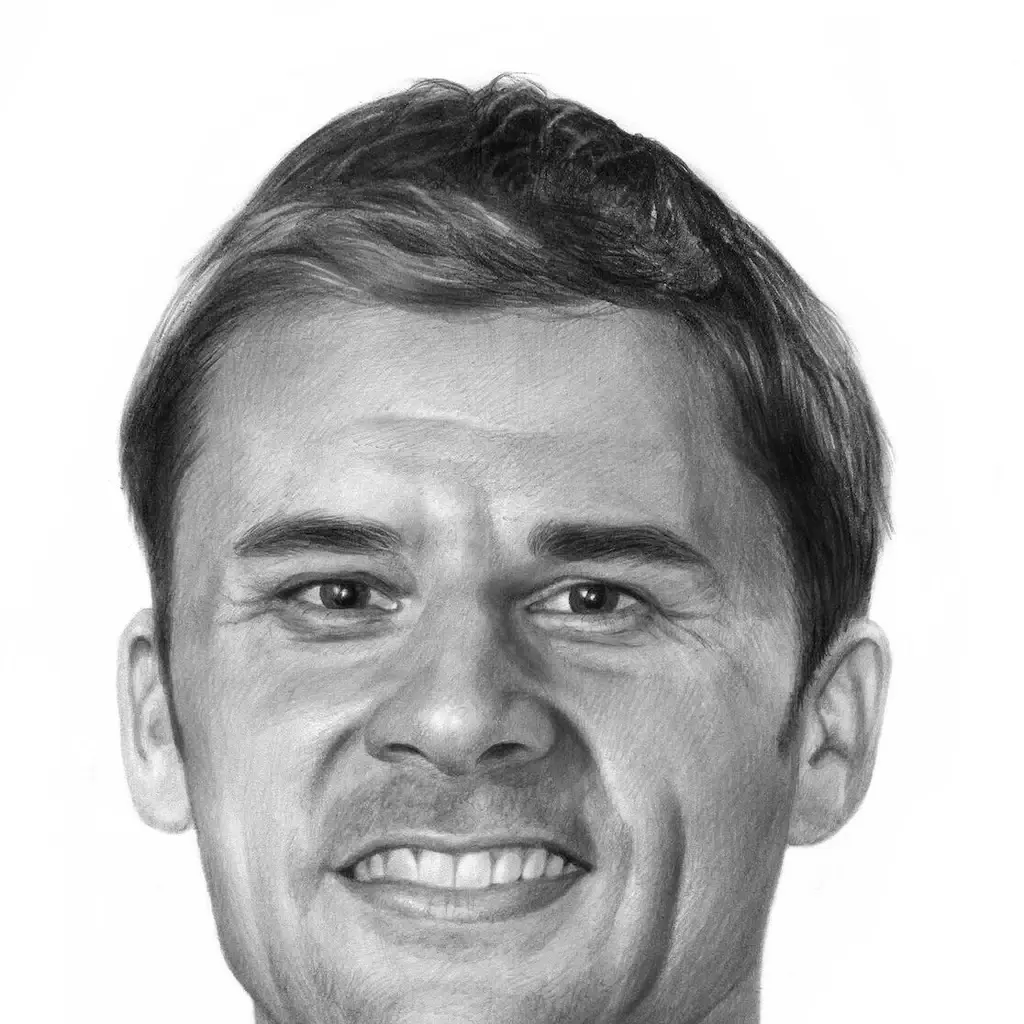
Peter Hollins is the author of “The Science of Rapid Skill Acquisition”. The book explores how to turn a chosen goal into a skill through deliberate work.
Explore more books by Peter Hollins