
What you'll learn
Key ideas from The Mental Toughness Handbook
These ideas compress the book's argument without treating the author's view as settled fact. Use them as an orientation before reading the full work or listening in Wiseley.
Mental toughness is a learnable capacity to regulate responses, adapt, and act toward worthwhile goals through adversity.
Emotional mastery begins by acknowledging feelings and examining their causes rather than suppressing them.
Failure can provide feedback about how choices and actions connect to results, guiding a more deliberate next attempt.
Habits grow through easy starting steps, gradual increases, consistent cues, and breaks that preserve a workable routine.
Reliable confidence rests on preparation, skill, and adaptability, and stays proportionate to present ability.
Anticipating possible complications and rehearsing responses can increase comfort and confidence when problems arise.
Purpose and manageable steps connect a distant goal to actions that are easier to see and begin.
Inside The Mental Toughness Handbook
Read the first chapter in full here. The other 9 continue in the Wiseley app.
Chapter 1 of 10 · 6 min · Audio & text
What Mental Toughness Makes Possible
The Mental Toughness Handbook, by Damon Zahariades.
Mental toughness can sound like a quality some people simply have and others lack. Zahariades presents it instead as a capacity people can develop. His shorthand is durability in adversity: how someone responds when plans fail, pressure rises, or emotions make action difficult. It is a way of meeting those conditions, not a promise that they will disappear.
That capacity shows up in choices. A person may feel frustration, anger, or disappointment and still decide what to do next. They may need to recover after a setback, adapt when circumstances change, or keep working toward a goal when the route becomes harder. Mental toughness, in this account, joins regulating one’s response with acting toward something worthwhile.
The author distinguishes this broader outlook from grit. Grit is an inclination to persevere through difficulty; mental toughness is a more general state of mind that shapes how a person handles adversity. Grit matters because persistence helps someone stay focused on achievement rather than fear of failure. But perseverance alone does not describe the whole capacity: toughness also involves managing reactions and adjusting to what is happening.
Zahariades treats this ability as learnable, though not instantly acquired. It develops through effort, patience, and a willingness to endure some discomfort and frustration. The point is not to become untroubled. It is to become more capable of responding when trouble arrives. That distinction helps explain the benefits he associates with toughness: better performance under pressure, greater confidence in one’s ability to handle circumstances, clearer purpose, and more room to recover when plans go wrong. These are connected effects of a steadier response, rather than separate guarantees of success.
Emotions are part of that response. Fear, anxiety, shame, and anger can distort judgment, encourage concealment, or make a person give up. Yet they can also carry information, and toughness does not require becoming detached from them. The relevant ability is to notice a feeling without letting it dictate every decision. Self-doubt, too, is natural. It can prompt preparation, but becomes a serious obstacle when insecurity turns into inaction or paralyzes performance.
The book’s picture of toughness also includes practical optimism. This is not forced cheerfulness or a claim that everything will work out. It means recognizing difficulty while remaining alert to possible actions and trusting one’s judgment enough to take them. Self-awareness supports that response: knowing something about one’s motives, emotional patterns, strengths, and weaknesses can make it easier to adapt. Flexibility matters because plans can be disrupted, and willingness to act amid uncertainty matters because certainty is not always available. Taken together, these traits describe a person who can remain purposeful without pretending to control every condition.
The abilities may also be uneven across a person’s life. Zahariades says someone can handle one kind of pressure and struggle with another. He contrasts his own ability to withstand business setbacks with the different demands of raising a child. Composure in one setting, then, is not proof that the same response will appear automatically elsewhere. Toughness has to be developed in the situations where it is needed.
The climate-action example makes this balance concrete. Concern about global warming can leave an individual focused on a problem whose scale exceeds personal influence. Zahariades’s suggested starting point is to act where action is available: vote, sign petitions, or reduce one’s own carbon impact. Those steps allow a person to contribute, but they do not give that person control over the global outcome. Spending countless hours trying to advance the issue without hope of a justified and rewarding outcome can lead to despair. A more useful response is to recognize what has been done, accept the limits of personal influence, and redirect attention toward matters where one’s actions can make a difference. That shift is not indifference; it is a way to keep concern from consuming the energy needed for purposeful action.
The author also introduces eight common enemies as a map of ways that purposeful action can be weakened. Some turn attention against the self: self-pity dwells on how badly things are going; self-doubt fixates on perceived inadequacy; and the inner critic attacks a person’s worth or performance. Others magnify danger or encourage avoidance. Fear can make negative outcomes seem overwhelming, unchecked laziness can make inaction spread, and perfectionism can make anything short of flawless performance feel unacceptable.
The final obstacles concern the thoughts and feelings that shape a response. Negative emotions can interfere with sound decisions when they take over, while self-limiting beliefs can treat assumptions about one’s ability as established facts. Naming these obstacles gives the book a practical map: attention can be pulled toward grievance, insecurity, imagined danger, avoidance, impossible standards, or beliefs that discourage action. They are not eight techniques or a definition of toughness. They are common pressure points that the later discussion addresses more closely.
This map also clarifies what toughness does not promise. A mentally tough person still encounters distress, doubt, uncertainty, and events outside their control. The difference lies in having more capacity to regulate a response, adapt, and continue toward a worthwhile goal. The book begins from that possibility: not invulnerability, but a practiced way of meeting difficulty with intention.
Chapter 2 of 10 · 7 min · Audio & textIn the app
Regulating Emotion Under Pressure
Under pressure, the first useful act is not to force a feeling away. It is to notice it clearly enough to choose what happens next.
Chapter 3 of 10 · 6 min · Audio & textIn the app
Resilience, Failure, and Sisu
Resilience and mental toughness are closely related, but they describe different parts of facing difficulty. Resilience is the capacity to adapt when events disrupt a plan and to recover enough to keep going.
Chapter 4 of 10 · 6 min · Audio & textIn the app
Train Impulses Through Habits
Persistence can be practiced in small moments when an immediate desire competes with a longer-term goal. Damon Zahariades calls this delaying gratification: setting aside something wanted now in favor of an outcome valued more.
Chapter 5 of 10 · 10 min · Audio & textIn the app
Confidence Without the Inner Critic
Confidence can steady a person in a difficult situation, but it is not simply a feeling of certainty. Zahariades presents it as a belief that one can prevail, supported by real abilities and readiness to adapt.
Chapter 6 of 10 · 7 min · Audio & textIn the app
Acting When Motivation Fades
Waiting to feel ready can make purposeful action depend on a state that comes and goes. This chapter separates three forces that are easy to blur together: willpower helps resist an immediate impulse, motivation gives us a reason to accept effort, and self-discipline carries a plan forward through repeated action.
Chapter 7 of 10 · 8 min · Audio & textIn the app
Choosing to Persist or Stop
Persistence is not simply refusing to stop. A difficult stretch can make quitting feel attractive even when a goal still matters.
Chapter 8 of 10 · 8 min · Audio & textIn the app
Learning Failure, Training Pressure
A failed attempt can feel like a judgment of your skills, or information about what happened. The first interpretation can make the next attempt feel dangerous: if a mistake seems to show you are incapable, avoiding another mistake may feel safer than trying.
Chapter 9 of 10 · 8 min · Audio & textIn the app
A Practical Training Plan
Mental toughness becomes practical when it is tied to a goal and the pressures that come with it. The book’s final section moves from individual methods to a starter plan readers can shape around their circumstances.
Chapter 10 of 10 · 6 min · Audio & textIn the app
Keeping Toughness in Practice
The work of building mental toughness does not end once a person has a training plan. Zahariades compares toughness to a muscle: when calm periods bring few setbacks, the ability can weaken through lack of use.
Chapter 1 of 10 · 6 min · Audio & text: What Mental Toughness Makes Possible
Wiseley supports reading and listening to summaries in the app.
Continue in WiseleyAbout Damon Zahariades
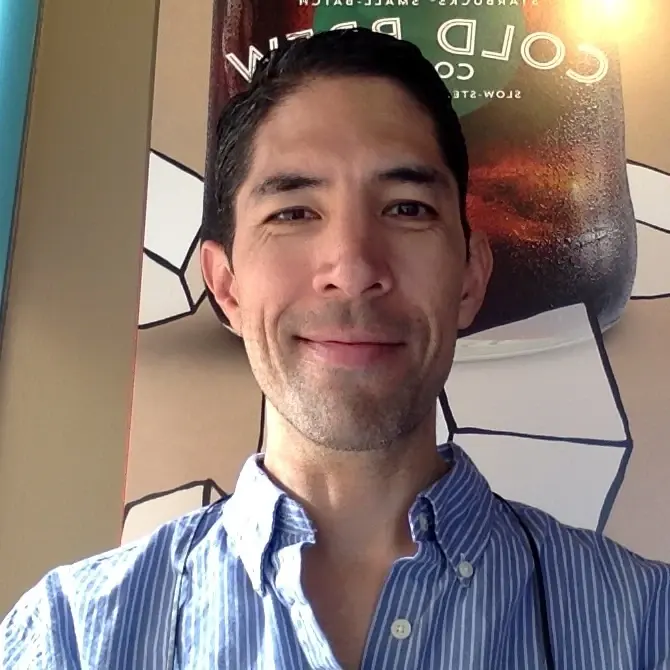
Damon Zahariades is the author of “The Mental Toughness Handbook”. The book explores mental toughness as a learnable practice of emotional regulation, recovery, habits, and disciplined follow-through.
Explore more books by Damon Zahariades