
What you'll learn
Key ideas from You Coach You
These ideas compress the book's argument without treating the author's view as settled fact. Use them as an orientation before reading the full work or listening in Wiseley.
COACH connects clarity, options, action, confidence, and help in a process that can be revisited and adapted.
Resilience means adapting across everyday strain and major change, with reserves built before adversity arrives.
Deliberate trade-offs and if/then plans turn desired work, such as learning or presenting, into specific choices about priorities.
Distanced self-talk, boundaries, and gradual courage-zone steps turn reflection into manageable action.
Career relationships support learning and progress when people invest in quality, seek different perspectives, and maintain ties beyond immediate needs.
Progress is personally defined movement toward meaningful work, not a race toward titles, promotion, or a standard career ladder.
Meaning meters and strengths tracking connect career direction to the work that fills ordinary days.
Career choices need to be weighed against personal values, practical constraints, and unequal domestic responsibilities.
Inside You Coach You
Read the first chapter in full here. The other 7 continue in the Wiseley app.
Chapter 1 of 8 · 12 min · Audio & text
Build the Self-Coaching Practice
You Coach You, by Helen Tupper and Sarah Ellis.
Many careers no longer follow a predictable ladder. People move between roles, industries, kinds of work, or employment and independent work. That freedom can make room for meaningful work and a personal definition of success, but it can also make it hard to know what to do next. The authors present self-coaching as a learnable way to navigate that uncertainty: listen carefully to yourself, ask purposeful questions, and choose actions you own. It is a practice that can help you get clearer and prepare for career conversations. It does not replace managers, mentors, colleagues, friends, or family, whose perspectives can reveal things you have not seen.
The practice rests on a mindset, a set of skills, and tools. Start with mindset because a challenge can feel so large that you lose confidence or stop before you have explored it. A fixed mindset treats difficulty as proof that you cannot change or succeed. A growth mindset leaves room to learn. When you hear yourself say, “I can’t do this,” adding “yet” can reopen the question. It does not promise success; it marks the possibility that your ability or understanding may develop. When fixed thinking returns, recalling times you stretched your skills or felt more confident can remind you that your current response is not the whole story.
Self-coaching also asks you to balance thinking with doing. Some people naturally reflect for a long time; others prefer to act quickly and experiment. Each approach can help, and each can get in the way. Too much reflection can become perfectionism or inaction. Acting too quickly can mean unclear choices or starting more than you finish. The authors describe these as preferences, not permanent personality types. If you tend to think, decide on a visible next action and try asking what a doer might do. If you tend to act, pause to map the issue, consider another point of view, or ask what a thinker might examine. The aim is to use the approach the situation needs, not to become a different person.
One obstacle to clear reflection is the inner critic: the voice that insists you are not good enough. Because people can dwell on shortcomings, this voice may grow louder when you keep listening to it. It can narrow what seems possible and make it harder to see yourself clearly. The authors suggest answering it with an inner coach. Think about how a supportive friend would speak to you, then create a statement in your own voice that challenges the unhelpful thought and helps you persist. For example: “Asking for the help I need is a sign of strength.” A statement works best when it feels personal rather than borrowed, and you can keep it somewhere you will see it.
Self-support does not mean ignoring honest feedback. The authors’ feedback friend, Bruce Daisley, read an early draft of their TEDx talk and candidly called it dull. They felt shocked and disappointed, but later recognized that the draft had lost their personality. They trusted his response because he wanted them to succeed. A useful feedback friend knows you and your work world, supports your success, and is willing to tell you the truth. Outside feedback can help you notice how you come across; your own reflection helps you understand your thoughts and feelings. These are different kinds of awareness, and one does not guarantee the other. Self-coaching works better when it makes room for both.
To build self-awareness, make space to pause. Work can move so quickly that reflection gets crowded out, and sitting with a question may feel uncomfortable at first. Try a short pause at a time you can repeat, such as a walk or lunch. Ask one focused question: What felt worthwhile today? What felt uncomfortable? When did I do my best work? The point is not to produce an instant answer. It is to give yourself time to notice what is happening before you move on.
Listening to yourself takes attention. You might jump from one thought to another, guess the answer before examining it, abandon a difficult question, or reach for a distraction. When that happens, return to the challenge in front of you. Explore it at three levels. Facts are the observable details: what happened, who was involved, and what is known. Feelings are your emotional responses. Fears are the concerns underneath, where something important to you may be at stake. A fear can be difficult to face, so choose a depth that feels manageable today. You do not need to force an answer or dig as deeply in every situation.
Questions help turn listening into learning. Open questions invite more than a yes-or-no answer. If you catch yourself asking, “Am I committed to taking this action?”, you can ask yourself, “What would increase my commitment to taking this action?” Ask one question at a time and wait for your answer before moving to the next. When several questions arrive together, attention tends to settle on only part of them. A slower sequence can uncover more options and actions.
The missed-promotion example shows why this matters. A person might ask all at once why they were passed over, what others did differently, and what to say to their manager. That bundle can lead to one obvious response: arrange a feedback meeting. Separate the questions, and other routes appear. You could learn how the promotion process works, speak with human resources or colleagues who were promoted, identify people who might support you, and consider which projects would motivate you. The first answer was not wrong; it was incomplete. A good question helps you see more of the situation before settling on a next step.
Keep those questions centered on what you can learn or do, even when other people are involved. If your thinking becomes mostly about what someone else did wrong, redirect it toward yourself: What will I do? What can I learn? What do I want to feel or change? This is not a claim that you control every circumstance. It is a way to find the part of the response that belongs to you, which can make action feel more possible and personally meaningful.
Two questioning approaches can help when you feel overwhelmed or stuck. Be an investigator when the situation feels tangled and you cannot see which details matter. Temporarily take an observer’s view. Establish the facts, identify the people involved, note when decisions are due, and then ask what to do with what you know. Be an explorer when you feel out of options. Start with possible directions rather than judging feasibility too soon. Ask what you might do without a particular barrier, what ambitious step you could imagine, or which option you dismissed that deserves another look. Investigating clarifies the situation; exploring widens the field of possibility.
The five connected whys offer another way to move below the first explanation. Each question follows from the previous answer, helping you look for a root cause and decide where effort might matter. In the authors’ example, someone has low motivation because the work feels uninteresting. Why? Their strengths are not being used. Why are those strengths unused? The new team does not know about the person’s experience. Why has that experience not been shared? The person is reluctant to talk about it. Why? They fear seeming boastful. The first answer, that the work is uninteresting, still counts. The chain adds a fuller picture: there may be both a practical issue and a fear that makes it harder to address.
That fuller picture points toward several possible actions. The person could talk with a manager about sharing their experience, discuss how to use their strengths in service of team goals, and write a self-supporting statement that challenges the fear of showing off. These are starting points, not a required list. The useful action depends on what fits the person’s situation, and what happens next may change the understanding again.
The authors gather this reflection in the COACH sequence: Clarity, Options, Action, Confidence, and Help. Clarity means naming what feels pressing. Options means considering possible routes and alternative perspectives. Action means choosing a useful next step. Confidence means checking your commitment, confidence, and obstacles. Help means identifying support you need and who might provide it. The sequence can also organize your preparation for a conversation with someone else, so you can bring a clearer sense of the issue and the help you want.
COACH is a guide to revisit as your thinking develops, not a form you need to complete all at once. An option may emerge while you are working on clarity; a confidence concern may send you back to explore another route. Choose an action as an experiment you own, then pay attention to what it teaches you. If it does not fit or circumstances change, adapt it. The foundation of self-coaching is not finding a perfect answer alone. It is listening closely enough to understand the challenge, asking questions that open useful possibilities, and taking a next step that remains yours.
Chapter 2 of 8 · 10 min · Audio & textIn the app
Prepare for Adversity, Then Respond
Adversity comes to everyone during a career, whatever their industry or level of experience. Some challenges are small: a project is derailed, priorities change, or a difficult person makes an ordinary week harder.
Chapter 3 of 8 · 11 min · Audio & textIn the app
Spend Time on What Matters
Being busy can feel like proof that work is getting done, but a packed day may still leave important work untouched. The authors argue that urgent, low-impact tasks can absorb attention and make it harder to think strategically.
Chapter 4 of 8 · 12 min · Audio & textIn the app
Build Belief Through Evidence and Action
Self-doubt often arrives as a warning: the mind is trying to protect us from a mistake, rejection, or an uncertain outcome. Ignoring or hiding the doubt can make it harder to understand what is driving it.
Chapter 5 of 8 · 12 min · Audio & textIn the app
Make Career Relationships Work
Work satisfaction, learning, and progress depend partly on the people around us. Helen Tupper and Sarah Ellis argue that career relationships need attention as careers and workplaces change.
Chapter 6 of 8 · 11 min · Audio & textIn the app
Make Progress Your Own
Career progress is often pictured as a promotion: a higher title, a bigger team, or the next rung on a ladder. But that picture leaves out many ways to move forward.
Chapter 7 of 8 · 13 min · Audio & textIn the app
Find Purpose in Daily Work
Purpose can sound like a hidden answer: find the one thing you were meant to do, then build a career around it. The authors offer a more workable idea.
Chapter 8 of 8 · 6 min · Audio & textIn the app
Keep a Career in Motion
A career can be understood as an evolving body of work, shaped by what a person tries, learns, and chooses next. It may include different roles and projects rather than follow a predictable ladder.
Chapter 1 of 8 · 12 min · Audio & text: Build the Self-Coaching Practice
Wiseley supports reading and listening to summaries in the app.
Continue in WiseleyAbout Helen Tupper & Sarah Ellis
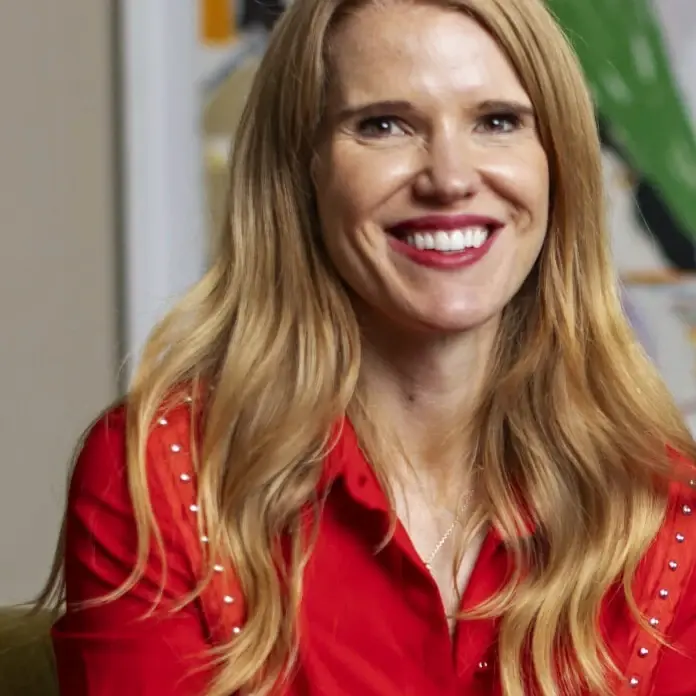
Helen Tupper
Helen Tupper is a cofounder of the career development company Amazing If. “You Coach You” explores how people can steer an unpredictable career through a repeatable practice of self-coaching.
Explore more books by Helen Tupper
Sarah Ellis
Sarah Ellis is a cofounder of the career development company Amazing If. “You Coach You” explores how people can steer an unpredictable career through a repeatable practice of self-coaching.
Explore more books by Sarah Ellis