What you'll learn
Key ideas from Understanding Power
These ideas compress the book's argument without treating the author's view as settled fact. Use them as an orientation before reading the full work or listening in Wiseley.
Institutional ownership, advertising, sourcing, professional routines, and career incentives can narrow coverage without direct orders.
Terms like “defense,” “containment,” and “national interest” can build political assumptions into the vocabulary of debate.
Chomsky argues that military spending sustains corporate production and bureaucratic power as well as military capacity.
Market outcomes can depend on public subsidies, legal rules, and coercion that free-market explanations leave out.
Public awareness becomes collective capacity through discussion, shared experience, and organizing that continues across time.
Negative freedom protects against coercion, while positive freedom depends on the practical ability and access to act.
Mobile finance and cross-border institutions can narrow governments’ economic choices and move decisions beyond public scrutiny.
Crisis can open paths to authoritarian politics or democratic organizing, and Chomsky treats neither outcome as inevitable.
Inside Understanding Power
Read the first chapter in full here. The other 14 continue in the Wiseley app.
Chapter 1 of 15 · 4 min · Audio & text
Reading Power Through Dissidence
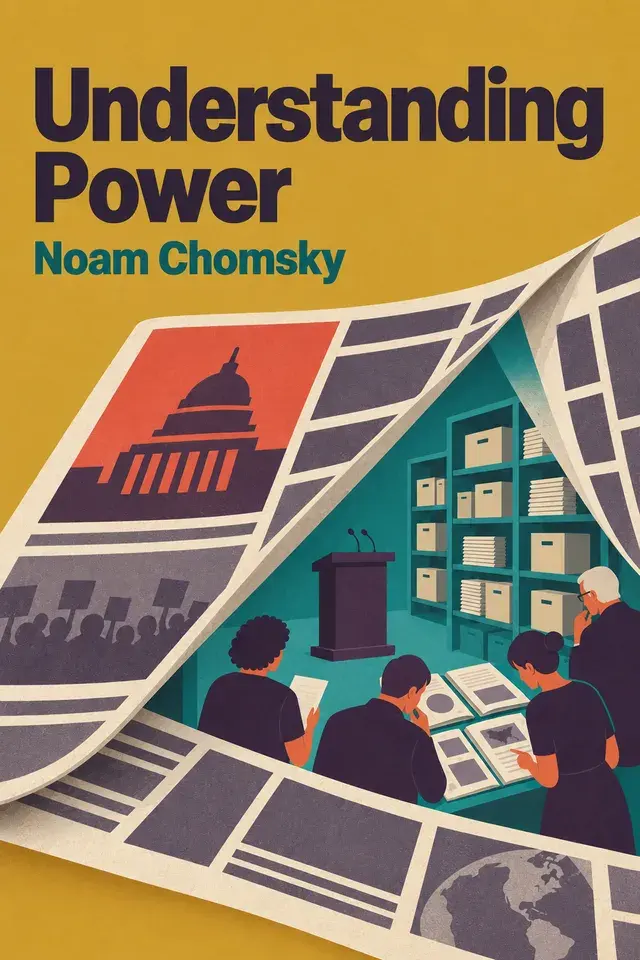
Understanding Power, by Noam Chomsky.
Understanding Power begins by asking how people can know what governments do when institutions shape both public information and official action. The editors locate Chomsky’s contribution less in a wholly new political theory than in his command of extensive factual material and scrutiny of powerful institutions. Their case-based approach is meant to help readers think critically rather than accept abstract conclusions on authority.
The book reaches the reader through edited conversations. It draws on question-and-answer sessions, seminars, public talks, and other discussions, mostly from 1989 to 1999. The editors removed repetition, reordered material, and made light stylistic changes; Chomsky reviewed the result. This is a guided sequence of discussions, organized around a recurring tension: activism can press for social change, while media and other institutions can narrow what the public understands.
That frame matters to the book’s note on September 11. Written as the book was going to print, the note says the manuscript had been compiled before the attacks. It argues that horror at the attacks does not answer questions about their causes. The note criticizes coverage that repeated claims about American freedom while giving little attention to relevant history, including civilian deaths in the Gulf War, sanctions on Iraq, U.S. support for Israel’s occupation, and support for repressive Middle Eastern governments. Its point is methodological: judging an event or policy requires examining the context official accounts leave out. The note offers questions for debate, not a retrospective account based on later evidence.
Chomsky uses the history of activism to ask how change should be measured. He says movements brought major cultural and social changes in the United States without replacing its underlying institutions. Public opposition grew, dissidents gained somewhat more media access, and former activists entered media, universities, publishing, politics, and congressional offices. Some helped advance human-rights initiatives. Such policies could be hypocritical and still impose constraints or save lives. These effects matter even when the institutional foundations of power persist.
The Kennedy–Reagan comparison makes the distinction concrete. Chomsky describes both administrations as relying on anti-Soviet fear, arms escalation, militarist language, and aggressive foreign policy. He distinguishes them in domestic policy and their room for overt action. Kennedy retained a rhetorical and partial practical commitment to social reform; Reagan sought to eliminate much of the welfare state. More directly, Kennedy could intervene openly in Cuba and Vietnam, while Reagan’s attempt at direct intervention in Central America met domestic resistance and shifted toward secret arms sales, covert funding, and support for the Nicaraguan contras. Chomsky reads this turn as evidence that protest made overt aggression politically costly. The power to act remained, but the acceptable form of action narrowed.
Institutional continuity does not mean dissent had no effect; visible reform does not mean the structure was transformed. This opening sets the measure for the discussions that follow: what collective action changed, what it restrained, and which institutions still set the limits.
Chapter 2 of 15 · 8 min · Audio & textIn the app
How Media Filter Reality
A free press is often imagined as an independent check on power. Chomsky’s propaganda model asks how media institutions shape news before any single journalist makes a choice.
Chapter 3 of 15 · 6 min · Audio & textIn the app
Naming Enemies and Democracy
Political language does more than label events. It can settle what questions seem reasonable before anyone weighs evidence.
Chapter 4 of 15 · 6 min · Audio & textIn the app
The Permanent War Economy
Chomsky presents military spending as an economic institution, not simply a response to dangers abroad. He describes a Pentagon system reaching across advanced technology, including NASA and the Department of Energy’s nuclear weapons work.
Chapter 5 of 15 · 9 min · Audio & textIn the app
Intervention and Popular Democracy
Chomsky compares interventions by asking what methods powerful states use when popular movements or independent governments challenge their influence. The methods vary with the target and the circumstances.
Chapter 6 of 15 · 8 min · Audio & textIn the app
Israel, Palestine, and Imperial Power
Chomsky’s account of Israel and Palestine is a focused case of policy described through security and peace, but also shaped, he argues, by strategy and material interests. He reads U.S. support for Israel after the 1967 war as a way to counter independent Arab nationalism and maintain influence over regional oil.
Chapter 7 of 15 · 7 min · Audio & textIn the app
Schools and Intellectual Authority
Chomsky’s starting point is that intellectual work is not a special quality possessed only by credentialed people. Anyone who uses their mind belongs in the broad sense; workers can read, reason, repair, argue, and judge evidence.
Chapter 8 of 15 · 6 min · Audio & textIn the app
Markets as Political Construction
The phrase “free market” suggests that prices, wages, and industrial change emerge from impersonal forces. Chomsky asks what institutions shaped those outcomes.
Chapter 9 of 15 · 9 min · Audio & textIn the app
Building Durable Democratic Movements
Awareness can show people what is wrong, but it does not by itself give them the ability to change it. Chomsky focuses here on the social work that turns shared understanding into collective capacity: meeting, trying ideas, building local relationships, and coordinating efforts over time.
Chapter 10 of 15 · 9 min · Audio & textIn the app
Rights and Practical Political Action
A right written into law does not enforce itself. Free expression, labor protections, and public services gain practical force when people can organize to defend them and make institutions respond.
Chapter 11 of 15 · 5 min · Audio & textIn the app
Media Tools for Collective Agency
Communication becomes democratically useful when people can use it to learn and act together. Chomsky treats technology as politically open: the Internet can widen access, but its effects depend on who controls it and how people use it.
Chapter 12 of 15 · 5 min · Audio & textIn the app
Morality and Human Possibility
People who want an unjust system or war to end may still feel change is pointless if hierarchy and selfishness are fixed features of human nature. Chomsky separates what people can do from what they should accept.
Chapter 13 of 15 · 7 min · Audio & textIn the app
Welfare and Coercive Social Policy
Chomsky asks us to widen the meaning of welfare. Public debate often treats cash or food assistance to poor families as a special handout.
Chapter 14 of 15 · 7 min · Audio & textIn the app
Global Capital and Democratic Control
Chomsky’s account begins with a mismatch: voters choose national governments, while many economic decisions move through markets and institutions that cross borders. He separates U.S.-based corporate and investor interests from the people who live and work in the United States.
Chapter 15 of 15 · 7 min · Audio & textIn the app
Crisis and the Democratic Turning Point
No one can say with confidence how a crisis will end politically. Chomsky calls the period a turning point because the direction of policy is visible, while popular response remains unsettled.
Chapter 1 of 15 · 4 min · Audio & text: Reading Power Through Dissidence
Wiseley supports reading and listening to summaries in the app.
Continue in WiseleyAbout Noam Chomsky
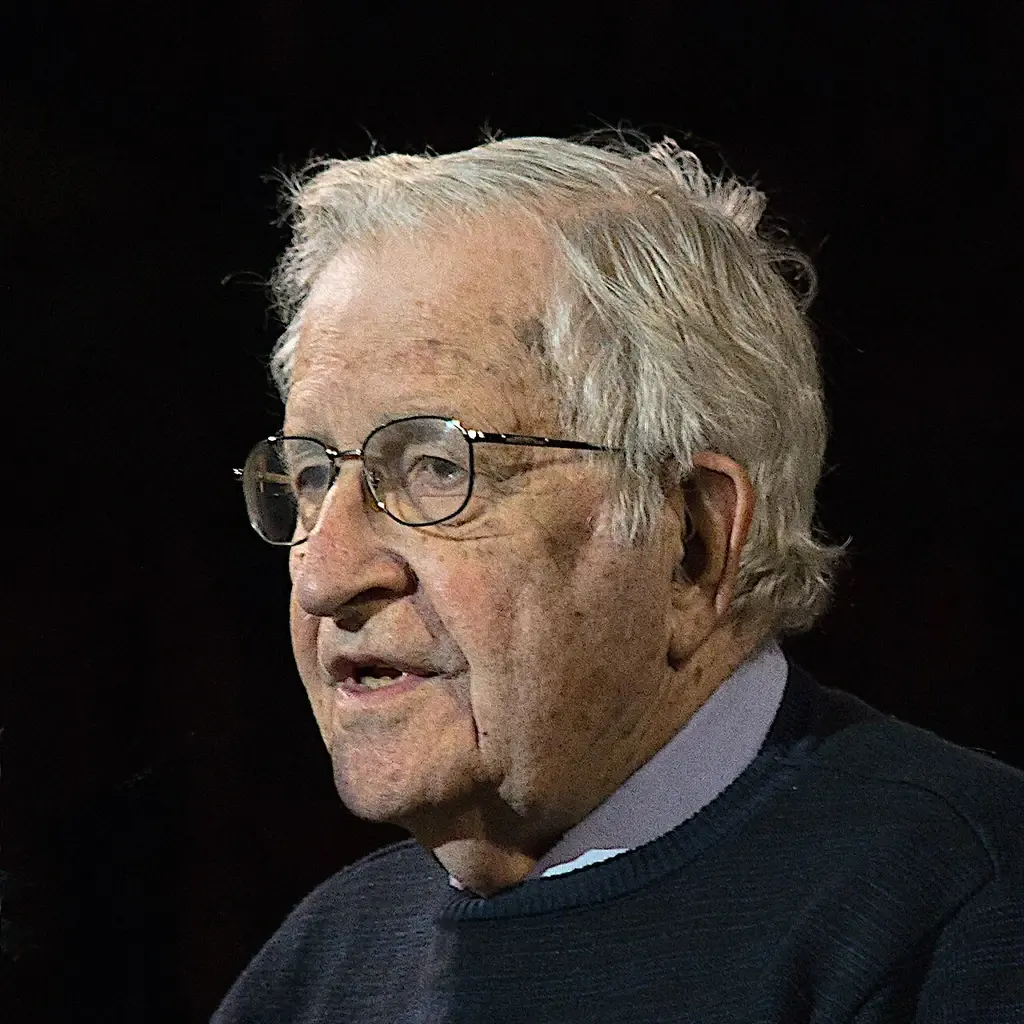
Noam Chomsky is an American linguist and activist. “Understanding Power” explores how institutions shape public knowledge, state policy, and control of economic life.
Explore more books by Noam Chomsky