What you'll learn
Key ideas from Uncle Tom's Cabin
These ideas compress the book's argument without treating the author's view as settled fact. Use them as an orientation before reading the full work or listening in Wiseley.
Shelby’s affection and Mrs. Shelby’s care cannot protect enslaved people from a sale driven by debt.
Mary’s clothing and Senator Bird’s trip to Van Trompe turn sympathy into concrete aid, while Eliza’s hope of reaching Canada remains unresolved.
Hagar’s separation from Albert and Lucy’s loss of her baby show how routine transactions fracture families.
St. Clare argues that economic self-interest can shape religious defenses of slavery, yet admits that criticism is easier for him than action.
St. Clare recognizes that Christian judgment condemns neglect, yet dies before Tom’s promised emancipation is completed.
Tom’s refusal to flog Lucy sets his conscience against Legree’s claim to command his body and soul.
Tom’s death exposes how the courts described in the novel deny accountability when there are no white witnesses and Black testimony is disregarded.
Stowe assigns responsibility to northern commerce and public acceptance as well as to southern slaveholders.
Inside Uncle Tom's Cabin
Read the first chapter in full here. The other 12 continue in the Wiseley app.
Chapter 1 of 13 · 8 min · Audio & text
Kindness Cannot Secure Freedom
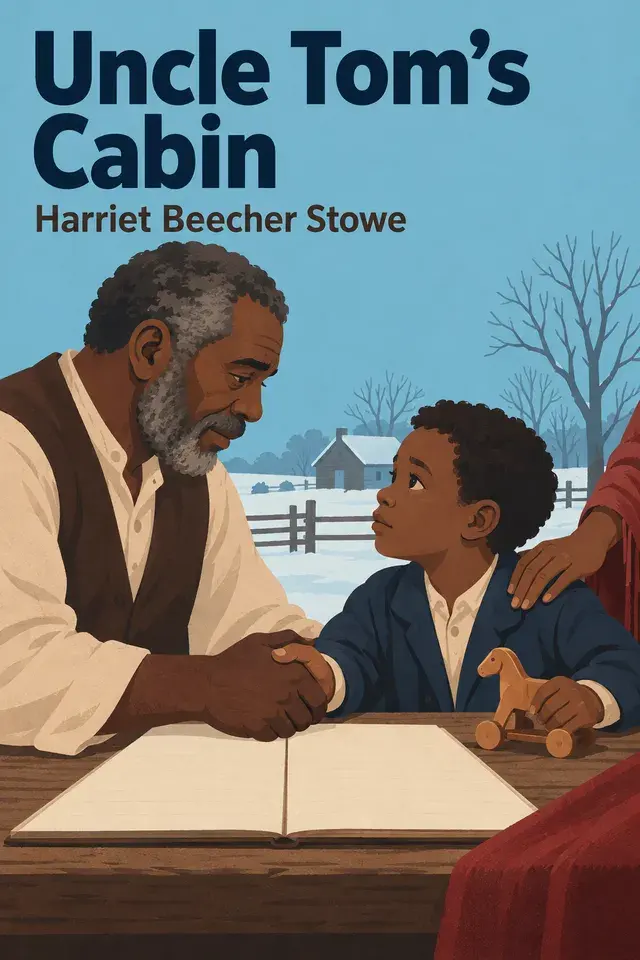
Uncle Tom's Cabin, by Harriet Beecher Stowe.
The novel opens with a sale discussed as a business solution. Mr. Shelby owes money to Haley, a trader, and proposes that Tom cover the whole balance. Haley rejects that arrangement and asks whether Shelby can add a boy or girl to the deal. When Harry appears, Haley wants him included, and Shelby eventually agrees. Shelby praises Tom as honest, capable, and faithful, and says he regrets parting with him. But his affection does not give Tom any claim to remain. From the start, the danger is not that every owner feels personal hatred. It is that an owner’s financial trouble can turn a person and a family bond into property available for sale.
Haley presents his trading methods as humane. He proposes getting the boy’s mother out of the way, completing the sale before she returns, and making it up to her afterward with gifts. He says that taking a child while the mother is present is bad business because the distress can damage the person being sold. He recounts a mother’s despair after her child was taken, describing her death as a preventable business loss. The novel’s irony is sharp: what Haley calls humanity means hiding a sale and managing suffering so a transaction remains profitable. His language exposes a system in which kindness can be measured by how smoothly ownership is maintained, rather than by whether people have the freedom to keep their families together.
George Harris’s story offers another view of the same power. He is a skilled worker at a factory, where he earns respect and invents a machine for cleaning hemp. His success might seem to offer a path toward independence. Instead, his owner treats George’s confidence and recognition as a challenge to control. He ends the factory arrangement, refuses better compensation, mocks the invention, and takes George back to farm labor. George’s skill has not secured authority over his own work. The factory employer can only offer tentative help; the owner’s power decides where George must go.
That power is especially painful because George’s talent belongs to a person who also has a family. During the period he worked at the factory, he met Eliza and they married with Mrs. Shelby’s approval. His trusted employer had given him freedom to come and go at his discretion. Now their household exists within different owners’ control. George’s factory success cannot protect him from being reclaimed, and affection within the Shelby household cannot guarantee Eliza and Harry’s safety. The novel makes the limit concrete: education, work, marriage, and care may shape a life, but none removes the legal power to command or sell an enslaved person.
At Tom and Chloe’s cabin, the story pauses over a vivid household life. Chloe takes pride in her cooking, and supper brings together Tom, George, and the children. The boys laugh and play around the baby; Tom and George move to a seat, where Tom remarks on the boys’ high spirits. George reads and helps Tom practice writing. The cabin is modest, but it holds skill, learning, humor, and affection. Chloe also reminds George that the privileges he enjoys are given privileges. Her words point beyond the meal: comforts may be sincere, yet they depend on the decisions of people who retain power over the household.
The cabin also serves as a place of worship for neighbors. People gather to sing, listen to Scripture, share testimony, and pray. Tom’s simple words and prayers move the congregation, which regards him as a spiritual leader. At the same time, in the master’s house, Shelby counts the money and signs the bills of sale; Haley hands him a parchment. This is the novel’s central contrast in miniature. The people in the cabin share a religious and family life that recognizes Tom’s character and relationships. The documents reduce his future to a transaction without giving that community a say.
Shelby’s wife learns that the sale includes Tom and Harry, and protests that it breaks obligations she thought her husband’s household had honored. She has valued Tom’s loyalty and helped care for Eliza. She also taught Eliza that a mother has a duty to her child. Selling Harry would make those lessons painful and urgent. Shelby answers that a mortgage threatens to take his property, and that the money from the sale is needed. He says Tom and Harry bring the highest price. His debt explains the pressure he faces, but his choice of whom to sell also shows his agency within it.
Mrs. Shelby’s protest reaches beyond her personal grief. She says that kindness and instruction cannot make enslavement better than freedom, and regrets having believed otherwise. Still, her care has operated inside a household that owns people. Her good intentions have not changed their status or given her control over the sale. Shelby says circumstances oblige him, while Haley offers to seek a good place for Tom. Such assurances leave the basic power untouched: Haley can buy Tom, and the family cannot make that promise enforceable.
By the time Shelby tells his wife the full decision, the transaction is complete. The bills of sale are signed and in Haley’s hands, and he plans to take possession the next day. The sale is settled before its consequences are fully known to the people most affected. Shelby reminds Haley that Haley had promised not to resell Tom without knowing what sort of hands Tom would enter. Haley answers that Shelby has just sold Tom to him; Haley has not yet resold Tom, and promises only to do his best to find him a good berth. The household’s sorrow cannot reverse the completed sale.
Eliza has overheard enough to understand that Harry is included. She sees her son asleep and decides to leave with him. Her decision comes despite her gratitude to Mrs. Shelby and the kindness she has received there. She leaves a note asking not to be thought ungrateful and thanking her mistress. That gratitude coexists with fear: care from an individual cannot protect Harry once a sale has been arranged. Eliza acts to keep her child with her, while knowing that her husband remains behind. Her flight begins as a response to a danger already made real by the signed papers.
Tom faces the same sale differently. Chloe urges him to escape, warning that he may suffer if Haley takes him away. Tom says Eliza has the right to flee with Harry, but he will stay. He believes accepting his own sale may spare the rest of the household from being broken up, and he does not want to break his word to Shelby. His decision reflects his loyalty and his attempt to protect others, not a freedom to choose without pressure. When he turns toward his children, his composure collapses into grief.
George’s return to farm labor, the cabin’s worship, and the choices Eliza and Tom make all reveal the same divide. A household may offer real affection and moments of safety, but ownership makes those conditions dependent on someone else’s will and financial needs. Eliza resists the sale by leaving with Harry; Tom stays in hope of sparing others. Neither response changes the system that made their family security conditional in the first place.
Chapter 2 of 13 · 6 min · Audio & textIn the app
Flight Against the Law
Eliza’s decision begins with a threat already made concrete: papers have been signed for Harry’s sale. She tells the Birds that she had lost two children, whom she left buried when she came away, and fears her last child will be sold south.
Chapter 3 of 13 · 9 min · Audio & textIn the app
Markets, Testimony, and Refuge
Tom’s sale turns the private loss his family feared into a journey through the slave trade. On the morning he leaves, Chloe prepares his clothes and a farewell breakfast while he sits with his Testament.
Chapter 4 of 13 · 6 min · Audio & textIn the app
The Household’s Moral Contradictions
Tom enters the St. Clare household because Eva asks her father to buy him after he rescues her from the river.
Chapter 5 of 13 · 4 min · Audio & textIn the app
Self Defense and Mercy
George’s family and their companions are nearing the end of a dangerous journey when possible pursuit becomes an approaching seizure. Phineas reports what he overheard at a tavern: men plan to use constables to help seize the party.
Chapter 6 of 13 · 7 min · Audio & textIn the app
Trauma, Care, and Formation
In these episodes, the novel shifts from ownership’s legal claim to the harm it leaves in ordinary lives. Prue and Topsy are different, but both stories show how deprivation shapes behavior that owners then condemn.
Chapter 7 of 13 · 7 min · Audio & textIn the app
Reading, Kinship, and Imminent Loss
Two years into Tom’s separation from home, ordinary comforts ease his days in the St. Clare household, but they do not end his longing.
Chapter 8 of 13 · 8 min · Audio & textIn the app
Love’s Influence, Unfinished Emancipation
Eva’s love gives Topsy a reason to imagine that she can be loved and can change. But when Eva dies, that new hope is tested by grief, and St.
Chapter 9 of 13 · 7 min · Audio & textIn the app
Sale Reopens the Wound
St. Clare’s death turns Tom’s promised freedom into an unfinished matter. Tom asks Miss Ophelia to press for the release St. Clare had promised and begun arranging. Now it depends on Marie, who says Tom is valuable, cannot be spared, and is better off enslaved. She dismisses his desire for liberty as discontent and argues that people fare worse when freed. Ophelia reminds her that Tom’s release was one of St. Clare’s last wishes and something he had promised Eva. Marie makes her own grief the answer. Tom still…
Chapter 10 of 13 · 7 min · Audio & textIn the app
The Soul Beyond Ownership
On Legree’s plantation, work quotas are enforced through punishment, and he treats signs of solidarity as a threat. Lucy is ill and close to collapse, but Sambo accuses her of “foolin’”; at the weighing, Legree calls her a “lazy beast.”
Chapter 11 of 13 · 11 min · Audio & textIn the app
Freedom, Faith, and Final Witness
The novel places two forms of resistance side by side. George and Eliza reach Canada and can begin a life outside a slaveholder’s immediate control.
Chapter 12 of 13 · 5 min · Audio & textIn the app
Reunion and Competing Futures
The closing events carry several separated families from escape toward reunion. These outcomes depend on people continuing to search, and on evidence that can connect a present life to a past sale.
Chapter 13 of 13 · 6 min · Audio & textIn the app
The Reader’s Public Responsibility
In her concluding remarks, Stowe turns from the characters’ choices to the people reading their story. She asks readers to treat slavery as a public responsibility, not a private misfortune that kindness can cure.
Chapter 1 of 13 · 8 min · Audio & text: Kindness Cannot Secure Freedom
Wiseley supports reading and listening to summaries in the app.
Continue in WiseleyAbout Harriet Beecher Stowe
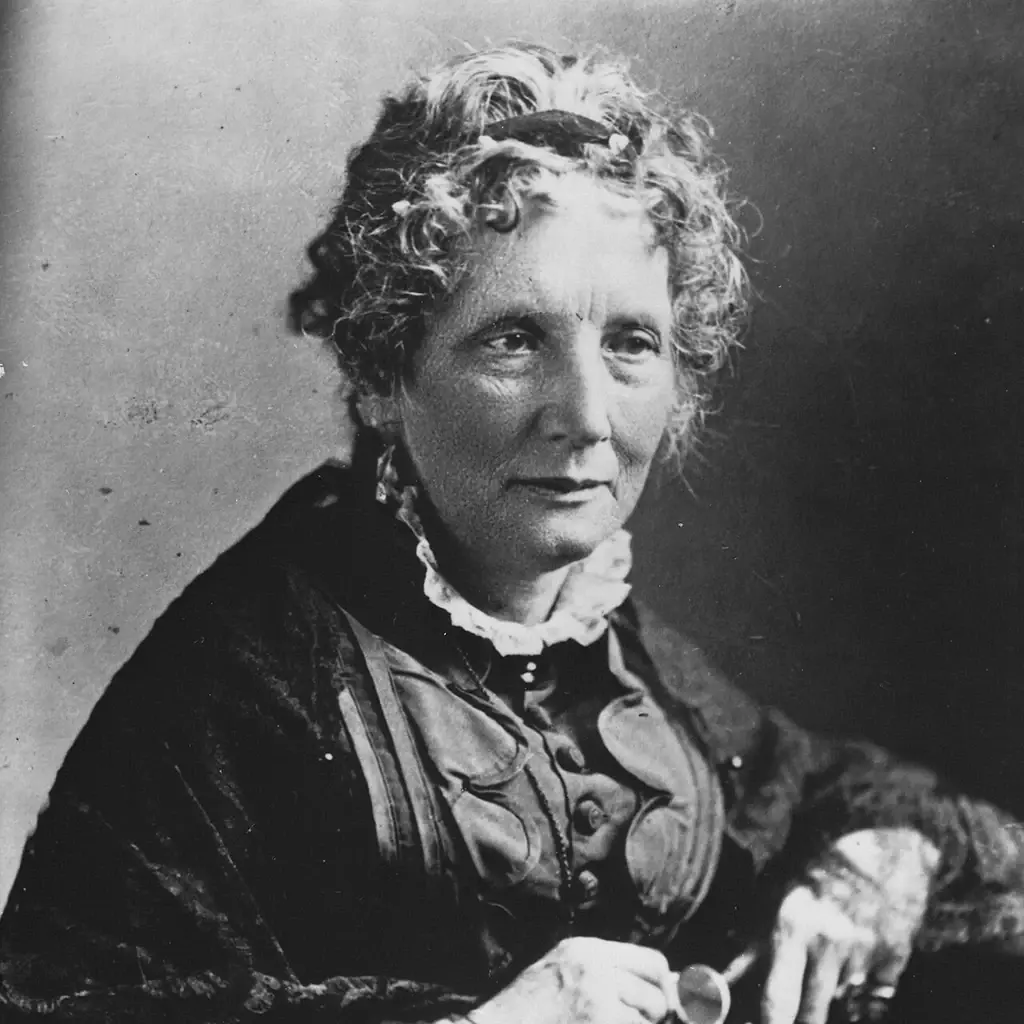
Harriet Beecher Stowe was an American abolitionist and author. “Uncle Tom's Cabin” explores whether faith, kindness, and resistance can answer a system that treats people as property.
Explore more books by Harriet Beecher Stowe