What you'll learn
Key ideas from Unbound
These ideas compress the book's argument without treating the author's view as settled fact. Use them as an orientation before reading the full work or listening in Wiseley.
Burke began using “me too” in Selma to connect survivors through empathy and support, years before the hashtag spread widely.
Sean’s betrayal deepened Burke’s withdrawal; the Rodney King verdict redirected her anger toward organizing.
Inviting abuse disclosures without trained support, safety planning, and continued care left young people without reliable protection.
Naming her own abuse begins a reckoning shaped by fear, affection, self-doubt, and the practical difficulty of leaving.
Silence around abuse grew from intersecting histories and pressures, including racism, distrust of law enforcement, victim-blaming, poverty, and shame.
Notebook drafts and a JEWELS session grow into survivor-support outreach as Burke works out how to extend the effort.
Kaia’s disclosure became possible through reassurance, patience, and writing rather than pressure to speak at once.
Inside Unbound
Read the first chapter in full here. The other 10 continue in the Wiseley app.
Chapter 1 of 11 · 6 min · Audio & text
Visibility, Shame, and Connection
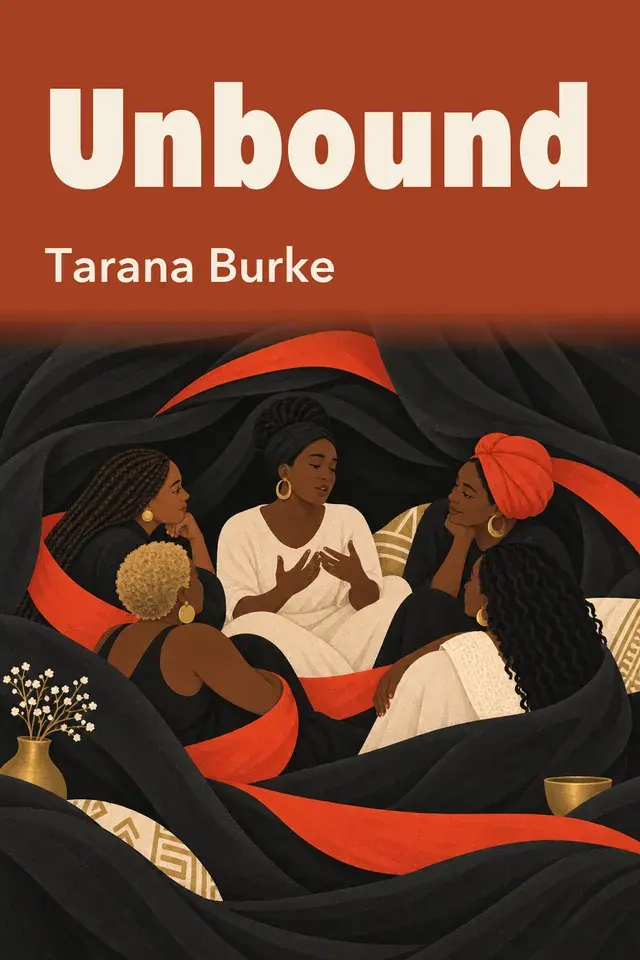
Unbound, by Tarana Burke.
In 2017, as women posted about sexual violence and actresses spoke publicly amid coverage of a Hollywood mogul, the hashtag #metoo spread quickly. Tarana Burke watched with mixed feelings. The words mattered to her: a little over eleven years earlier, while living and working in Selma, she had begun using “me too” to connect survivors. But the viral posts seemed at first to belong to a different kind of effort, and their speed raised questions she could not set aside.
A friend reposted an existing post and tagged Burke because she knew about Burke’s work. Burke asked her to take it down. She feared that a phrase could travel without its history or the care she believed survivors needed. She had spent years using workshops, panels, and outreach to build empathy as a way toward healing and action, often with little support. Now the words were suddenly everywhere, and she worried that the community work behind them would disappear from view.
The scale also frightened her for another reason. People were sharing painful experiences in public, and Burke did not know whether those disclosures would meet an empathetic response. A public invitation to speak could leave someone exposed, especially if the person felt overwhelmed afterward and had no support around them. Burke felt unprepared to respond at the speed of the internet. Visibility could help, but the act of making someone visible did not itself provide care.
She tried to make the earlier work visible. Burke retrieved a video from 2014 in which she explained the “me too.” Movement, posted it, and asked people in her networks to share it. She wanted the public conversation to include the years of work behind the phrase. At the same time, she did not know who had sent the first tweet, how extensive the response had become, or whether her own post had changed its course. Her account is not a claim to know the hashtag’s complete origins.
Then Burke read a blog post by a survivor she did not know. The woman described a college assault and explained that seeing so many #metoo posts made her feel able to tell her story publicly and be embraced and supported. The shared accounts made her feel less alone. For Burke, this was more than evidence that the hashtag had reached a large audience. It showed what recognition could do for a person who had carried an experience privately: seeing others name something similar made speaking feel possible.
That account changed Burke’s focus. She had been afraid that the viral moment would erase her work, but the survivor’s words helped her see that the work was already happening in a new form. People were recognizing one another. Burke could support that connection, even if she had not directed the hashtag’s spread. The measure of “me too” was not simply how widely the words traveled. Their value lay in whether survivors felt seen, less isolated, and met with empathy and care.
This is the connection Burke had sought through her earlier community work. She describes using “me too” as a declaration that survivors were not alone, and building spaces where recognition might lead to healing and action. The online posts and her workshops were different in scale and setting, but the survivor’s message revealed a shared possibility: another person’s willingness to speak can make someone else’s experience feel speakable. That possibility matters most when recognition is accompanied by compassion and a path to support.
Burke’s account of public shame also turns inward, toward judgments about her appearance. When she was twelve, a man dismissed his young daughter’s comparison of Burke to a girl named Amaya by saying Burke was too ugly to resemble her, and he mocked Burke’s nose. Burke had been polite to him and his daughter. The insult left her numb and unsure how to understand what she looked like. Its force came from being imposed on her by someone else, not from any objective truth about her appearance.
Still, the judgment stayed with her. Burke describes “ugly” as a stigma that can make a person feel disgusting, avoided, and ashamed. Once she internalized the insult, it became a lens for reading later encounters. In high school, she built a smart, athletic, funny, outspoken persona and sometimes answered insults with anger. That response did not make the shame disappear. She describes a painful tension: being singled out can hurt, yet even unwanted attention can briefly feel like proof that someone has noticed you. Invisibility can also wear down the spirit.
A subway encounter brought these feelings into a situation where Burke was already thinking about safety. She managed her clothing and movements to avoid sexual attention, but a man and his group mocked and insulted her. She confronted him, while recognizing the danger of being alone. Afterward she left at the next station, waited for several trains, and blamed herself for losing her temper. She also wondered whether the scene would have gone differently if the man had found her attractive. That was her painful interpretation of the encounter, shaped by the stigma she had absorbed; it does not make the stigma a fact about her.
Together, these accounts give Burke’s argument about visibility a personal measure. Being seen can loosen isolation, as it did for the anonymous survivor, but public attention can also expose someone without offering care. And being noticed through cruelty is not the same as being met with empathy. For Burke, connection is what gives visibility its value: recognition that makes room for people to speak, feel less alone, and receive support.
Chapter 2 of 11 · 8 min · Audio & textIn the app
Silence Learned in Childhood
In Burke’s account, silence begins before she can name what happened as abuse. At seven, she could sense that something was wrong, but she lacked the language to explain it.
Chapter 3 of 11 · 7 min · Audio & textIn the app
Armor Built from Shame
Burke describes several ways she tried to live with a hurt she could not yet name. Church offered rules; anger gave her a way to push back; fighting made her feel powerful for a moment.
Chapter 4 of 11 · 7 min · Audio & textIn the app
Stories That Open Possibility
A story begins to change what Burke believes her own past means. Her mother kept many books by Black women writers, and Burke had grown up loving literature.
Chapter 5 of 11 · 9 min · Audio & textIn the app
Leadership and Bodily Agency
At a youth leadership gathering in Washington, D.C., Burke encountered a kind of collective energy she had not known from school rallies. Students sang and danced to live drums, and Rose Sanders led them in call and response.
Chapter 6 of 11 · 8 min · Audio & textIn the app
Finding Voice Through Organizing
Burke’s route to college begins with a question from Mrs. Sanders: will she trust her?
Chapter 7 of 11 · 7 min · Audio & textIn the app
Care Without Capacity
By Burke’s junior year at Alabama State, changes under a new university president were making student life difficult. A policy requiring students who relied on financial aid to pay tuition upfront threatened access for people from low-wealth communities.
Chapter 8 of 11 · 12 min · Audio & textIn the app
Facing Harm at Home
Heaven’s disclosure forces Burke to face a painful gap between the connection her work promises and what she could offer in the moment. When Heaven tells her that her mother’s boyfriend has done things to her, Burke is overwhelmed.
Chapter 9 of 11 · 9 min · Audio & textIn the app
Building Programs, Facing Complicity
Burke’s work with girls began by trying to give them what the world often withheld: a sense of their worth, a grounding in history, and room to lead. The programs were not created to address sexual violence.
Chapter 10 of 11 · 6 min · Audio & textIn the app
From Memory to Movement
Burke recounts painful memories surfacing as she tries to sleep. She has tried to hide both from Kaia and from the images entering her awareness; now they arrive with force.
Chapter 11 of 11 · 7 min · Audio & textIn the app
Disclosure, Accountability, and Love
When Kaia was struggling, Tarana Burke could see that something seemed wrong, but she could not know what had caused the change. Bullying was one possibility; other experiences might also have played a part.
Chapter 1 of 11 · 6 min · Audio & text: Visibility, Shame, and Connection
Wiseley supports reading and listening to summaries in the app.
Continue in WiseleyWhat Unbound is about
Unbound traces how Tarana Burke’s childhood sexual abuse and experiences of shame shaped her path into community organizing and survivor support. It asks what helps people disclose violence, feel less alone, and receive care—and how communities can confront harm within their own ranks. The memoir offers examples of listening, optional disclosure, and accountability.
About Tarana Burke
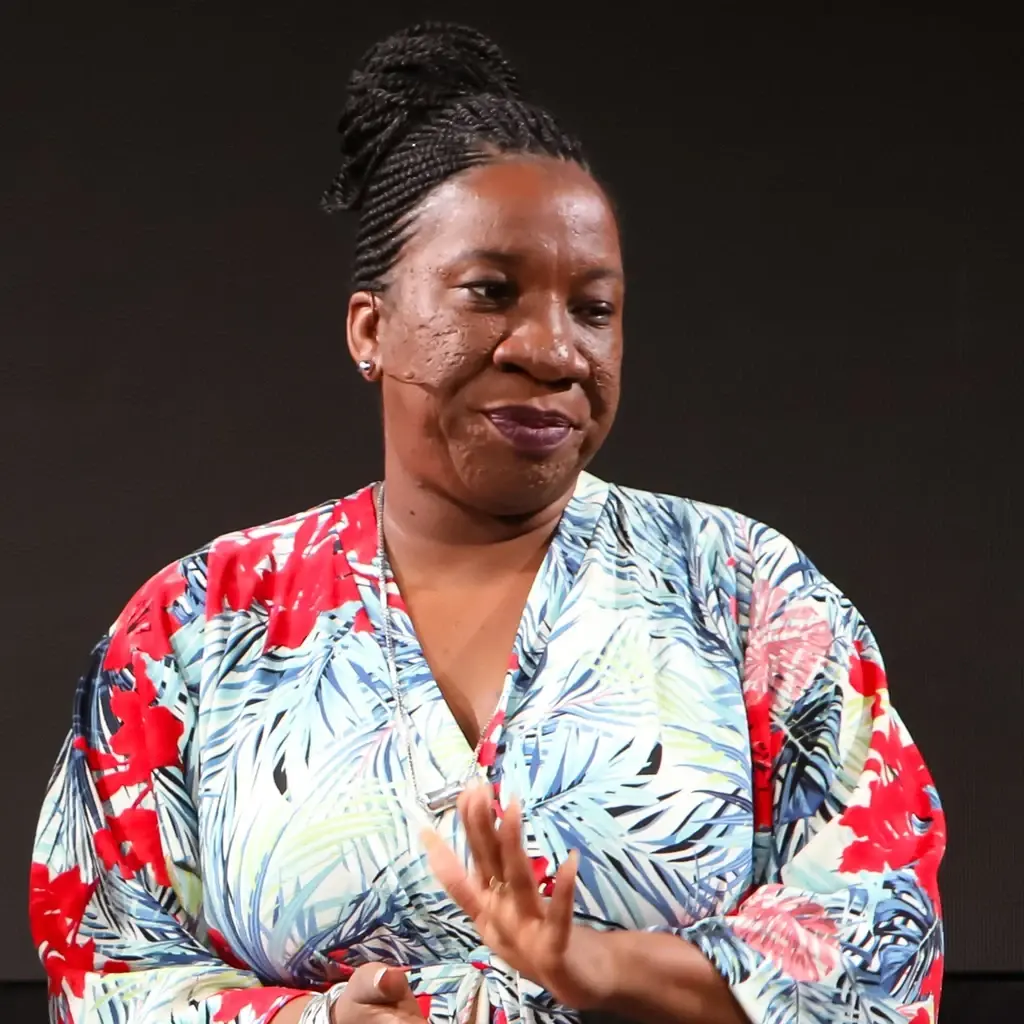
Tarana Burke is an American activist who founded the MeToo movement. “Unbound” explores how childhood abuse and shame shaped a path into community organizing and survivor support.
Explore more books by Tarana Burke