What you'll learn
Key ideas from This Is How We Do It
These ideas compress the book's argument without treating the author's view as settled fact. Use them as an orientation before reading the full work or listening in Wiseley.
Positive mindset treats setbacks as temporary information and possibility, not as proof that a person’s identity or future is fixed.
Reliability makes self-trust visible through realistic promises, time awareness, necessary refusal, punctuality, and follow-through.
Cowboying up means taking responsibility for your life, naming mistakes, accepting consequences, and changing the next response.
Nonreactivity keeps provocation from taking over attention, judgment, and emotional agency.
Sponginess expands capability by absorbing experience from people with different knowledge, methods, and perspectives.
An authentic, revisable prize organizes attention and helps distinguish meaningful opportunities from distraction, comparison, and borrowed ambitions.
Inside This Is How We Do It
Read the first chapter in full here. The other 5 continue in the Wiseley app.
Chapter 1 of 6 · 8 min · Audio & text
Choose Possibility and Accept Reality
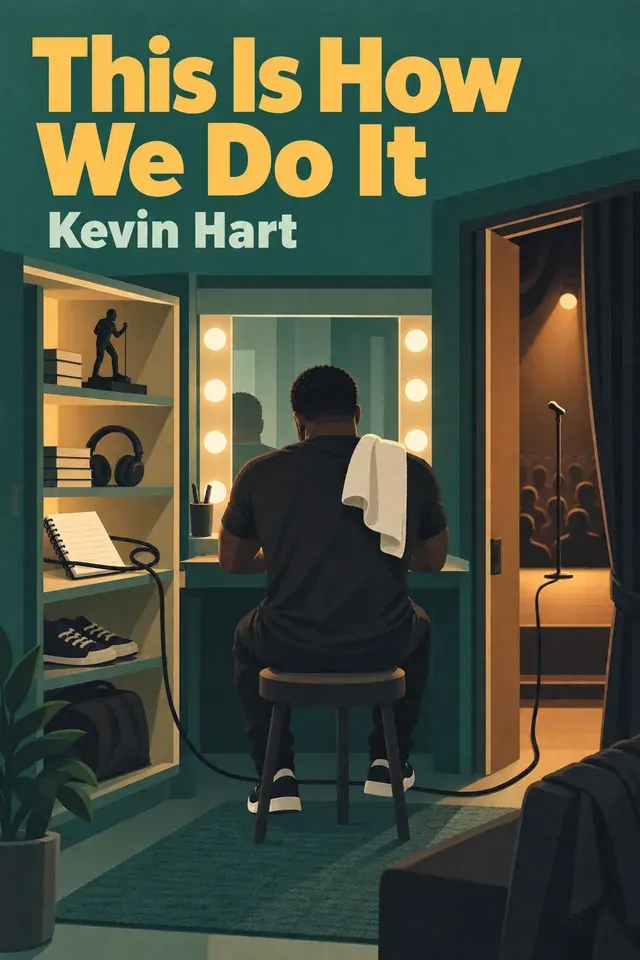
This Is How We Do It, by Kevin Hart.
At the center of Hart’s opening argument is a question: how can a person direct a life instead of simply reacting to other people’s expectations? Approval, fear, criticism, and someone else’s agenda can quietly become the forces making decisions. Hart’s answer begins with choosing a direction for yourself, then preparing your mind to act on that choice in ordinary situations. His fifteen tools are presented as a kind of mental training. They are not ideas to admire once. They are practices to repeat until they help shape how you meet opportunity, difficulty, and uncertainty.
That direction does not require a final answer to every question about life. Hart asks what a person is building, what kind of example they are leaving, what might remain after death, and what their children may inherit from them. He also asks whose approval is being pursued and whether fear or joy is driving the present path. These questions create orientation without supplying definitive answers. Their value is that they move attention beyond immediate reactions and toward a life chosen deliberately.
The starting point is not a perfected future self. Hart says improvement begins with respecting who you are now, including the effort, will, work, and suffering already invested. Mistakes and omissions do not erase a person’s journey. A painful experience can become experience, wisdom, or a lesson, depending partly on how it is interpreted. A setback may describe what happened, but it does not have to become a definition of who someone is. Calling it a temporary defeat preserves the possibility of another response, while calling it final failure can make the present feel like an ending.
This is where positive mindset enters. Hart does not describe it as permanent cheerfulness or a demand to call every event good. He presents it as a deliberate way of interpreting circumstances through possibility, empathy, effort, and forward movement. At any moment, a person can choose whether to feed misery, suspicion, and passivity or to look for options, understanding, and useful action. Negativity, in his account, becomes unproductive when it turns into circular dwelling, self-doubt, judgment, or comparison. Positivity is more generative: it keeps attention open to what might be done next.
Difficult feelings are still allowed. A positive mindset does not deny pain, disappointment, fear, or frustration, and it does not require a person to feel happy while life is hard. The distinction is between experiencing a difficult feeling and becoming resigned to it. Hart’s constructive response to negativity is to process it: ask what the experience can teach, what action it suggests, and whether the obstacle should be addressed or approached from another direction. This framing does not guarantee a good outcome. It simply prevents one bad moment from claiming authority over the entire future.
The tools work through repetition. Hart says they address recurring internal battles, so they must be used repeatedly rather than summoned only during a crisis. At first, a constructive interpretation may feel conscious and awkward. With practice, it can become more familiar, eventually influencing instinct and identity. This repetition is preparation for everyday decisions: how to interpret a mistake, how much attention to give a critic, whether to accept a difficult obligation, and how to keep moving when the mind wants to stop. Preparation concerns both the person’s craft and the person’s readiness to recognize and use an opportunity.
Positive possibility, however, is not enough by itself. Without contact with reality, optimism can become another way of resisting what has already happened. Hart calls the necessary acceptance what-is-ness. It begins by acknowledging the fact of an event instead of arguing with it, wishing it had not occurred, or treating complaint as a way to reverse it. Acceptance removes an additional layer of struggle. It does not make an unpleasant fact pleasant, but it stops the mind from spending its remaining energy fighting the existence of that fact.
The practical sequence is simple. First, identify what actually happened. Next, notice the stories, judgments, blame, entitlement, or victimhood added to it. Then choose a response that works with the situation as it is. Between an event and a response, people often insert an interpretation that changes the situation in their minds. They may insist that reality should have been different, that someone must be punished before they can act, or that the event proves something permanent about them. What-is-ness separates the event from those additions. That separation creates enough clarity to correct a mistake, learn a lesson, endure what cannot be changed, or decide on a next step.
Hart illustrates this with his daughter’s dislike of school. She says that she hates it, but attendance remains necessary. Hating the obligation does not remove it; it only makes each required day harder. Hart asks what the hatred accomplishes, and she thinks about the question privately. She returns having recognized two things at once: school is difficult, and it is still something she must do. She can therefore decide to make the best of it while appreciating the friends she has there. Acceptance has not made school optional or transformed it into something she enjoys. It has changed the way she can engage with an unavoidable part of life.
That qualification matters. Acceptance is not permission to remain in danger, tolerate mistreatment, or surrender agency. It applies to circumstances that cannot be changed by resistance alone. Even when a chosen path requires unpleasant work, education, or training, complaining about the unavoidable cost adds difficulty without advancing the aim. But leaving a harmful situation, setting a boundary, or seeking help can be a constructive response to reality. The point is not passive endurance. It is accurate recognition of the circumstances from which a useful choice must begin.
Hart uses his own career as an illustration of refusing limits imposed by other people’s conversations and expectations. He says his progress depended on allowing himself, rather than outsiders, to determine what was possible for him. He also interprets earlier work and success as preparation for a larger future. His experience demonstrates the attitude he is describing, but it is not proof that imagining a larger possibility guarantees success. The broader lesson is that other people’s assumptions do not have to become the boundaries of a person’s identity.
Together, possibility and acceptance provide the foundation for the rest of the toolkit. Possibility keeps the future open; acceptance gives the present a clear shape. When something happens, recognize the fact, notice the extra story or blame, and choose the most constructive response available. Repeatedly practicing that sequence can make deliberate action more available than automatic reaction. The questions of purpose, approval, and legacy remain open, but they can guide the way a person meets today’s facts while deciding what kind of life to build.
Chapter 2 of 6 · 9 min · Audio & textIn the app
Build Trust Through Repeated Action
The practical question now is what turns a good intention into a dependable pattern. Hart’s answer is consistency: repeated, intentional behavior that gives a person enough attempts to learn.
Chapter 3 of 6 · 7 min · Audio & textIn the app
Own Your Part and Generate Momentum
Repeated action can build capability and trust, but it does not eliminate mistakes, obstacles, or days when motivation drops. This chapter adds a way to restart.
Chapter 4 of 6 · 6 min · Audio & textIn the app
Stay Grounded Around Other People
Around other people, agency is tested by pressures that do not appear in private routines. A provocation can invite retaliation, an audience’s reaction can become a source of approval, and success can tempt someone to confuse status with identity.
Chapter 5 of 6 · 7 min · Audio & textIn the app
Grow Without Rejecting the Present
Growth, in Hart’s account, begins with a particular kind of dissatisfaction. You can recognize that something is good, appreciate the progress already made, and still ask whether it can become better.
Chapter 6 of 6 · 7 min · Audio & textIn the app
Choose the Prize and Its Price
A goal becomes useful when it helps you decide what deserves your attention. Hart’s phrase “eyes-on-the-prize-ness” begins with a prior question: what, exactly, is the prize?
Chapter 1 of 6 · 8 min · Audio & text: Choose Possibility and Accept Reality
Wiseley supports reading and listening to summaries in the app.
Continue in WiseleyWhat This Is How We Do It is about
Kevin Hart explores how to build mental strength while pursuing a life shaped by your own goals. How can acceptance, consistent effort, responsibility, and curiosity become everyday habits? His practical tools and personal stories connect these choices to handling setbacks, keeping commitments, learning from others, and sustaining growth without depending on approval.
About Kevin Hart

Kevin Hart is an American comedian and actor. “This Is How We Do It” explores how acceptance, consistent effort, responsibility, and curiosity can become everyday habits.
Explore more books by Kevin Hart