What you'll learn
Key ideas from The Twelve Caesars
These ideas compress the book's argument without treating the author's view as settled fact. Use them as an orientation before reading the full work or listening in Wiseley.
Caesar turned office, popular favor, patronage, and military command into mutually reinforcing sources of personal authority.
Augustus made one-man rule durable by directing established offices, provincial government, and public services from a center of concentrated authority.
Tiberius’s early Senate consultation and modest public posture gave way to treason prosecutions that reached speech, writing, and family members.
Claudius’s equitable rulings and civic reforms coexisted with erratic judgments and court influence from wives and freedmen.
The revolt exposed Nero’s isolation: his bodyguard deserted and servants fled, though four companions remained and Epaphroditus helped him die.
After Nero, provincial armies made military allegiance a practical condition of an emperor’s claim.
Public rebuilding and support for civic life complicate Vespasian’s reputation for avarice without erasing the burdens of extraction.
The soldiers’ honors for Domitian and senators’ erasure of his memory reveal divided judgments of his rule.
Inside The Twelve Caesars
Read the first chapter in full here. The other 9 continue in the Wiseley app.
Chapter 1 of 10 · 6 min · Audio & text
Reading Suetonius’s Imperial Balance Sheets
The Twelve Caesars, by Suetonius.
The Twelve Caesars is not a continuous account of Roman political history. Suetonius builds each biography around one ruler, selecting events and personal details that help assess that individual. The result is neither a conventional history nor simply a collection of scandals. It is a scholarly biography with a distinctive way of arranging evidence—and that arrangement shapes what readers can see.
Each life offers a reading map. It usually begins with ancestry and parentage, follows the ruler chronologically from birth to accession, turns to topics during the reign, then returns to chronology for the death. The pattern varies: some lives give more space to narrative, and the reign sections arrange their topics in different ways. Augustus’s life separates public and private matters. In the lives of Tiberius, Caligula, Nero, and Domitian, Suetonius first treats positive or neutral aspects, then gives more space to negative ones. Public conduct, character, and private habits all contribute to the assessment. This topical approach had familiar precedents in praise speeches and Roman inscriptions that grouped rulers’ deeds and virtues by category; in Suetonius, it makes each life read like a balance sheet.
Sometimes a sentence previews the topical sequence to come. After describing Nero’s return from Greece, Suetonius lists traits that he says Nero revealed gradually. The following chapters give examples in that same order. Such a list is more than a passing comment: it can help readers recognize how later anecdotes belong together, even when each one appears under a separate heading.
The Great Fire shows what the arrangement reveals and obscures. Suetonius places his account of Nero watching the flames and singing under a discussion of cruelty toward Rome’s people. Elsewhere, he treats the persecution of Christians and new rules for building in the city under public policy, while describing the Golden House under extravagance. He says Nero rebuilt it after an earlier palace burned, but does not identify that fire there as the Great Fire. The city's burning, the policy measures, and the palace project are thus separated into different topics. Comparing the sections can restore some connections, while also showing which links Suetonius leaves unstated.
The evidence, too, needs to be read with its status attached. Suetonius sometimes quotes documents to challenge received accounts. Against the view that Augustus disliked Tiberius, he cites extracts from Augustus’s letters. In discussing Gaius’s birthplace, he weighs an Augustus letter and public records against the views of two earlier writers. He also comments on Augustus’s handwriting and spelling, saying in effect that he had seen the original letters. On Vespasian’s family origins, Suetonius says that his own careful inquiries found no evidence for allegations of humble descent. These examples show him comparing documentary material with claims already in circulation.
A report attributed to someone else is different from a document, and neither is the same as rumor. Suetonius says a rumor accused Augustus of arranging the deaths of Hirtius and Pansa to gain control of their armies. He adds that Pansa’s death was considered suspicious enough for his physician to be arrested, then names Aquilius Niger as the source of a stronger claim: that Augustus killed Hirtius himself. The passage preserves several levels of assertion, not one established account. Keeping the attributions visible prevents a reported allegation from becoming a fact merely because Suetonius records it.
Inference requires another label. Suetonius sometimes appears to move from a single known incident to a broader generalization. That generalization is his interpretation of the evidence, not a second piece of evidence. Readers also infer connections when they compare events filed under separate headings, as with the fire. Those reconstructions should remain distinct from what the text states outright.
The amount of detail changes across the lives. Caesar and Augustus receive the fullest treatment, with many specific examples and named sources. The next four lives, from Tiberius through Nero, give fewer precise details and refer to sources less often; the final six are shorter, sometimes almost perfunctory. Suetonius’s checkable particulars can be accurate even when his larger assessment is partial. His treatment of Tiberius’s alleged miserliness is severe, although he also reveals that Tiberius’s economy kept taxes from rising; Suetonius criticizes other rulers for tax increases. Detail, accuracy, and balance are therefore separate questions. A well-supported particular does not by itself make the overall judgment evenhanded, and thinner coverage limits how much readers can conclude.
A useful way to read each life is to track what kind of support a claim has: a quoted document, an attributed report, a labeled rumor, Suetonius’s own inference, or a connection reconstructed across headings. Follow the chronological frame, then compare the topical sections without supplying links the text leaves implicit. This keeps the evaluative purpose of the biographies in view while preserving the limits of their evidence and scope.
Chapter 2 of 10 · 13 min · Audio & textIn the app
Caesar and the Seizure of Power
Caesar’s rise was not a straight march through public offices. It was a series of moves that turned office, popular favor, political alliances, and military command into sources of personal authority.
Chapter 3 of 10 · 11 min · Audio & textIn the app
Augustus Builds a Durable Principate
Caesar’s assassination left the young Octavius with a name, an inheritance, and a claim to carry forward Caesar’s decrees. Suetonius says he returned to Rome and accepted the inheritance despite resistance from his mother and stepfather.
Chapter 4 of 10 · 11 min · Audio & textIn the app
Tiberius: Service, Withdrawal, Terror
Suetonius begins Tiberius’s life in a family shaped by political struggle. Tiberius’s father first served Caesar, then sided with Lucius Antony at Perusia.
Chapter 5 of 10 · 8 min · Audio & textIn the app
Caligula: Favor Turns to Tyranny
Gaius began with an advantage that no policy could create: people already felt attached to his family. His accession was met with extraordinary joy.
Chapter 6 of 10 · 9 min · Audio & textIn the app
Claudius: Reform Under Arbitrary Rule
Claudius’s rise began after years of being pushed aside by his own family. Ill health and a reputation for dullness kept him from office, although he studied literature and published work.
Chapter 7 of 10 · 9 min · Audio & textIn the app
Nero: Spectacle and Political Collapse
At sixteen, Nero succeeded Claudius with a display of piety, generosity, and deference. He gave Claudius an elaborate funeral and divine honors, promised to govern by Augustus’s example, and declined the title Father of His Country because he was young.
Chapter 8 of 10 · 9 min · Audio & textIn the app
Galba, Otho, and Vitellius: Armies Choose Emperors
The year commonly called the Year of the Four Emperors tests what an imperial title could do without military support. The revolt began before Nero’s death: Julius Vindex led an uprising in Gaul in March.
Chapter 9 of 10 · 7 min · Audio & textIn the app
Vespasian’s Restoration and Its Costs
Vespasian’s victory ended a year of upheaval, but victory alone could not repair a government weakened by civil war. Suetonius presents his reign as a project of restoration: discipline the armies, settle the provinces, repair Rome’s institutions, and rebuild the city.
Chapter 10 of 10 · 10 min · Audio & textIn the app
Titus, Domitian, and Imperial Reputation
The closing biographies invite comparison through a question: what happens to an emperor’s standing when conduct in office contradicts expectation? Titus became far more generous and approachable once emperor than his earlier reputation suggested.
Chapter 1 of 10 · 6 min · Audio & text: Reading Suetonius’s Imperial Balance Sheets
Wiseley supports reading and listening to summaries in the app.
Continue in WiseleyAbout Suetonius
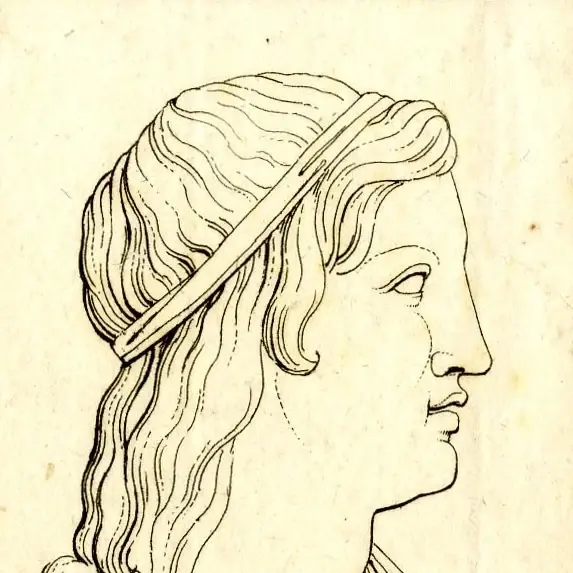
Suetonius was a Roman historian. “The Twelve Caesars” explores how Rome’s rulers from Julius Caesar to Domitian used power and what their habits reveal about character.
Explore more books by Suetonius