What you'll learn
Key ideas from The Science of Storytelling
These ideas compress the book's argument without treating the author's view as settled fact. Use them as an orientation before reading the full work or listening in Wiseley.
A strong opening establishes an expectation, introduces consequential change, calibrates audience knowledge, and leaves a meaningful causal question unresolved.
Narrative sequence, active action, and precise sensory detail make imagined events arrive with clarity and emotional force.
A compelling flaw is a defended belief about how to control life, not merely a bad trait.
Dialogue carries subtext when stated aims, concealed desires, mind-reading assumptions, and defensive tactics pull words apart.
Lolita demonstrates that confession, vulnerability, charm, framing, and worse antagonists can create sympathy without moral approval.
Master-stories can select genuine features while excluding complexity and turning rival groups into villains.
A personally consequential disruption creates desire, and goal-directed action turns the environment into tools, obstacles, and new causes.
External success resolves little unless the ending also shows whether the protagonist’s inner model has changed.
Inside The Science of Storytelling
Read the first chapter in full here. The other 8 continue in the Wiseley app.
Chapter 1 of 9 · 9 min · Audio & text
Why Change Captures the Mind
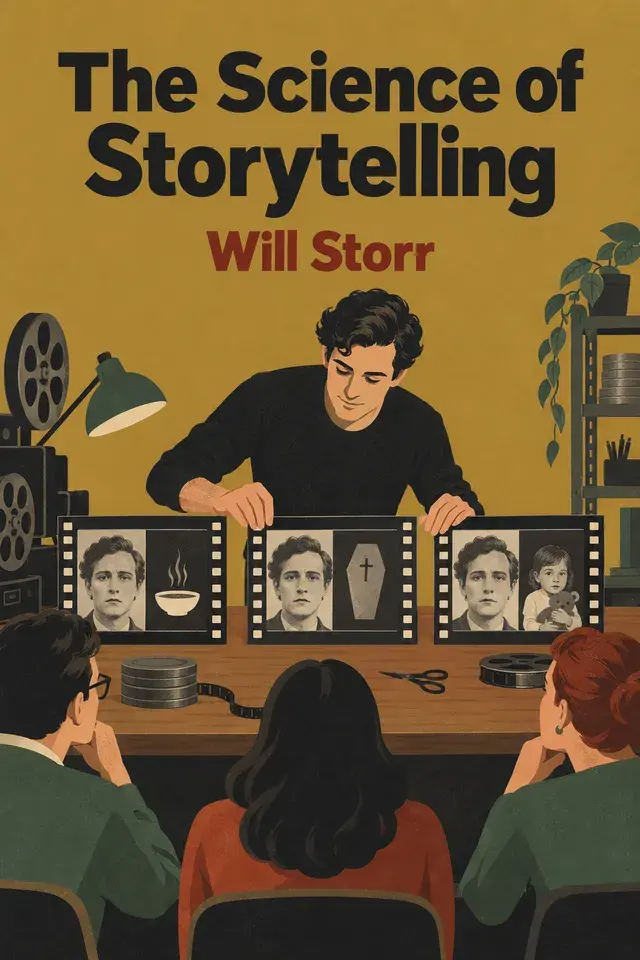
The Science of Storytelling, by Will Storr.
Storr’s starting point is the brain’s need to make an uncertain environment manageable. He describes it as a model-building system rather than a passive recorder. From limited sensory signals, it constructs a working account of what is happening, then revises that account when new signals do not fit. The model need not reproduce reality perfectly; it needs to be accurate enough to guide action. Its broad practical aim is control: perceiving the physical and social environment well enough to influence circumstances and obtain desired outcomes. This helps explain why the brain is so responsive to change, consequence, and cause. They are ways of turning a stream of events into something that can be understood and acted upon.
When the world matches the brain’s expectation, there is relative calm. An unexpected change creates neural activity and redirects attention because it may announce danger or opportunity. It can close off a desired future, but it can also open a route toward a different one. Yet novelty alone does not sustain a story. Daily life contains countless surprises that turn out to be irrelevant. Narrative change matters when it affects what someone can do, wants, fears, or expects, and therefore requires a response. The key question is not simply, What is different? It is, What might this difference cause? At that point, attention becomes the beginning of story.
Two opening examples show how a writer can create that attention in different ways. Where’s Spot? makes the gap immediate: a concrete absence produces a direct question about where Spot is. The question is simple, but the reader has a foothold and a reason to continue. The Secret History works through foreknowledge instead. Its opening gives the audience knowledge of an important event while leaving the causes unresolved. The resulting question is not what is missing from the present scene, but how the known outcome came about. One opening makes us seek an absent answer; the other makes us reconstruct a hidden chain of causes. Both begin by disturbing an expected world.
That reconstructive impulse is curiosity. The brain dislikes recognizing an information gap without some way to close it. In one experiment associated with George Loewenstein, people who saw fragments belonging to one incomplete animal kept clicking beyond the required number more often than people who saw separate complete animals. Another experiment, as summarized by Storr, found that seeing more partial information about a person increased the desire to see the whole image. These examples point to an important condition: curiosity is strongest when the audience knows enough to imagine an answer but not enough to settle it. With no foothold, a question is merely opaque. With complete certainty, there is nothing left to discover. Curiosity therefore rises between confusion and closure.
Curiosity asks for knowledge, but story also asks for explanation. The brain automatically links events into causes and effects. In the bananas-and-vomit test discussed by Storr, unrelated words still invite the mind to supply a temporal or causal connection. In the Kuleshov example, the same facial expression seems to carry different emotions when placed beside soup, a corpse, or a child. Context changes the explanation the viewer builds. Similar findings with simple moving shapes show people attributing motives, attacks, and chases to motion that contains no people at all. These examples distinguish causal understanding from surprise and curiosity. Surprise detects a mismatch. Curiosity keeps the gap open. Causal inference proposes what the mismatch means and what may follow. Once events are connected this way, they stop being isolated information and become a story.
Bartlett’s War of the Ghosts retelling experiment shows the same process operating in memory. English participants repeatedly retold a story whose unfamiliar cultural elements were difficult to fit into their existing expectations. Across retellings, they deleted material, added assumptions, reordered events, and explained strange details in more familiar terms. Memory was not preserving a neutral sequence. It was reshaping the material into an account with recognizable causes and consequences. The experiment matters because it reveals why narrative feels so natural: the mind continually compresses a confusing stream into a manageable explanation. That compression can give experience personal and moral meaning, but it also means remembered events are reconstructed rather than untouched records.
This does not mean every story must make its causal chain explicit. Storr distinguishes between commercial narratives, which often make change quick and legible, and literary or art-house forms that may slow, loosen, or partially hide the links between events. Ambiguity can invite readers to supply their own memories, values, and connections. It gives them a role in completing the model. But uncertainty still needs a foothold. If causes are arbitrary or discontinuous, the audience may feel abandoned rather than intrigued. Complete explanation can weaken participation, yet unexplained randomness can destroy it. The useful middle is a shaped gap: enough relation to suggest that meaning exists, enough openness to make discovery worthwhile.
That balance gives a practical procedure for designing an opening. First, identify the expectation already operating in the world: what seems normal, stable, or about to happen? Second, introduce a change with consequences, not merely an unusual detail. It should threaten, promise, or redirect something that matters. Third, specify what the audience knows at that moment. Give them enough context to form a provisional model, while preserving the information needed to revise it. Finally, leave a question whose answer matters: what caused the change, what will it produce, or what will this event reveal? The procedure is not a rigid formula. It is a way to check whether surprise has become curiosity, and whether curiosity has a consequential path to follow.
It also clarifies Storr’s preference for character-generated stories. A change becomes meaningful when it strikes a particular person, because that person’s response gives the event a direction and produces further consequences. Broad structure can help organize those consequences, but it should serve the cast rather than dictate a generic sequence. The full model of character belongs to the work that follows. At this foundation, the essential point is simpler: stories recruit attention by disrupting an expected world and inviting us to discover the causes and outcomes that matter to someone. Change catches the mind because it threatens the model that gives the world order—and because, for a moment, a story lets us help rebuild that order.
Chapter 2 of 9 · 9 min · Audio & textIn the app
Building Worlds Through Selective Detail
To read a scene is to build it. Words do not send a finished picture into the mind; they provide signals from which the brain constructs a usable model.
Chapter 3 of 9 · 11 min · Audio & textIn the app
The Beliefs Characters Live By
A compelling flaw is not simply a bad trait. It is a defended belief about how to live and control the world.
Chapter 4 of 9 · 8 min · Audio & textIn the app
Hidden Motives and Divided Selves
Chapter 3 explained how characters defend a worldview that helps them feel safe, competent, or worthy. This chapter adds a different uncertainty.
Chapter 5 of 9 · 11 min · Audio & textIn the app
Moral Judgment, Status, and Sympathy
Stories gain social energy when they let us inspect a social world. We want to know who cooperates, who takes advantage, who is treated unfairly, and whether wrongdoing will be exposed or punished.
Chapter 6 of 9 · 10 min · Audio & textIn the app
Stories That Bind and Divide
The same psychological machinery that makes a person feel like the hero of a private life can operate at the scale of a people. A shared narrative gives a group a common account of where it came from, what rules matter, who belongs, and what future would count as restoration.
Chapter 7 of 9 · 11 min · Audio & textIn the app
How Character Generates Moving Plots
Plot begins moving when change becomes personal. An unexpected event is an ignition point only when it strikes something a character depends on: a belief, a role, a relationship, or a theory of control.
Chapter 8 of 9 · 9 min · Audio & textIn the app
What an Ending Finally Reveals
An ending does more than tell us who won. It answers, or deliberately unsettles, a deeper question: who has the protagonist become, and what can this person now do?
Chapter 9 of 9 · 15 min · Audio & textIn the app
Practicing the Sacred Flaw Approach
Begin with the spark, but treat it as a question rather than a story. A milieu is a setting, a what-if changes the conditions of life, and an argument frames a social or moral problem.
Chapter 1 of 9 · 9 min · Audio & text: Why Change Captures the Mind
Wiseley supports reading and listening to summaries in the app.
Continue in WiseleyWhat The Science of Storytelling is about
Why do some stories hold our attention and change how we see people? Will Storr connects storytelling to perception, curiosity, identity, and social emotion. His character-centered approach shows how flawed beliefs generate conflict, how language builds imagined worlds, and how writers can turn psychological insight into narrative choices.
About Will Storr
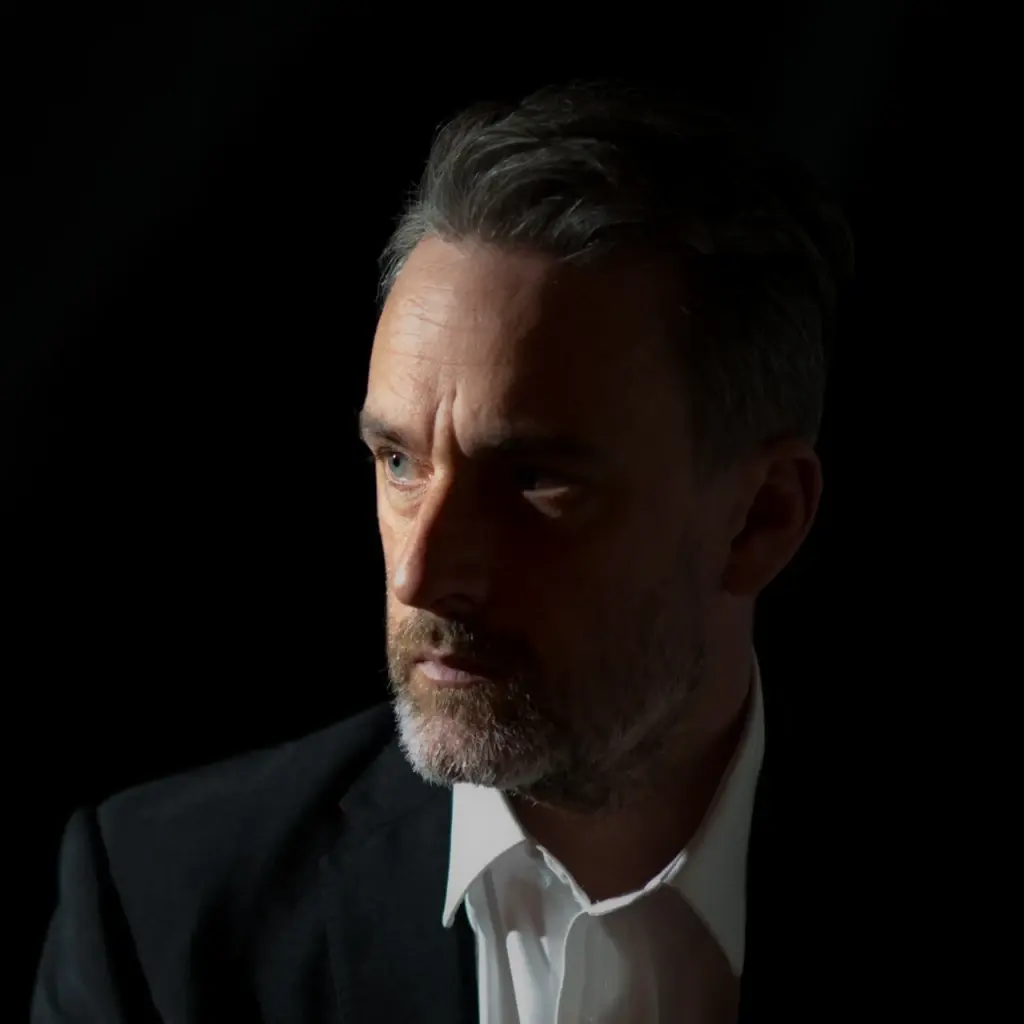
Will Storr is a British author and journalist. “The Science of Storytelling” explores why some stories hold attention and change how people are seen, connecting storytelling to perception and identity.
Explore more books by Will Storr