What you'll learn
Key ideas from The Pope at War
These ideas compress the book's argument without treating the author's view as settled fact. Use them as an orientation before reading the full work or listening in Wiseley.
Pius XI’s anti-racism encyclical stalled, while his planned address against racism and Axis alignment was suppressed after his death.
Pius XII’s wartime neutrality combined private mediation with public restraint.
Scavizzi’s reports of mass murder distressed Pius privately; the pope doubted excommunication would stop the killings and withheld publication.
German forces seized 1,259 Jews in Rome; 1,007 were deported, and only sixteen survived Auschwitz.
Church buildings and Vatican City offered refuge, but raids showed that religious protection could not guarantee safety.
Postwar public memory celebrated the Resistance while leaving Fascist rule, Italian complicity, and anti-Jewish laws largely outside the national story.
Kertzer connects papal restraint to Church interests, changing military prospects, and fear of losing Catholic allegiance.
Inside The Pope at War
Read the first chapter in full here. The other 15 continue in the Wiseley app.
Chapter 1 of 16 · 6 min · Audio & text
The Crisis Before the Conclave
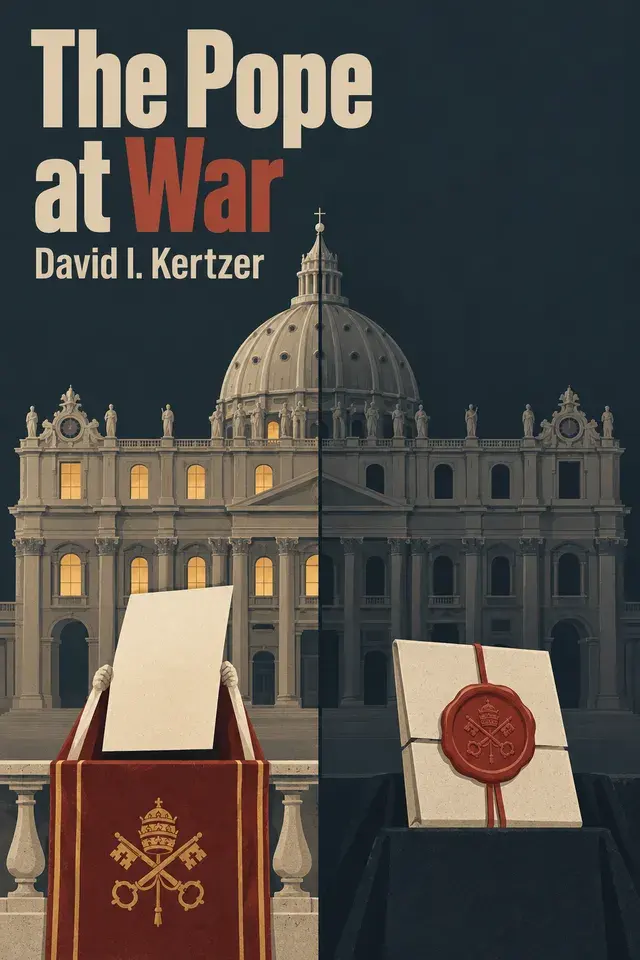
The Pope at War, by David I. Kertzer.
The Vatican succession in 1939 was also a choice between approaches. Pius XI had made resistance to Nazi influence public; his secretary of state, Eugenio Pacelli, favored preserving diplomatic access. The distinction mattered because Mussolini was drawing Italy toward Hitler, while the Church sought to protect its position in Fascist Italy. Kertzer begins with this tension between open protest and institutional diplomacy. It frames Pacelli’s election without pretending it dictated every later decision.
Hitler’s six-day visit to Rome in 1938 made the disagreement visible. Pius XI refused an audience unless Hitler changed his treatment of the Church; Hitler refused. The pope left Rome, closed the Vatican museums, and ordered the Vatican’s night lights extinguished. Addressing newlyweds, he condemned the swastika’s glorification in Catholic Rome as the sign of a cross other than Christ’s. These were public signals. Mussolini feared the pope’s criticism could weaken his alliance with Hitler, especially because many Italians distrusted Nazi claims of racial superiority. Vatican officials also worried that open confrontation could endanger the Church’s privileged place in Fascist Italy.
Pacelli’s method was different. As secretary of state, he had negotiated a concordat with Hitler’s government to protect German church institutions. Hitler violated it, but Pacelli still believed further antagonism could worsen matters. He saw Germany as a bulwark against Communism and thought Mussolini’s relationship with Hitler could be used to seek better treatment for the Church. Keeping the Duce content, on this view, preserved leverage and a diplomatic channel. This was not simple abandonment of Pius XI’s policy: Pacelli carried out the pope’s instructions while trying to soften their most confrontational language. Kertzer presents a disagreement over means, with Church security central to Pacelli’s calculations.
The conflict sharpened around Pius XI’s efforts against racism. He secretly commissioned American Jesuit John LaFarge to prepare an encyclical on racism and antisemitism. Jesuit superior general Wlodimir Ledóchowski delayed the draft. It reached the pope only in mid-January, with advice to abandon the project. Kertzer treats the initiative as real, while the delays and unfinished text limit what can be said about the encyclical’s full contents.
A separate, more immediate prospect was the address Pius XI planned for more than three hundred Italian bishops at the tenth anniversary of the Lateran Accords. He intended to address racism and Italy’s alignment with Nazi Germany. Bedridden, he was urged by Pacelli to postpone the speech, but refused. Copies were printed in case he could not deliver it himself. Pius XI died on February 10, 1939, one day before the address was planned. Later suspicions that Mussolini had hastened his death remain suspicions in Kertzer’s account, not established fact.
After Pius XI’s death, Pacelli agreed the copies should not be distributed and ordered them destroyed. The decision gives the extinguished lights a counterpart. The lights made opposition publicly visible; destroying the address kept the dead pope’s final warning from being delivered or circulated in printed form. Kertzer establishes its intended challenge, but does not supply its full wording. The contrast is between a public gesture of protest and a private decision that limited what would be heard.
The conclave chose Pacelli after Italian and German diplomats had backed him in the expectation that he would improve relations with their governments. The delay after Pius XI’s death allowed cardinals from outside Italy to arrive. Once voting began, Pacelli received thirty-two votes on the first ballot and forty on the second, two short of the required two-thirds. He was elected on the third ballot with forty-eight. Some observers saw a conciliator; others, including French cardinal Eugène Tisserant, judged him weak and too easily pressured. Fascist leaders welcomed the result, but their hopes do not establish that Pacelli shared their political aims. His diplomatic style promised continuity in the Church’s access and institutional interests.
Kertzer’s evidence-based approach is central to this account. Researchers gained access to the Pius XII archives beginning in March 2020, including thousands of pages on Vatican decisions. Kertzer compares those records with archives from Italy, Germany, France, the United States, and Britain, as well as reports from Axis and Allied envoys and Mussolini’s informants. He cautions that Vatican records alone would be incomplete. Comparing sources allows a fuller chronology and tests later claims against contemporary records. That method matters here, where public protest, private diplomacy, and the suppressed address tell different parts of the story.
Chapter 2 of 16 · 6 min · Audio & textIn the app
The Church’s Terms of Accommodation
After his election, Pius XII treated access to governments as a way to preserve room for Catholic institutions. He thanked Hitler for his congratulatory message, called for harmonious church-state relations, and stopped L’Osservatore Romano from criticizing the German government.
Chapter 3 of 16 · 7 min · Audio & textIn the app
Neutrality at War’s Opening
In the final days before war, Pius XII was still trying to settle the crisis over Danzig. His efforts included urging Poland to consider compromise, a course Cardinal Tardini warned might look like another Munich and bind the Holy See too closely to Mussolini.
Chapter 4 of 16 · 6 min · Audio & textIn the app
The Road to Italian Belligerency
By spring 1940, Germany’s victories were changing what neutrality seemed to mean. Hitler argued that Italy could not remain outside the conflict indefinitely and appealed to Mussolini’s fear that Italy would lose its standing among the great powers.
Chapter 5 of 16 · 6 min · Audio & textIn the app
Church and Country at War
Italy’s first weeks in the war exposed a gap between Mussolini’s ambitions and his army’s capacity. Hoping to share Germany’s victory over France, Italy sent troops across the Alpine frontier without a workable invasion plan.
Chapter 6 of 16 · 7 min · Audio & textIn the app
Racial Law and the New Order
By the time Italy entered the war, racial laws had already turned exclusion into part of daily life. Jews were barred from schools, professions, businesses, and public establishments.
Chapter 7 of 16 · 5 min · Audio & textIn the app
Crusade, Communism, and Mass Murder
When Germany invaded the Soviet Union in June 1941, Italian Catholic newspapers and church leaders gave the campaign a religious cast. One paper predicted the Cross would again appear above the Kremlin.
Chapter 8 of 16 · 10 min · Audio & textIn the app
Neutrality Under Growing Pressure
By late 1942, the military outlook that had once seemed to favor the Axis was changing. Allied advances in North Africa, the defeat at El Alamein, and the encirclement of German forces at Stalingrad made Italy’s vulnerability harder to ignore.
Chapter 9 of 16 · 7 min · Audio & textIn the app
Rome and Mussolini’s Fall
The Allied landing in Sicily on July 10 brought Italy’s military weakness into sharp view. As Allied forces advanced and Italian defenses failed, Mussolini’s authority faltered.
Chapter 10 of 16 · 6 min · Audio & textIn the app
Armistice and German Occupation
The armistice was signed before Italy was ready to carry it out. The agreement depended on coordination: the Allies planned to land at Salerno while an airborne force went to Rome, where Italian troops were expected to secure airfields.
Chapter 11 of 16 · 6 min · Audio & textIn the app
Rome’s Jews and the Roundup
In October 1943, German authorities moved from threats and individual seizures to a coordinated operation against Rome’s Jews. On October eleventh, Berlin ordered the immediate and complete elimination of Jewry in Italy.
Chapter 12 of 16 · 9 min · Audio & textIn the app
Shelter, Reprisal, and Liberation
By early 1944, shelter inside a religious house offered no guarantee of safety. On February 3, about one hundred Republican Fascist policemen broke into the basilica of St.
Chapter 13 of 16 · 6 min · Audio & textIn the app
The Church After Liberation
With Rome liberated, Pius XII became more direct about the political future he wanted for Italy. Allied dignitaries sought private audiences with him, while he received thousands of Allied officers and men at daily public audiences.
Chapter 14 of 16 · 5 min · Audio & textIn the app
The Axis Collapse and Papal Defense
By April 1945, Allied forces had broken through the German line in northern Italy, while resistance leaders called for an insurrection. Partisans seized strategic points in Milan as Fascist forces fought back.
Chapter 15 of 16 · 6 min · Audio & textIn the app
Rewriting Italy’s Wartime Memory
In Kertzer’s account, Italy’s postwar history was being rewritten before the rubble had been cleared. The public story celebrated a heroic Resistance.
Chapter 16 of 16 · 6 min · Audio & textIn the app
Judging Pius XII’s Silence
Kertzer’s final judgment resists an easy label. Pius XII was not simply Hitler’s ally: the Nazi regime was hostile to the Church and sought to weaken its influence.
Chapter 1 of 16 · 6 min · Audio & text: The Crisis Before the Conclave
Wiseley supports reading and listening to summaries in the app.
Continue in WiseleyAbout David I. Kertzer
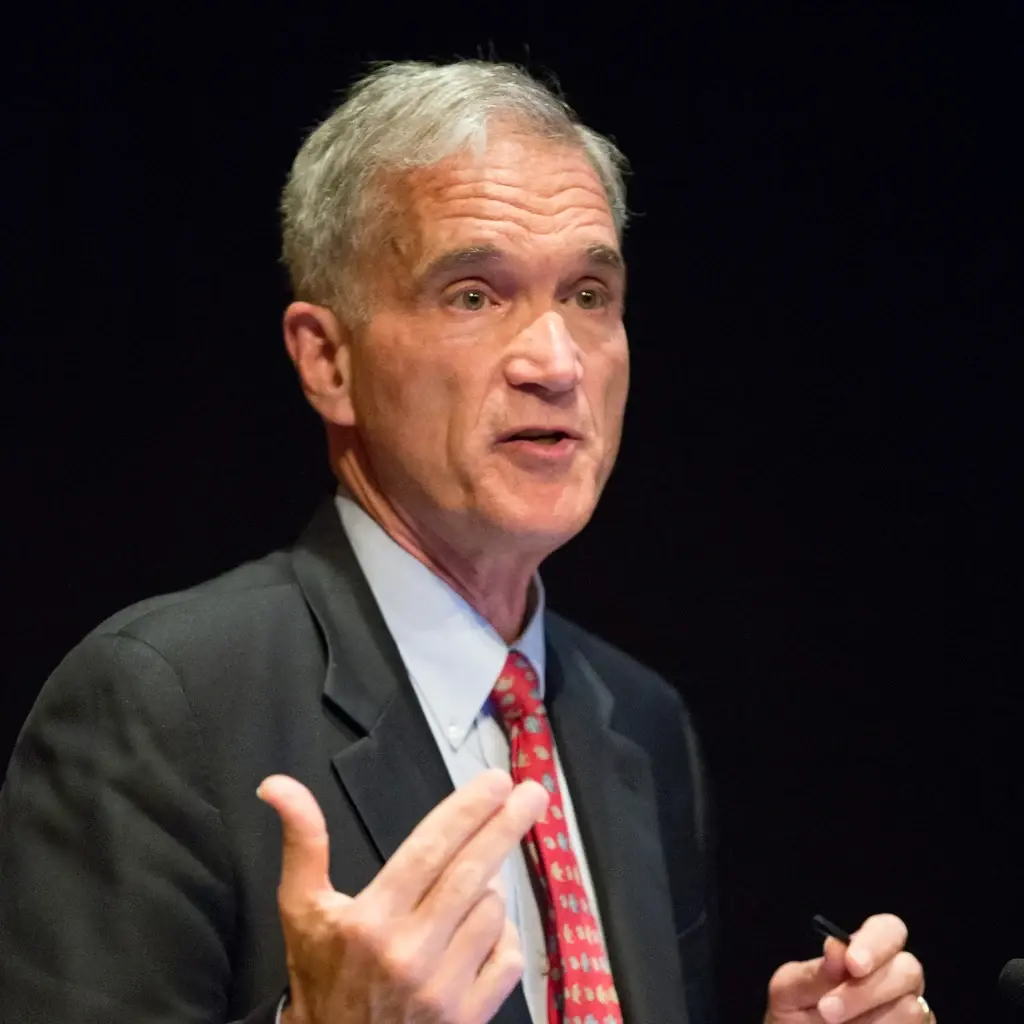
David I. Kertzer is an American anthropologist and historian of modern Italy. “The Pope at War” explores how Pius XII balanced church interests, peace efforts, and political caution as Fascist Italy joined Nazi Germany.
Explore more books by David I. Kertzer