What you'll learn
Key ideas from The Incredible Journey of Plants
These ideas compress the book's argument without treating the author's view as settled fact. Use them as an orientation before reading the full work or listening in Wiseley.
Surtsey’s seeds arrived by several routes, but arrival did not guarantee establishment, and marine erosion is shrinking the island.
Vegetation returned at Chernobyl, but regrowth did not establish that radioactive contamination had disappeared.
Senecio’s British adaptation depended on fertile hybrids that allowed selection to assemble traits suited to colder conditions.
Ornamental cultivation carried water hyacinth into waterways, where dense mats harmed aquatic life, livelihoods, and navigation.
A giant seed’s reserves can help seedlings compete near a parent in poor soil.
Teerlink’s archive showed that some seeds remained viable after more than two centuries, although germination and survival varied by species.
Campbell Island’s spruce preserves a late-1965 carbon-14 peak probably linked to Northern Hemisphere nuclear tests.
Wind and water provide dependable, low-cost dispersal, while animal transport can be more effective but may require rewards or create dependence.
Inside The Incredible Journey of Plants
Read the first chapter in full here. The other 7 continue in the Wiseley app.
Chapter 1 of 8 · 5 min · Audio & text
How Plants Travel Without Walking
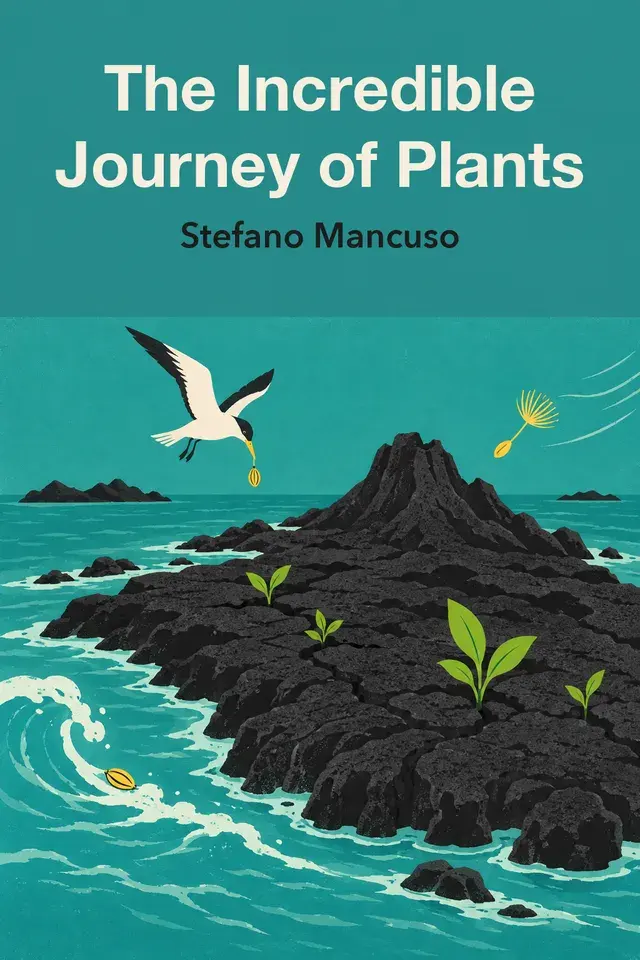
The Incredible Journey of Plants, by Stefano Mancuso.
We usually recognize movement when an animal leaves one place and travels to another. By that standard, a rooted plant seems immobile. Mancuso asks us to use a broader distinction: locomotion is travel by an individual, while movement can also happen through growth and bodily change. A plant generally cannot relocate from its birthplace during its lifetime, but it grows and changes as it develops. Its larger journey unfolds across generations: spores, seeds, and other propagules carry its life into new ground. A plant does not have to walk for its population to migrate.
For Mancuso, that longer movement makes plants pioneers. They reach difficult or empty places and can prepare conditions for other life to follow. A former army depot in Florence turns this idea into an urban scene. After the military left, plants began entering spaces that had seemed sealed by walls, asphalt, and metal.
Within two years of the depot’s evacuation, more than twenty species covered its perimeter wall, among them capers, snapdragons, pellitory, and ferns. Trees of heaven and princess trees grew fast enough to damage the wall. A fig emerged from a crack in the asphalt, while morning glories and burdock spread over the abandoned site. These plants had not moved as animals do. Their seeds had reached the depot, and the plants grew where they landed.
Fifteen years after abandonment, only a few structures still resisted plant growth; even a large metal cistern was showing signs of surrender. The speed matters. A place that looked inhospitable could be recolonized in a few years, and plant growth gradually altered the structures left behind. The depot shows how easily plants can take hold when people stop maintaining a site.
Surtsey offered a different kind of pioneer story. An underwater eruption created a new island of sterile volcanic ash, pumice, sand, and lava. Because the island was protected as a nature reserve, scientists could observe colonization with limited human interference. They could follow plants reaching bare ground over time, rather than infer the sequence from a landscape already filled with life. The record began quickly, but the island itself is temporary: marine erosion is steadily shrinking it.
The first vascular plant recorded on Surtsey was Arctic sea rocket, in 1965. Mancuso describes sea rockets as halophytes, plants with adaptations that let them grow in salty conditions using seawater. Their seed pod divides the risk of travel. One part falls and buries itself near the mother plant. The other half is swept out to sea. Its seeds can float for years and remain viable until currents deposit them on a distant beach. Salt tolerance and seeds that can travel by sea help explain why sea rocket arrived so early.
Other seeds reached Surtsey by water, wind, and birds. Snow buntings carried viable seeds through their digestive systems. Marine birds such as gulls sometimes fed on plants in distant arid zones and carried their seeds to the island. Geese also carried a variety of seeds in their droppings, coated with natural fertilizer. A more surprising carrier was the capsule containing skate eggs, which transported seeds of herbaceous plants. Of the vascular plant species recorded on the island, the book attributes nine percent of arrivals to wind, twenty-seven percent to the sea, and sixty-four percent to birds. The routes explain how seeds arrived; they do not, by themselves, show whether a plant became established.
That distinction is visible in the island’s record. A tea-leaved willow became Surtsey’s first recorded tree in 1998. By 2008, scientists had recorded sixty-nine plant species, but considered only thirty established. Two to five additional species were still arriving each year. Arrival is one step in colonization; a record of arrival does not mean that a species has taken lasting hold.
Surtsey’s succession can be watched, but not preserved indefinitely. Marine erosion had reduced the island to less than half its maximum area by 2012, and the process is expected eventually to erase it. The Florence depot and Surtsey show the same central principle in different settings: plants spread through growth and reproduction across generations. An individual may remain rooted while its descendants reach and sometimes establish themselves in new ground.
Chapter 2 of 8 · 6 min · Audio & textIn the app
Recovery, Cleanup, and Remembrance
Chernobyl and Hiroshima show three different things a plant can do after catastrophe: return to a damaged landscape, take up some of its contamination, or become a witness people choose to remember. These outcomes can overlap, but one does not prove the others.
Chapter 3 of 8 · 6 min · Audio & textIn the app
From Introductions to Invaders
Native and invasive can sound like permanent opposites. But a plant’s origin and its present sense of belonging are different parts of its history.
Chapter 4 of 8 · 7 min · Audio & textIn the app
Water Routes and Ocean Journeys
Water offers a route for plants, but a floating mat in a lake and a seed crossing an ocean pose different problems. The water hyacinth’s story follows a documented invasion after people prized the plant as an ornament.
Chapter 5 of 8 · 4 min · Audio & textIn the app
Parental Care in Enormous Seeds
The coco de mer grows on the Seychelles islands of Praslin and Curieuse. Its seeds can weigh about thirty-seven pounds, an extraordinary size for something poorly suited to being carried away.
Chapter 6 of 8 · 7 min · Audio & textIn the app
Plant Life Across Deep Time
After following plants across space, the journey turns to time. But plant survival can mean several different things.
Chapter 7 of 8 · 6 min · Audio & textIn the app
Isolated Trees as Living Records
A tree standing alone in a harsh place can preserve several kinds of history. Its rings may record a distant human event; its survival may reflect both its biology and how people treated it.
Chapter 8 of 8 · 7 min · Audio & textIn the app
Dispersal After Partners Disappear
A seed’s journey is shaped by a basic survival problem: plants produce many seeds, but only a small fraction become established. The choice of carrier affects the odds.
Chapter 1 of 8 · 5 min · Audio & text: How Plants Travel Without Walking
Wiseley supports reading and listening to summaries in the app.
Continue in WiseleyWhat The Incredible Journey of Plants is about
How do rooted organisms travel, survive upheaval, and persist across centuries? Stefano Mancuso answers through histories of island colonization, escaped plants, ocean journeys, ancient seeds, solitary trees, and lost animal partners. These cases clarify how dispersal works, why resilience depends on relationships, and how human transport or ecological change can unsettle them.
About Stefano Mancuso
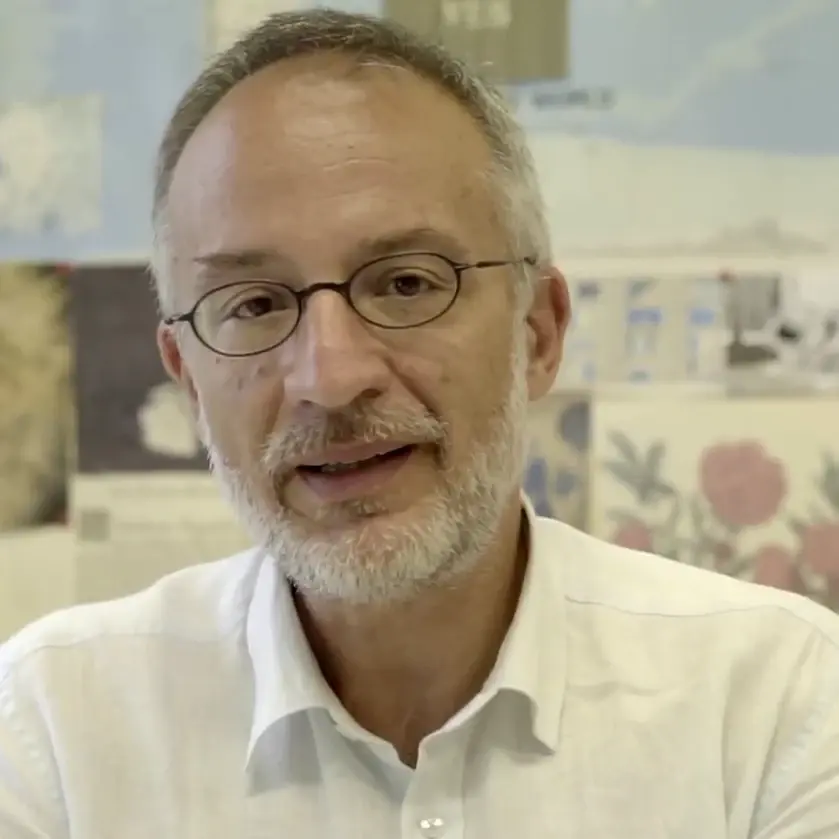
Stefano Mancuso is an Italian botanist. “The Incredible Journey of Plants” explores how rooted organisms travel, survive upheaval, and persist across centuries.
Explore more books by Stefano Mancuso