What you'll learn
Key ideas from The Black Jacobins
These ideas compress the book's argument without treating the author's view as settled fact. Use them as an orientation before reading the full work or listening in Wiseley.
James locates revolutionary agency in enslaved people while showing that leaders acted within forces they could not create alone.
The fight for colonial representation excluded enslaved people and free people of color, exposing the limits of revolutionary claims to universal rights.
The Convention gave national legal force to freedom already won through San Domingo’s uprising and Sonthonax’s local abolition decree.
Compensation and protections coexisted with movement restrictions and compelled plantation labor.
James locates Toussaint’s strategic failure in leaving the laborers who had to fight unclear about the expedition’s aims and the danger to their freedom.
Independence secured a break with France, while Dessalines’s massacre turned revenge into a moral and political injury James judged damaging to Haiti.
James argues that locally directed land and production can reduce vulnerability to sugar dependence and external control.
Inside The Black Jacobins
Read the first chapter in full here. The other 11 continue in the Wiseley app.
Chapter 1 of 12 · 6 min · Audio & text
People Make Their Own Freedom
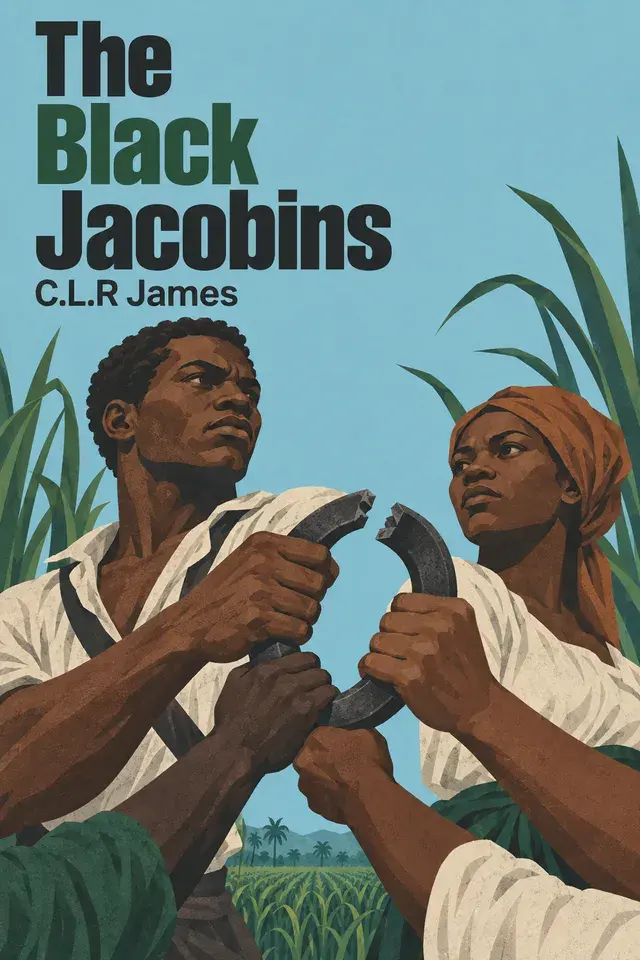
The Black Jacobins, by C.L.R James.
James begins with a question of agency: who made the revolution in San Domingo? His answer is the enslaved people themselves. He wanted Africans and people of African descent to appear as actors who shaped history, not merely as people acted upon. Leaders mattered, but they could not create the forces that made a mass movement possible. James gives Toussaint L’Ouverture exceptional importance while rejecting the idea that Toussaint alone made the revolution. In his formulation, the revolution made Toussaint as well as being shaped by him.
That view rests on a method. James asks historians to connect visible events and powerful individuals to the economic and social conditions beneath them. Economic forces shape society and political choices, but people also react to and change their surroundings. Revolution, in this account, is an eruption of pressures that have accumulated over time. This approach avoids explaining change through a leader’s personality alone, while also avoiding the claim that people simply obey economic forces.
The book’s introductory framing places the opening for revolt within the upheaval of the French Revolution. Its language of liberty and equality clashed with a colony founded on racial subordination. At the same time, disputes weakened the colonial order. Enslaved people did not create those contradictions or the crisis in France, but they acted within the opening those conditions made possible.
James also offers an account of how enslaved people could act together. He emphasizes the discipline and unity developed through plantation production, treating the collective organization of workers as one way to understand the scale of mass action. His model gives shared experience and coordination a historical role. The Introduction locates colonial conflict among groups squabbling—brown with white, middle class with upper class, French with colonial—while the Preface separately describes enslaved people trembling in hundreds before a single white man and then becoming a people able to organize and defeat powerful European nations.
James’s own foreword later qualifies how broadly that model should be applied. He says Haitian historian Fouchard’s work establishes that it was not so much the plantation slaves James and his political associates had emphasized, but the maroons—people who escaped slavery and made lives in mountains or forests—who led the revolutions and created the foundation of the Haitian nation. Research on southern Haiti also describes rural enslaved people gathering in the mountains in search of independence and, after returning to plantations, demanding two or more days off. These accounts broaden the explanation of revolutionary agency beyond plantation-wide organization alone.
The Prologue traces the colonial system further back, to the Spanish conquest of Hispaniola. The Spanish renamed the island and subjected its Indigenous population to mine labor and other violence, alongside disease and famine. The account estimates that the population fell from about half a million people, perhaps as many as a million, to 60,000 within fifteen years. Those starting figures are a range, not a precise count. Las Casas appealed against the enslavement of Indigenous people. Spain later abolished the repartimientos, or forced labor arrangements, in law, but colonial agents continued them in practice.
The attempt to stop Indigenous destruction became entangled with the expansion of African enslavement. Las Casas proposed importing Africans to spare the Indigenous population. In 1517, Charles the Fifth authorized the export of 15,000 enslaved people to San Domingo. The Prologue connects this authorization to the beginning of the American slave trade. A measure presented as protection for one population thus accompanied a new system of coercion for another.
French settlement and commercial agriculture extended that system in the island’s west. Frenchmen settled on Tortuga in 1629, amid competition with English and Dutch arrivals. From there, the French moved to San Domingo, and the Treaty of Ryswick in 1695 recognized their rights to the western part of the island. When Spanish forces killed cattle in an effort to dislodge French settlers, the colonists turned to other crops. They cultivated cocoa, then indigo and cotton; sugar cane was already familiar to them.
Coffee cultivation began in 1734. Fertile land and a good French market encouraged its expansion, and the colonists needed more labor. The colony also brought white engagés, who served a term and were then freed. The account says white workers could not endure the climate, while enslaved Africans were imported in growing numbers. Over time, millions were brought from Africa. The sequence from cocoa to indigo and cotton, and then coffee, shows how commercial opportunity intensified demand for coerced labor.
This colonial history supplies the material setting for James’s argument. The growth of trade did not itself dictate a revolution, and no leader could produce one alone. It built a coercive order and a society full of tensions. When authority weakened in a wider political crisis, enslaved people seized the opening and made freedom a revolutionary force. James’s account locates that agency firmly with them, while the evidence he discusses leaves the precise forms of their organization open to historical qualification.
Chapter 2 of 12 · 7 min · Audio & textIn the app
Property, Terror, and Resistance
James presents plantation slavery as an economic arrangement that turned human beings into property while depending on their continuing intelligence and effort. At sale, enslaved people were examined and branded; their welfare was subordinated to owners’ claims and calculations.
Chapter 3 of 12 · 7 min · Audio & textIn the app
Prosperity Fractures the Colony
By the eve of the French Revolution, San Domingo’s prosperity had made it central to commerce while intensifying conflicts within the colony. After 1783, production grew rapidly; by 1789, it had nearly doubled.
Chapter 4 of 12 · 8 min · Audio & textIn the app
Revolt Forces the Question
James shifts from the colony’s divided politics to the action enslaved people took themselves. He argues that the rising of 1791 was prepared through collective experience, not simply sparked by one leader or a sudden burst of anger.
Chapter 5 of 12 · 6 min · Audio & textIn the app
Abolition Changes the War
The Convention’s abolition decree can be mistaken for the beginning of freedom in San Domingo. James presents it instead as formal recognition of a freedom enslaved people had already fought to win.
Chapter 6 of 12 · 9 min · Audio & textIn the app
Toussaint’s Power and Its Limits
Toussaint’s authority rested on more than his command of troops. James traces it to an army led by formerly enslaved people and to laborers who feared that freedom could still be taken away.
Chapter 7 of 12 · 11 min · Audio & textIn the app
Victory, Autonomy, and Civil War
The British evacuation showed how much authority Toussaint had won, but it also raised a harder question: could San Domingo defend its freedom while remaining tied to France? His answer combined military pressure, reconciliation, and careful diplomacy.
Chapter 8 of 12 · 7 min · Audio & textIn the app
Reconstruction Under Command
Once military resistance had given Toussaint room to govern, the central problem was making freedom durable in a colony whose fields and institutions had been shattered. James presents Toussaint’s answer as a program to restore production, which Toussaint treated as a material guarantee of freedom.
Chapter 9 of 12 · 7 min · Audio & textIn the app
The Cost of Political Ambivalence
By the time Bonaparte’s expedition threatened San Domingo, Toussaint faced a question beyond how to command an army: how to make people understand what they might have to defend. C.L.R.
Chapter 10 of 12 · 10 min · Audio & textIn the app
Invasion and the Failure to Mobilize
The French expedition opened with a contest over who could define its purpose. Bonaparte presented the force as a defender of liberty and a revolutionary order.
Chapter 11 of 12 · 10 min · Audio & textIn the app
Popular War Makes Independence
After Toussaint’s removal, the French tried to make disarmament a condition of restoring order. But for people who had won their freedom by fighting, surrendering weapons was not a neutral demand.
Chapter 12 of 12 · 7 min · Audio & textIn the app
The Caribbean After Toussaint
The end of the Haitian war does not close, for James, the history it set in motion. He places Haiti within a Caribbean pattern formed by plantation society and recurring struggles over who can shape a nation.
Chapter 1 of 12 · 6 min · Audio & text: People Make Their Own Freedom
Wiseley supports reading and listening to summaries in the app.
Continue in WiseleyWhat The Black Jacobins is about
C.L.R. James traces how enslaved people in San Domingo turned colonial crisis into a struggle for freedom and independence, with Toussaint Louverture as an extraordinary but historically situated leader. The book asks how emancipation was organized, contested, and defended, and connects that history to later Caribbean debates about political agency and self-determination.
About C.L.R. James
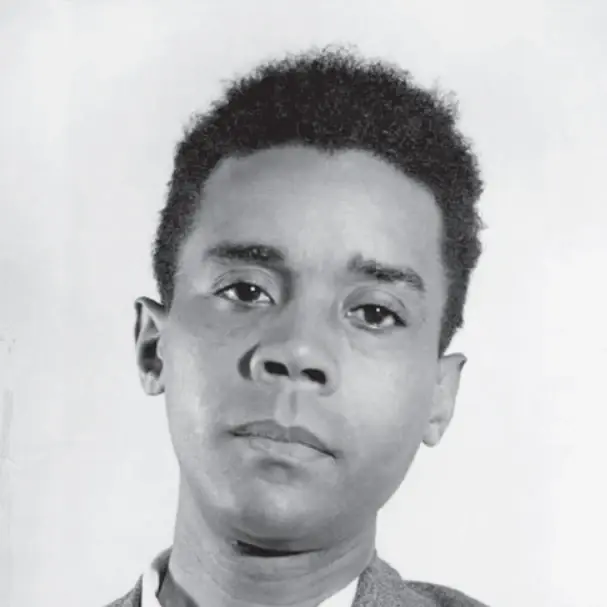
C.L.R. James was a Trinidadian historian, journalist, and political thinker. “The Black Jacobins” explores how enslaved people in Saint-Domingue, led by Toussaint Louverture, carried out the Haitian Revolution.
Explore more books by C.L.R. James