
What you'll learn
Key ideas from The Art of Clear Thinking
These ideas compress the book's argument without treating the author's view as settled fact. Use them as an orientation before reading the full work or listening in Wiseley.
The ACE Helix links assessment, choice, and execution, then turns consequences into material for the next assessment.
Nonlinear relationships make equal input changes produce unequal outcomes, including accelerating growth, diminishing gains, long tails, and abrupt thresholds.
Usable intuition connects conceptual understanding, conditional heuristics, and repeated practice so a pilot can act quickly while adapting to changing conditions.
Connected concepts and cause-and-effect relationships make facts more useful when conditions change.
Expected value weighs possible gains and losses by their probabilities, so a serious possibility is not the same as a likely outcome.
Generating options one prioritized effect at a time can reveal useful combinations before premature judgment narrows the search.
Stress may support simple, rehearsed actions while narrowing attention and disrupting flexible thinking.
Scheduling important work, delegating lower-priority demands, removing needless tasks, and preserving spare capacity protect attention.
Inside The Art of Clear Thinking
Read the first chapter in full here. The other 7 continue in the Wiseley app.
Chapter 1 of 8 · 9 min · Audio & text
Form the Right Mental Model
The Art of Clear Thinking, by Hasard Lee.
When something goes wrong, the visible problem can seem to demand an immediate fix. But acting before understanding it can change the situation in ways that make the real problem harder to solve. Hasard Lee’s starting point is a decision cycle called the ACE Helix: Assess, Choose, Execute. Assessment comes first because the quality of a choice depends on how well you understand what is happening. Execution then creates new consequences and information, so the next decision begins with another assessment.
A mental model is a working picture of the situation: what is happening, which details matter, and how the parts affect one another. It does not need to explain everything. It needs to be accurate enough to guide a choice and flexible enough to change when new evidence appears. Lee argues that people weaken their decisions when they skip this step, mistake one signal for the whole problem, or lose sight of how their actions affect the larger system.
Assessment is not the same as collecting every possible detail. In a cockpit, a pilot may have instrument readings, outside conditions, vibration, physical sensations, radio calls, alarms, and smells to process. The task is to compare useful information in sequence rather than fixate on one source or try to handle everything at once. This matters anywhere a decision maker has more information than time: a clear picture depends on finding the signals that explain the situation, not merely noticing the loudest one.
A brief pause can make that comparison possible. In F-16 training, pilots wound a small cockpit clock before deciding. The simple physical task occupied their hands for a few seconds and interrupted the impulse to reach for another control. It gave them a moment to keep flying, assess the problem, and consider what an intervention might change. The pause was not a promise that waiting would solve the problem. It was a way to create room for judgment before acting reflexively.
Air Force emergency exercises called stand-ups gave this pause a practical setting. Students faced tense, hypothetical situations where several responses might be reasonable. They had to maintain control of the aircraft while analyzing the problem, then consider what could follow from each response. A rash early choice could lead to an unsolvable problem fifteen minutes later. The point was to practice thinking while keeping the larger situation in view, not to memorize a single answer for every emergency.
Air France Flight 447 shows why that distinction matters. During a storm, ice blocked the aircraft’s pitot tubes, which supply airspeed readings. The autopilot disconnected when the data became invalid. At that moment, the aircraft was still level at 35,000 feet, with no mechanical malfunction. Lee’s account says that if Bonin and Robert had done nothing, the plane would have continued straight ahead, the pitot heating would have melted the blockages within a few minutes, and the trip would have continued as planned. Blocked airspeed readings alone had not made the aircraft unflyable.
The airspeed indication needed to be checked against other information. Comparing it with ground speed, altitude, attitude, and climb rate could have helped show that the airspeed reading was unreliable. Instead, one copilot immediately pulled back on the control stick, sending the plane into a steep climb. The climb rapidly reduced airspeed and changed the situation the crew needed to assess. The lesson is not that taking action is always wrong. It is that this action began before the crew had formed a sufficiently accurate picture of the problem.
The crisis then involved more than one instrument and one pilot’s response. Another copilot recognized the steep climb and the danger of a stall, but his backup role, fatigue, limited recent flying, and lack of visibility into the other pilot’s side-stick inputs made it harder to establish what was happening. He tried to use avionics to isolate the problem, but the standby pitot tube was also blocked, and the troubleshooting added confusion. The aircraft stalled, yet the pilots did not understand the stall or its cause. When the captain returned, he entered a disordered cockpit and learned only late in the crisis that the stick had been held back. The pilots’ changing or conflicting inputs repeatedly disrupted their picture of the aircraft.
Lee identifies the central failure as none of the pilots forming a correct mental model in time. That conclusion sits within a chain of contributing conditions: bad airspeed data, disabled flight-envelope protection, crew roles and experience, fatigue, confusing controls, and actions that changed the aircraft’s state. The aircraft still had altitude to recover after the stall began, but the crew did not recognize what recovery required. The account therefore treats pitot icing as a trigger, not a complete explanation for the crash. It also cautions against reducing a multi-factor event to one person’s mistake.
A very different example comes from an F-16 maximum-speed test. The older, heavily used jet began shaking near Mach 1.6, and there was no flight-specific data to settle what the vibration meant. The pilot checked the heads-up display against a standby gauge, inspected the sideslip indicator, and tried to center the rudder. Those checks helped test possible instrument error and misalignment. The shaking continued to worsen, and it threatened structural damage; ejecting at that speed was outside the safe ejection envelope.
The pilot also drew on a mentor’s experience. The mentor had described buffeting in a clean F-16 near Mach 1.6 that could ease if the aircraft passed through that speed range, as changing resonance dampened the wing’s flexing. This offered a possible explanation, but not proof that the same response would work in this test. The pilot weighed slowing down against accelerating, with trade-offs in control inputs, dive angle, deceleration time, and stress on the wings. With little time to assess every option, he kept the existing settings and gradually increased the dive to pass through the suspected vibration range without undue control stress.
The vibration worsened as the aircraft accelerated, so the pilot had reason to doubt his choice. At Mach 1.9, the jet smoothed out. The result supported the mentor’s hypothesis in that flight, but the pilot could not know that outcome when he chose to accelerate. This episode does not turn pushing through vibration into a general rule. It shows how cross-checking, a possible explanation from prior experience, and a cautious test can contribute to a decision under uncertainty, while consequences remain the final evidence about how the situation is developing.
Together, these cases clarify what the first turn of the ACE Helix is for. Assessment builds a usable picture from several sources, preserves awareness of the larger system, and leaves room for uncertainty. Choosing and executing follow from that picture, but they do not end the work: their effects become information for the next assessment. A sound decision process does not require perfect knowledge. It requires a mental model that is accurate enough to act on and responsive enough to change as the situation changes.
Chapter 2 of 8 · 10 min · Audio & textIn the app
Recognize Nonlinear Effects
Many relationships do not change in proportion to their inputs. A small change can have little effect in one part of a system, then a large effect somewhere else.
Chapter 3 of 8 · 10 min · Audio & textIn the app
Turn Practice Into Intuition
Useful intuition is built, not bestowed. It develops when someone understands how a situation works, practices applying that understanding, and learns which cues can guide a fast decision.
Chapter 4 of 8 · 11 min · Audio & textIn the app
Teach Concepts That Transfer
A training program has to turn knowledge into performance people can use in changing conditions. When F-35 training moved toward full combat readiness, instructors faced two tasks: prepare new pilots quickly and help experienced pilots adapt what they knew to a very different aircraft.
Chapter 5 of 8 · 13 min · Audio & textIn the app
Forecast With Useful Precision
A forecast is a bet on what a choice may produce. In familiar situations, experience can make the comparison feel immediate.
Chapter 6 of 8 · 10 min · Audio & textIn the app
Generate Better Alternatives
Creativity is often treated as a flash of inspiration. Hasard Lee presents it instead as a kind of problem solving: identify what needs to happen, then look for ways to make it happen.
Chapter 7 of 8 · 10 min · Audio & textIn the app
Regain Focus Under Stress
Stress can prepare the body to act while making it harder to think clearly. Hasard Lee describes a danger response that raises heart rate and breathing and sends energy toward immediate action.
Chapter 8 of 8 · 11 min · Audio & textIn the app
Prioritize, Decide, Reassess
Clear action depends on two judgments: what deserves attention, and when additional thinking is no longer worth the delay. Goals help distinguish importance from urgency.
Chapter 1 of 8 · 9 min · Audio & text: Form the Right Mental Model
Wiseley supports reading and listening to summaries in the app.
Continue in WiseleyWhat The Art of Clear Thinking is about
Hasard Lee examines how to make decisions when information is incomplete and pressure is high. He develops a cycle of assessing, choosing, acting, and adapting, then shows how nonlinear effects, practice, forecasting, creativity, stress management, and prioritization shape judgment. The examples connect fighter-pilot experience to choices in other fields.
About Hasard Lee
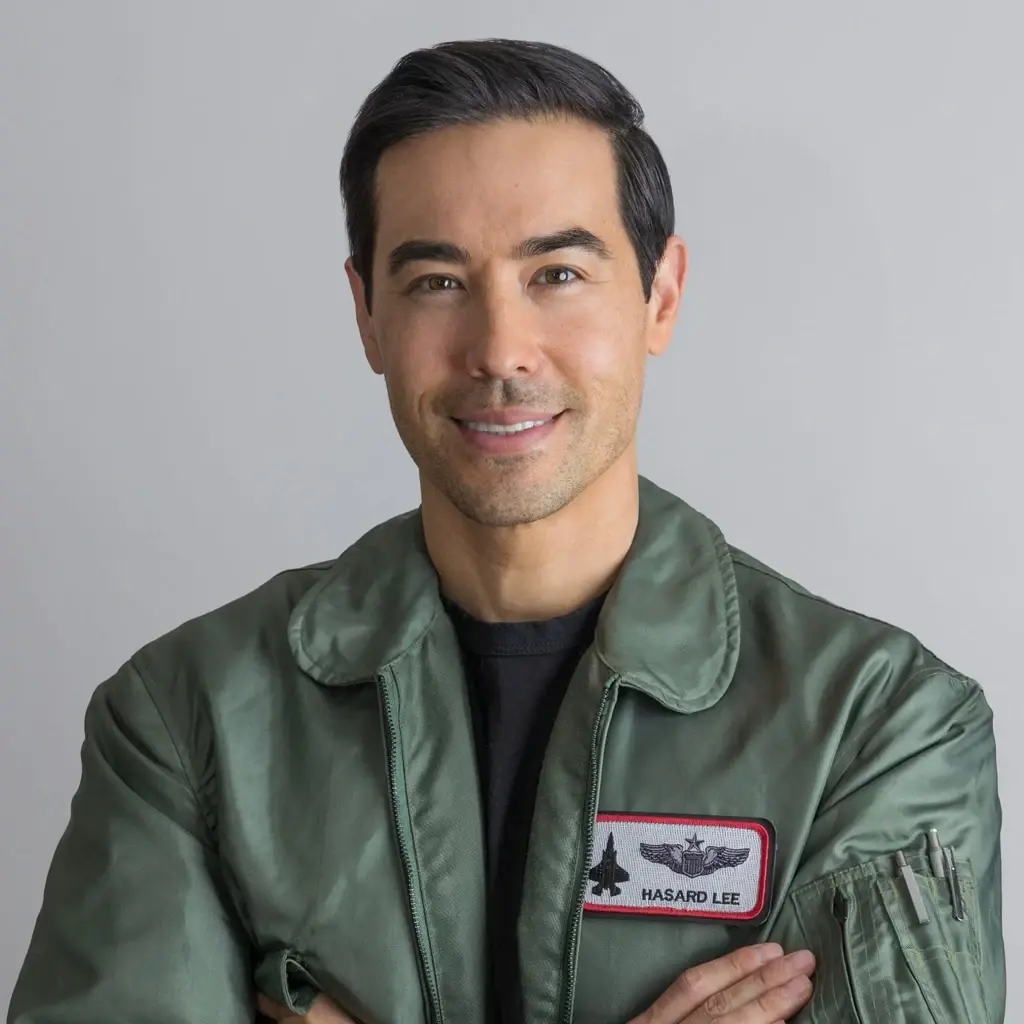
Hasard Lee is an American fighter pilot and author. “The Art of Clear Thinking” explores how to make decisions when information is incomplete and pressure is high.
Explore more books by Hasard Lee