What you'll learn
Key ideas from The Adventures of Huckleberry Finn
These ideas compress the book's argument without treating the author's view as settled fact. Use them as an orientation before reading the full work or listening in Wiseley.
Huck uses staged evidence—a bloodied scene, a weighted sack, and a meal trail—to misdirect the search for his supposed body.
The Grangerford-Shepherdson feud persists after its cause is forgotten, sustained by inherited retaliation and a code that mistakes violence for courage.
The king’s camp-meeting story and the duke’s theatrical billing manipulate audiences, while the duke’s false-reward notice remains a plan.
The impostors attach false kinship to Peter’s real death, a genuine inheritance letter, and the town’s sincere grief.
Remembering Jim’s care leads Huck to tear up his report and choose Jim’s rescue.
Miss Watson freed Jim in her will before the rescue, but he was still captured, chained, and confined.
Huck chooses the Territory over adoption and civilization.
Inside The Adventures of Huckleberry Finn
Read the first chapter in full here. The other 11 continue in the Wiseley app.
Chapter 1 of 12 · 6 min · Audio & text
Huck Against Respectability
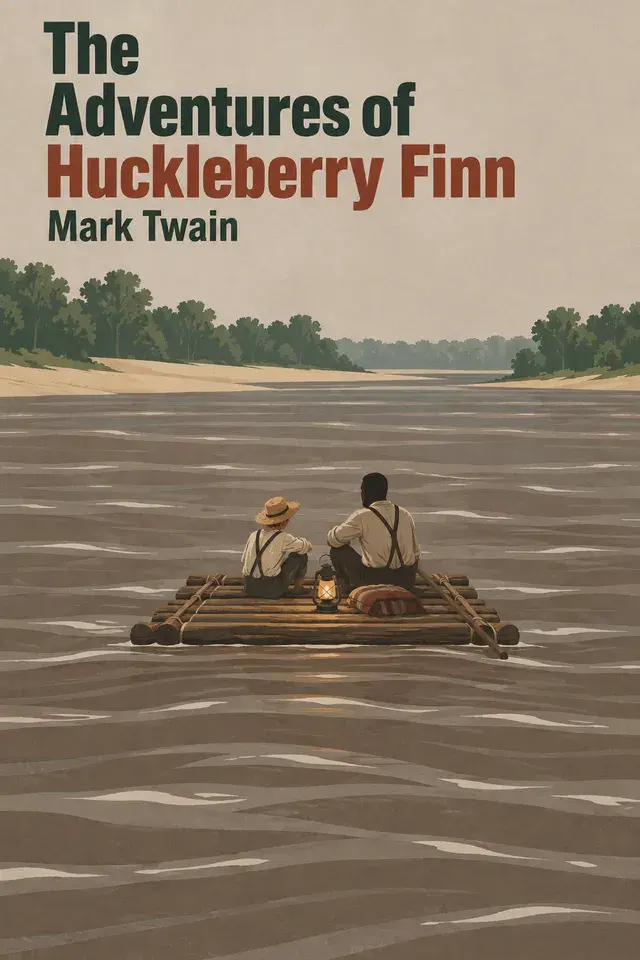
The Adventures of Huckleberry Finn, by Mark Twain.
Huck begins by setting his story beside Tom Sawyer’s earlier one. He says Tom’s book was mostly true, though it stretched things, and observes that almost everybody lies sometimes. Huck’s own account is plainspoken, but not presented as a perfect record from an all-knowing narrator. He notices what people say, compares it with what happens, and admits when he does not understand or believe them. A note by Twain also explains that the characters’ dialects are deliberately distinct, rather than different attempts at one uniform voice.
The Widow Douglas takes Huck in and tries to make him respectable. Her household has clean clothes, set mealtimes, prayer, lessons, and rules about how to behave. Even the food feels wrong to him: he prefers things mixed together to dishes kept separate and served by routine. He returns to the Widow’s home when Tom promises he can join a robber gang if he behaves, but that does not mean he has embraced the household’s idea of civilization. Over time, Huck gets used to some of its ways, while still finding indoor life and its expectations confining.
Religious instruction meets the same practical scrutiny. Huck’s interest in the story of Moses fades when he learns Moses is dead. Miss Watson’s picture of heaven does not attract him; he would rather stay with Tom. When told to pray for what he wants, Huck tests the idea against material needs: once he gets a fish-line, but no hooks, even after trying for the hooks three or four times. The Widow explains that prayer brings spiritual gifts, including helping others. Huck finds the teachings of the Widow and Miss Watson hard to reconcile, and he cannot see how the Widow’s teaching would leave him any better off himself. He often keeps his objections to himself because he expects speaking up to cause trouble without doing good.
Huck also spots a contradiction in the standards adults apply to him. The Widow disapproves of his smoking, yet she takes snuff. Huck cannot see why one tobacco habit is condemned while the other is accepted. The point is not that he has worked out a general argument against every rule. Rather, he judges rules against the behavior he sees, and he is quick to notice when respectable people do not seem to follow their own standards.
Tom brings a different kind of authority: the rules of adventure books. He forms a gang whose oath demands loyalty and severe revenge, and the boys treat its language as grand. But when they discuss what the gang will actually do, the rules prove hard to make sense of. Tom says they will rob people and take captives for ransom, though he cannot explain what ransom means. When another boy questions the point of keeping captives and the work of feeding and guarding them, Tom insists that the books’ procedure must be followed. The episode shows the difference between Tom’s borrowed ideas of adventure and Huck’s attention to practical consequences.
That difference sharpens during the gang’s supposed raid on a caravan of travelers. The boys reach a Sunday-school picnic instead, take food and small items, and run when the teacher intervenes. Tom explains the mismatch by saying enchantment turned the travelers and animals into children at the picnic. Huck questions why genies would obey someone rubbing a lamp, then tests the claim with a lamp and ring. No genies appear. He decides that Tom has invented the genies, although he thinks Tom may believe the caravan story himself. Huck’s test is small and concrete: rather than accept an explanation because it comes from a book or a friend, he tries it against what he can observe.
Pap’s return makes the conflict over authority dangerous. Huck has been relieved during his father’s long absence because Pap used to beat him. When tracks in the snow suggest Pap is back, Huck gives Judge Thatcher control of his money. Pap then mocks Huck’s better clothes and schooling, treats literacy as an insult to his own standing, knocks away Huck’s book, tears up a school reward, and demands money. Huck’s education is not simply a disagreement between father and son; Pap uses his power to threaten and punish him.
The Widow and Judge Thatcher try to secure guardianship for Huck, but a new judge is unwilling to separate father and child, so they abandon the effort. The judge then takes Pap into his home and tries to reform him. Pap makes an emotional promise to change and signs a temperance pledge, but soon trades his new coat for liquor and ends up badly injured. The judge’s kindness and advice do not stop Pap’s return to drinking or protect Huck from his father’s control. Pap later catches Huck, takes him by skiff to a remote cabin, locks him in, and beats him.
Huck’s response to the cabin is mixed. He likes its lazy, unstructured days better than the Widow’s schedule of washing, meals, study, and correction. He comes to like being where he is, except for the beatings. His preference for an unstructured life is not a preference for abuse. The distinction establishes the tension at the heart of Huck’s early story: he resists adult rules that ignore his experience, while Pap turns the authority of a parent into coercion.
Chapter 2 of 12 · 6 min · Audio & textIn the app
Escape, Refuge, and Partnership
Huck’s escape begins with a problem he solves by carefully misleading the people who might pursue him. With Pap’s violence and confinement making the cabin unsafe, he finds a hidden saw and cuts through a bottom log while Pap is away.
Chapter 3 of 12 · 6 min · Audio & textIn the app
The River as Moral Test
On the river, Huck and Jim’s partnership is tested not just by danger, but by the choices they make under pressure. Huck often acts first from excitement or habit, while Jim weighs what an action might cost.
Chapter 4 of 12 · 6 min · Audio & textIn the app
A Conscience Against Custom
The raft is carrying Huck and Jim toward Cairo, which Jim believes will put him in a free state. Its nearness turns their journey into a test of Huck’s conscience.
Chapter 5 of 12 · 6 min · Audio & textIn the app
Feud, Refuge, and False Royals
Huck’s stay with the Grangerfords brings him into a wealthy family’s inherited feud with the Shepherdsons. Their standing and careful manners do nothing to restrain the violence.
Chapter 6 of 12 · 7 min · Audio & textIn the app
Crowds, Performance, and Power
Once the king and duke leave the raft for the towns, their stories become public instruments. Huck privately recognizes their royal claims as inventions but keeps quiet to avoid a quarrel.
Chapter 7 of 12 · 7 min · Audio & textIn the app
The Wilks Inheritance Con
The king and duke enter the Wilks household through a real death and a real inheritance. Peter Wilks has died, leaving three nieces and an estate.
Chapter 8 of 12 · 5 min · Audio & textIn the app
Choosing Jim Over Conscience
After Huck escapes the Wilks crowd and rejoins Jim on the raft, the king and duke catch up with them. Their reunion does not restore trust: their argument over the missing gold grows physical.
Chapter 9 of 12 · 5 min · Audio & textIn the app
Tom Joins the Rescue
At the Phelps farm, Huck’s borrowed name gives him entry to the household, but every question makes the disguise harder to maintain. Aunt Sally believes he is her nephew Tom and asks about the Sawyer family.
Chapter 10 of 12 · 6 min · Audio & textIn the app
Prisoners by Storybook Rules
Tom and Huck debate the tools before they ever reach Jim. Huck suggests the old picks and shovel, but Tom rejects them because a prisoner in his books must dig with a case knife.
Chapter 11 of 12 · 5 min · Audio & textIn the app
Escape, Care, and Recapture
After weeks of turning Jim’s escape into a storybook performance, Tom extends the performance to the people guarding him. His first anonymous warning says only that trouble is brewing and tells them to keep a sharp lookout.
Chapter 12 of 12 · 3 min · Audio & textIn the app
Freedom After the Adventure
Jim’s return to chains shows how little the first praise of him has changed. The doctor has told the Phelpses how faithfully Jim nursed Tom and argued that Jim deserved kind treatment.
Chapter 1 of 12 · 6 min · Audio & text: Huck Against Respectability
Wiseley supports reading and listening to summaries in the app.
Continue in WiseleyAbout Mark Twain
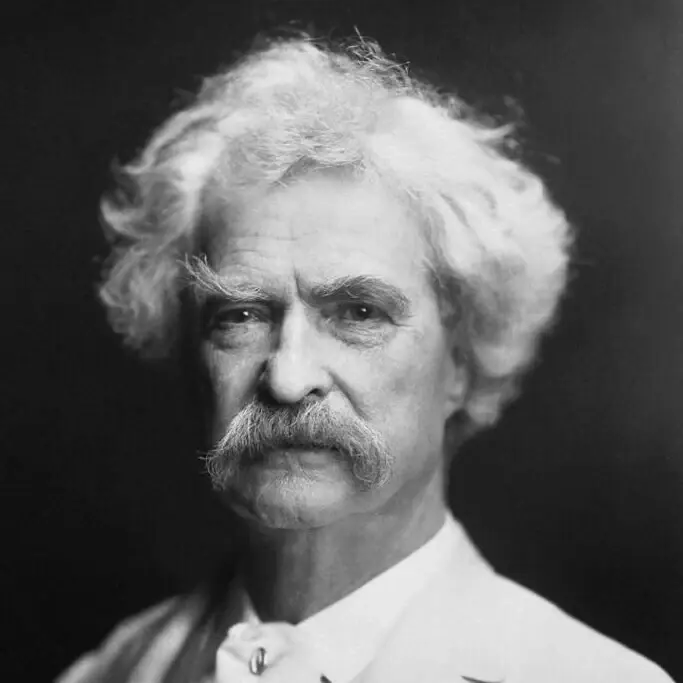
Mark Twain was an American author and humorist. “The Prince and the Pauper” explores how recognition, law, and social standing shape identity and justice when two look-alike boys of different rank trade places.
Explore more books by Mark Twain