What you'll learn
Key ideas from Stop Overthinking
These ideas compress the book's argument without treating the author's view as settled fact. Use them as an orientation before reading the full work or listening in Wiseley.
Useful reflection serves a purpose and can stop; overthinking becomes intrusive, circular, distressing, and unhelpful.
A temporary stress diary turns vague distress into patterns of triggers, feelings, bodily symptoms, productivity, responses, and outcomes.
Time blocking protects focused work, recovery, relationships, and buffers while remaining adjustable when energy patterns or surprises expose a mismatch.
Relaxation is presented as a practiced bodily skill that may lower arousal and loosen attention from rumination when planning cannot remove stressors.
Interpretation mediates an event’s emotional and behavioral impact, so one failure can produce panic, proportionate disappointment, or constructive curiosity.
Behavioral experiments compare beliefs with safe observations and revise conclusions in proportion to what experience shows.
Opposite action acknowledges emotion and its urges before choosing a more useful response for a defined period.
Inside Stop Overthinking
Read the first chapter in full here. The other 6 continue in the Wiseley app.
Chapter 1 of 7 · 8 min · Audio & text
How Thinking Becomes a Stress Loop
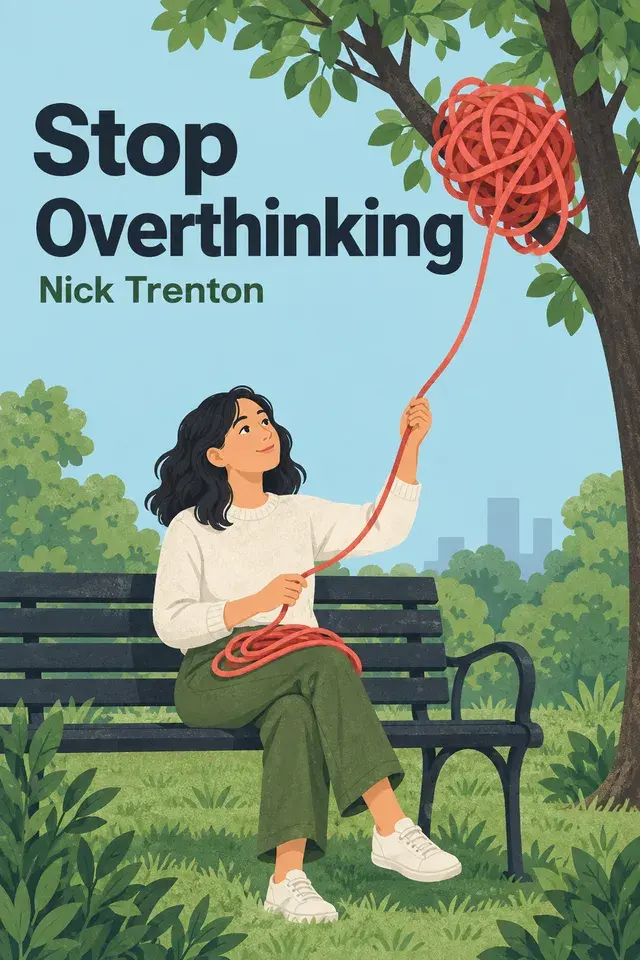
Stop Overthinking, by Nick Trenton.
The book begins by separating ordinary reflection from overthinking. Reflection can inspect a situation, compare options, or solve a problem. Its effort serves a purpose and can eventually stop. In the book’s definition, overthinking begins when those ordinary cognitive instincts go into overdrive. Analysis, judgment, monitoring, worry, or rumination become excessive, intrusive, circular, and distressing. The mind keeps working, yet the activity no longer gives useful help. Repeated doubt, difficulty deciding, attempts to steer thoughts, and distress about spontaneous thoughts may all point to the problem. But the signs are not automatically unhealthy. Awareness, questioning, and careful reflection can be valuable. The dividing line is whether thought remains beneficial and workable or becomes difficult to stop and self-defeating.
James’s example makes the distinction concrete. He notices a mole and becomes concerned about his health. He searches online, hoping information will settle the question, but the search opens more possibilities and more fear. Soon he is worrying not only about the mole but about his own anxiety. He imagines diagnoses, questions why he cannot stop, and judges himself for thinking this way. His mind then moves through memories of criticism, scrutiny of personal flaws, and uncertainty about what to do about his health concern. Repetitive negative self-talk deepens the distress, and the original health concern is no longer the only, or even the main, subject.
That movement matters. The loop does not depend on one especially important topic. If one concern were resolved, another could take its place, because the process has become the problem. James’s attention shifts from his body to online information, from possible illness to the meaning of his thoughts, then to his character and choices. The subject of rumination is therefore a clue, not necessarily its true cause. What needs explaining is the circular process that keeps generating a new target.
For this book, anxiety is the working explanation for why overthinking happens, while overthinking is how anxiety appears in thought and behavior. That is the author’s framework, not a claim that everyone who overthinks has a formal diagnosis. The text rejects a single cause and describes interacting biological, genetic, experiential, behavioral, cultural, and cognitive influences. Similar pressures can produce very different responses.
Predisposition is one layer. The text mentions genetic influence, including a reported association involving chromosome nine and a stated estimate of 26 percent heritability. It treats those figures as partial and probabilistic, not as a forecast of an individual’s fate. Genes, upbringing, early experiences, and later behavior are difficult to separate. The book’s sunburn comparison makes the point: susceptibility may matter, but repeated exposure also matters, and deliberate protection can alter the outcome.
Learned habits add another layer. Rumination can feel like action because analysis, rejection, and reconsideration create an illusion of control, even when the concern remains unresolved. Suppressing unwanted thoughts may also rebound, pulling attention more strongly toward the feared subject. The text names sleep, food, hydration, and social-media habits as comparatively changeable influences.
Surroundings supply another source of pressure. The book distinguishes stress, which it describes as external demand, from anxiety, the internal response to that demand. Stress may provide useful challenge, become harmful when overwhelming, or become harmful through too little challenge. Work, family, money, relationships, trauma, discrimination, news, and everyday spaces can shape the load. The same event can affect people differently because their histories, resources, and thresholds differ.
Finally, mental models mediate experience. Appraisal, worldview, self-concept, inner dialogue, identity, and beliefs about control influence what an event seems to mean. A situation can look manageable to one person and threatening to another. Seeing life as governed mainly by luck, randomness, or other people can intensify threat-focused behavior. The practical opening is therefore not to change genes or eliminate all stress, but to find room in outlook, habits, boundaries, behavior, and coping choices. This does not blame interpretation for every hardship; it identifies one changeable link.
When a situation is appraised as threatening, the book says it can activate the HPA axis and the fight-or-flight response, producing heightened arousal. It links prolonged activation with symptoms such as tension, nausea, fatigue, sleep disruption, digestive problems, and impaired memory or concentration, while distinguishing chronic strain from brief acute stress. These are elements of the book’s model, not a diagnosis for every symptom.
The reinforcing loop is the central consequence. Anxious interpretation raises arousal and leaves the mind on edge. That state encourages more scanning, judging, worrying, and reconsidering. The resulting behavior—staying up late, eating poorly, withdrawing, procrastinating, or making poorer choices—can create new problems and new reasons to worry. Overthinking is then not only a response to stress; it becomes one of the conditions that keeps stress going, affecting thought, mood, relationships, work, and enjoyment.
The book’s useful starting point is awareness without rumination: noticing bodily sensations, thoughts, feelings, and circumstances without judgment, clinging, resistance, or compulsive analysis. This is not a demand to monitor every thought. It is a way to step back far enough to see the sequence without trying to solve it from inside the spiral. Once visible, the pattern can later be approached through the surroundings, attention, bodily arousal, interpretation, or behavior that sustain it. The foundation is that stress may be unavoidable, but the loop is understandable and therefore offers several points of influence.
Chapter 2 of 7 · 11 min · Audio & textIn the app
Find the Stressor and Choose a Response
When stress feels like one large, shapeless problem, the first useful move is to make its pattern visible. The book’s approach is practical: notice what sets distress off, observe what it does to feeling, body, and work, then match the stressor to a response.
Chapter 3 of 7 · 12 min · Audio & textIn the app
Build a Schedule That Reduces Strain
Relaxation can be useful, but it cannot always solve the problem that keeps creating strain. Susie discovers this when she tries to meditate during lunch and becomes more distressed instead of calmer.
Chapter 4 of 7 · 9 min · Audio & textIn the app
Practice Calm Through the Body
Planning can reduce recurring demands, but it cannot remove every surprise or make every stressor solvable. When no further planning will help, continued analysis can keep attention inside the same anxious loop.
Chapter 5 of 7 · 11 min · Audio & textIn the app
Examine the Interpretation Behind the Feeling
An event does not arrive with one emotional meaning attached to it. The interpretation placed on it helps determine what follows.
Chapter 6 of 7 · 10 min · Audio & textIn the app
Test Beliefs and Rehearse Kinder Self-Talk
Challenging an anxious thought does not always loosen the belief beneath it. A person may recognize catastrophizing or mind reading, generate a balanced alternative, and still feel that the old conclusion is true.
Chapter 7 of 7 · 8 min · Audio & textIn the app
Choose Actions Without Obeying Every Feeling
At the end of this progression, the problem is not a shortage of techniques. It is the moment when a difficult feeling claims authority over attention and behavior.
Chapter 1 of 7 · 8 min · Audio & text: How Thinking Becomes a Stress Loop
Wiseley supports reading and listening to summaries in the app.
Continue in WiseleyWhat Stop Overthinking is about
Why does thinking through a problem sometimes become a source of distress? Nick Trenton explores how anxiety, interpretation, and habits sustain overthinking. This summary explains practical ways to identify stressors, organize demands, calm the body, test anxious beliefs, and choose actions without letting every thought or feeling dictate behavior.
About Nick Trenton
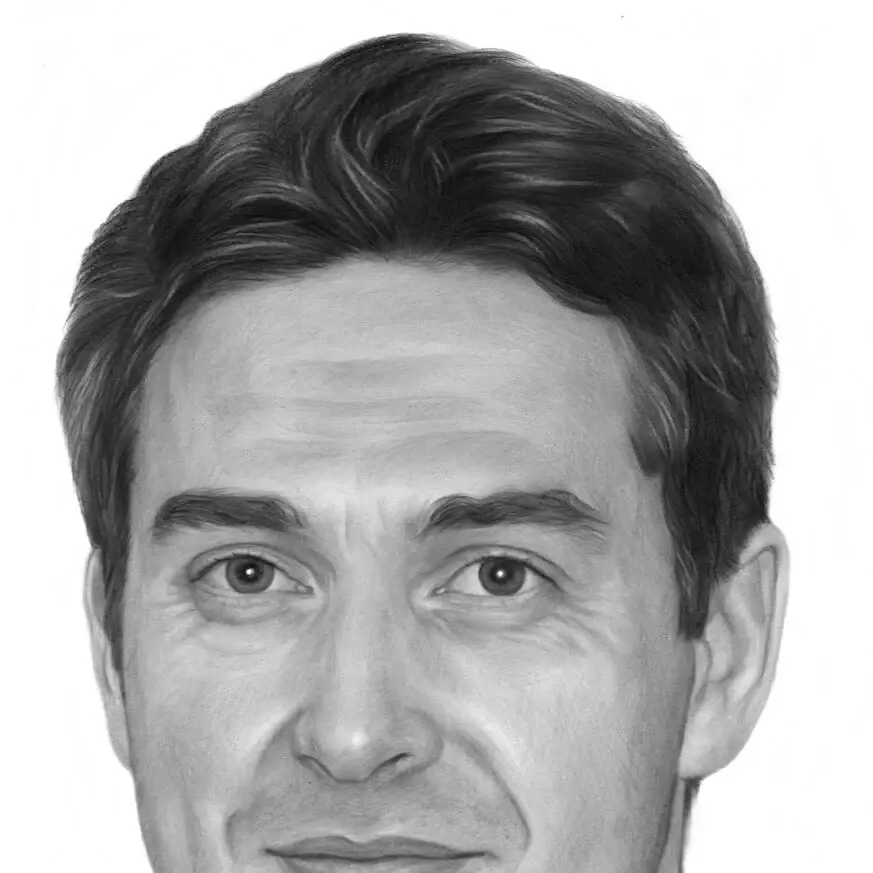
Nick Trenton is the author of “The Art of Letting Go”. The book explores how to release unhelpful thoughts, expectations, and resentment while still acting where action is possible.
Explore more books by Nick Trenton