
What you'll learn
Key ideas from See You at the Top
These ideas compress the book's argument without treating the author's view as settled fact. Use them as an orientation before reading the full work or listening in Wiseley.
Ziglar’s six-step framework treats success as a gradual climb grounded in character and a balanced life.
A mistaken label can make a temporary mistake seem like a fixed limit on ability.
Credible encouragement pairs honest feedback about actions with confidence in a person’s capacity to improve.
Ambitious, long-range aims gain direction from specific daily objectives, while goals detached from a person’s interests or capacity can undermine effort.
Ranked goals, named obstacles, deadlines, support, and daily measures turn a broad aim into a workable plan.
Disappointment is natural in Ziglar’s account; recovery adds a proportionate deadline, perspective, and a next step.
Ziglar’s change advice starts with personal resolve, draws on support, examines responsibility and motives, then builds a constructive replacement.
Preparation turns effort into readiness for opportunity, while Edison and John Nevin illustrate persistence in practice.
Inside See You at the Top
Read the first chapter in full here. The other 13 continue in the Wiseley app.
Chapter 1 of 14 · 6 min · Audio & text
The Stairway Begins with Choice
See You at the Top, by Zig Ziglar.
Ziglar presents success as a stairway with six steps. The steps are developing a healthy self-image; recognizing other people’s worth and learning to live and work with them; setting goals; adopting the right mental attitude; being willing to work; and having a strong desire to excel. There is no elevator, he says: people may climb at different speeds, but each step matters. The book’s framework begins with these broad commitments, then develops them in detail.
Success, in this account, means more than money or advancement. Ziglar describes it as a balanced life that includes health, wealth, and happiness. Honesty, character, faith, integrity, love, and loyalty are foundation stones: material gains that cost a person health or family relationships do not amount to complete success. The framework therefore joins personal achievement to the way a person treats others and the principles that guide their choices.
The foreword places Ziglar’s optimism in a Christian context. He says his beliefs about forgiveness, abundant life, and everlasting life give him confidence and gratitude about the past, present, and future. Faith, love, optimism, and enthusiasm shape the outlook he brings to the book. He also distinguishes positive believing from positive thought alone: belief matters when it helps turn thought into positive action. This is his stated spiritual foundation, not a promise that circumstances will always change as hoped.
Several opening illustrations ask readers to notice what a quick glance can miss. In the squares puzzle, the task is to count the squares in an arrangement. Looking carefully reveals possibilities that a casual count overlooks. The point is broader than solving a puzzle: attention can uncover options that seemed absent when a person looked only once or expected to see very little.
A map puzzle makes a related point. Its pieces show a man on one side and a map on the reverse. Ziglar says that putting the man’s picture together also puts the map in order. He draws from this the idea that getting oneself in order can help put one’s world in order. The story directs attention inward, toward what a person can begin to change, rather than waiting for every outside circumstance to be rearranged first.
This claim leads to a shift in responsibility. Ziglar does not say that people choose every hardship or that others never contribute to it. Bad guidance and negative messages can help explain how someone reached an unwanted situation. But he argues that responsibility for future growth belongs to the person now facing the next choice. The past may shape a starting point without fixing every step that follows. He cautions, too, that positive thinking may initially sit like a thin cover over old negative messages. Those thoughts can return, so change requires more than repeating an optimistic phrase.
Ziglar’s message is that people already have some of the characteristics needed for success. He urges readers to use what they have and give each characteristic a chance to grow, since using it can provide more to use.
To help readers engage with the book, Ziglar recommends slowing down instead of rushing through it. Pause over a question or idea that matters. Underline useful passages, write thoughts in a portable “Trigger Page” notebook, and return to marked sections later. He suggests rereading and adding notes so the book becomes a personalized reference, not something that must be remembered all at once. The practice is meant to preserve ideas that might otherwise be forgotten and keep reading active.
That method reflects a central distinction in the chapter: hearing an idea is not the same as learning it. Ziglar calls action the manifestation of learning. A principle that is understood but never applied has not yet changed conduct. He describes success as a journey and direction, so beginning to act is already a meaningful change of course. His warning is against waiting for every condition to become ideal before taking a first step.
The stairway begins, then, with a choice to use what is available and to keep moving through the necessary steps. Ziglar connects that choice to helping other people get what they want, while insisting that real success does not require dishonesty or taking advantage of them. Belief, attention, and learning gain practical meaning when they shape what a person does next—and when that conduct helps others as well.
Chapter 2 of 14 · 8 min · Audio & textIn the app
How Self-Image Takes Shape
Self-image is the picture a person carries of their own ability and worth. Ziglar argues that this picture can influence whether people try, how they perform, and what they expect from themselves.
Chapter 3 of 14 · 9 min · Audio & textIn the app
Practices for Healthy Self-Image
Ziglar turns the previous chapter’s concern with self-image into a set of practices. He opens with Step One: take inventory of what you already possess.
Chapter 4 of 14 · 7 min · Audio & textIn the app
Expectations Shape What We Pass On
The preceding chapter focused on the picture a person forms of their own worth. Here, Ziglar widens the question: what picture do we help other people form?
Chapter 5 of 14 · 6 min · Audio & textIn the app
Marriage as Daily Partnership
Here Ziglar applies his broader call to serve and encourage others to marriage, presenting it as a commitment renewed by both partners through daily care and shared responsibility. He describes love as unselfish concern and lust as selfish desire.
Chapter 6 of 14 · 7 min · Audio & textIn the app
Give Effort a Destination
Effort alone does not tell us whether we are moving toward anything. A person can stay busy, repeat familiar tasks, and spend a great deal of energy, yet finish no closer to a wanted result.
Chapter 7 of 14 · 12 min · Audio & textIn the app
Turn Goals into Daily Action
A goal becomes useful when it changes how an ordinary day is planned. Ziglar turns goal-setting into a working process: record where you are, choose a challenging but reachable destination, write and rank your aims, then schedule steps and check what happens.
Chapter 8 of 14 · 7 min · Audio & textIn the app
Choose and Renew Your Attitude
Life does not let us choose every circumstance, but Ziglar argues that we can prepare how we meet it. Attitude, in this sense, is not a claim that events are harmless or that disappointment can be switched off.
Chapter 9 of 14 · 6 min · Audio & textIn the app
Feed the Mind Deliberately
After considering how to choose a response in a difficult moment, Ziglar turns to what can make constructive responses easier to reach. His answer is a regular practice of feeding the mind with useful ideas and inspiration.
Chapter 10 of 14 · 8 min · Audio & textIn the app
How Habits Shape a Life
Ziglar’s account begins with a quiet but consequential idea: habits grow from repeated choices, often before people notice what those choices are adding up to. A harmful routine can start with something that seems easy to dismiss.
Chapter 11 of 14 · 6 min · Audio & textIn the app
Directing the Subconscious Mind
Ziglar presents the subconscious as a model for how experience and repeated instructions can shape responses. In his account, the conscious mind reasons about what it encounters, while the subconscious stores experience and accepts instructions without examining them.
Chapter 12 of 14 · 6 min · Audio & textIn the app
Work, Persistence, and Preparation
Ziglar turns from preparing one's thinking to putting it to work. A philosophy, he says, has little value if it never becomes action.
Chapter 13 of 14 · 9 min · Audio & textIn the app
Desire Against Apparent Limits
Desire, in this part of Ziglar’s argument, is the force that keeps a person using available abilities when a barrier seems to settle the question. It is not just wanting a result or repeating an encouraging phrase.
Chapter 14 of 14 · 8 min · Audio & textIn the app
Opportunity and Civic Responsibility
At the close of See You at the Top, Ziglar widens his argument from personal development to national life. A person’s abilities and effort matter, he says, but they also need conditions that let people work, start enterprises, and contribute.
Chapter 1 of 14 · 6 min · Audio & text: The Stairway Begins with Choice
Wiseley supports reading and listening to summaries in the app.
Continue in WiseleyWhat See You at the Top is about
How can people put unused potential to work and build a fuller life? Zig Ziglar’s six-step framework connects self-image, relationships, goals, attitude, work, and desire, with practical routines for setting targets, encouraging others, renewing habits, and persisting through setbacks. The closing chapter extends his argument into a call for civic responsibility and defense of free enterprise.
About Zig Ziglar
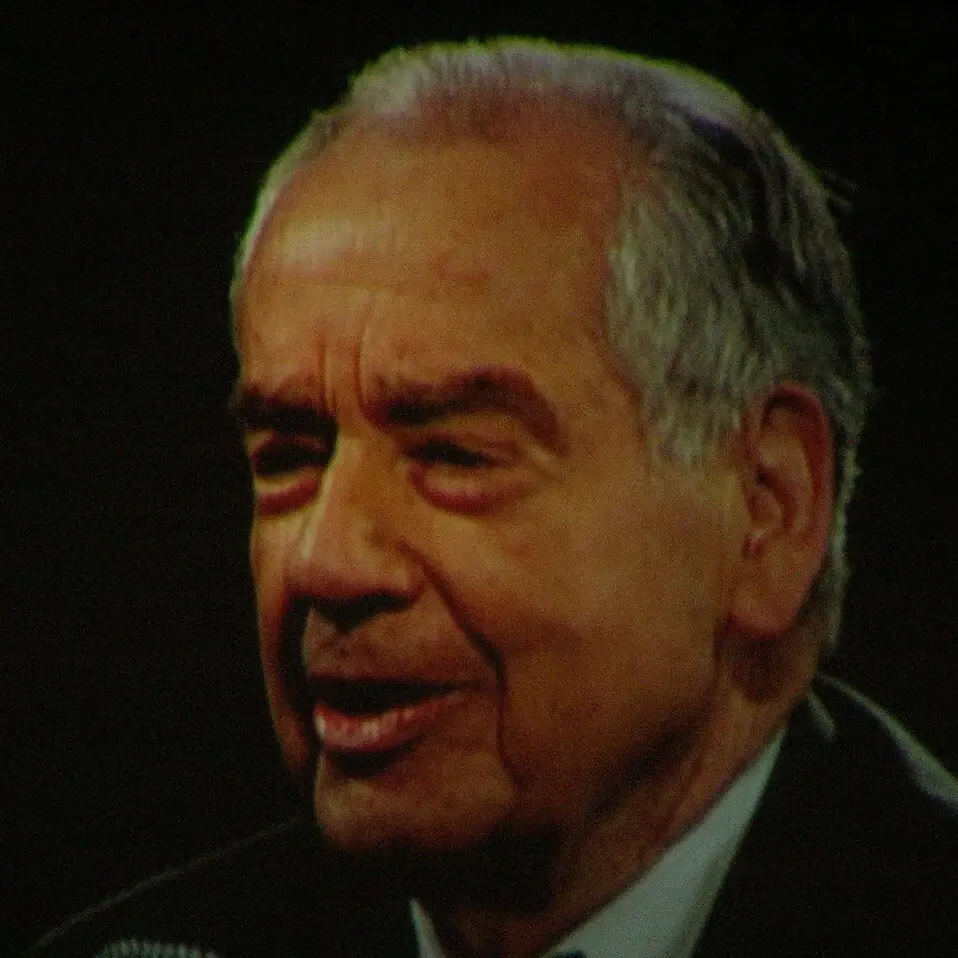
Zig Ziglar was an American author, salesman, and motivational speaker. “See You at the Top” explores how people can put unused potential to work through self-image, relationships, goals, attitude, work, and desire.
Explore more books by Zig Ziglar