
What you'll learn
Key ideas from Persuasion
These ideas compress the book's argument without treating the author's view as settled fact. Use them as an orientation before reading the full work or listening in Wiseley.
Sir Walter and Elizabeth reject Lady Russell’s moderated economies because they associate sacrifice with lost status and comfort.
Anne’s later regret does not become blame: she sees her earlier decision as conscientious and does not condemn Lady Russell or herself.
Practical care gives Anne a valued role, especially when she coordinates help and comforts those around the Musgroves’ child after his serious fall.
Wentworth warns Louisa against the jump, gives way to her insistence, and later regrets yielding; Anne questions whether firmness needs limits.
Anne briefly feels the appeal of a future with Mr Elliot, then rejects it because social suitability does not overcome her doubts about warmth and character.
Mrs Smith’s history and preserved letter give Anne concrete evidence about Elliot, while reports of his recent motives remain indirect.
Wentworth’s letter turns Anne’s defense of constancy into an opening for honesty about the pride and resentment that distorted his reading of her.
Inside Persuasion
Read the first chapter in full here. The other 7 continue in the Wiseley app.
Chapter 1 of 8 · 7 min · Audio & text
Rank, Debt, and Kellynch
Persuasion, by Jane Austen.
At Kellynch Hall, Sir Walter Elliot treats status as a measure of personal worth. His baronetcy is more than a title: it shapes his idea of who deserves respect and what his family should preserve. He repeatedly turns to the Baronetage, especially his own family’s entry, where he has added details of their history. It offers a pleasing view of lineage when bills and warnings from his agent offer a less comfortable one. Austen describes vanity as central to Sir Walter’s character. He prizes his looks nearly as much as his title and admires himself for having both.
That outlook also shapes how he values his daughters. Sir Walter favors Elizabeth, who resembles him and has taken a leading place in the household. Anne’s steadier character earns respect from Lady Russell, but little attention from her father or sister. At twenty-nine, Elizabeth remains handsome, yet worries that time is narrowing her chance of marrying someone of baronet blood. She shares her father’s belief that family standing should determine a suitable match. The sisters therefore inhabit the same household but not the same position: Elizabeth’s ambitions fit its hierarchy, while Anne’s judgment is easy to overlook.
The household’s financial trouble exposes the cost of maintaining its preferred way of life. While Lady Elliot was alive, method and economy kept Sir Walter within his income. After her death, he spent beyond it. He has mortgaged what he can, and the bills keep arriving. Still, he will not sell land because he insists that Kellynch must pass to the next generation intact. Preserving the estate’s appearance of permanence matters more to him than changing the habits that have made it difficult to afford.
The family first considers small economies. Elizabeth suggests ending some charitable payments, postponing new drawing-room furnishings, and giving up Anne’s customary present. These cuts are not enough. Lady Russell, who is careful and principled, takes the problem more seriously. She wants the debts paid, but also wants to spare Sir Walter’s feelings and protect the family’s standing. Her respect for rank sometimes makes it harder for her to judge a titled person’s faults plainly.
Lady Russell calculates a plan and asks Anne to review it. Their exchange makes clear that both care about paying creditors, but they differ over what honesty requires. Lady Russell tries to make reform less painful. Anne presses for faster and more complete repayment through the fullest feasible economies. She regards paying debts as a duty and an honest character as more valuable than a gentleman’s feelings. She also thinks a thorough change might prove no more painful than a partial one that leaves the family continually resisting further cuts.
Anne’s proposal is a stricter alternative, not a plan Sir Walter tests. The version Lady Russell presents already asks the Elliots to give up familiar comforts, including journeys, London visits, servants, horses, and a reduced table. Sir Walter and Elizabeth treat these sacrifices as an intolerable loss of dignity and decent living. For them, the problem is not only that money is owed. It is that repayment seems to require them to live in a way they associate with lower standing. Sir Walter and Elizabeth refuse even this gentler plan, so the text shows Anne’s judgment and priorities, not proof that her approach would have worked.
Sir Walter would rather leave Kellynch than accept the economies. His adviser, Mr Shepherd, supports moving because the ancient house and its traditions make it difficult for Sir Walter to reduce his household there. Elsewhere, Shepherd suggests, he could set his own style of living. Anne would prefer a small house nearby, close to Lady Russell, Mary, and Kellynch, but the family chooses Bath. Again, her preference receives little weight. Leaving redirects the household’s immediate problem: instead of reforming its habits at Kellynch, it must let the estate to someone else.
Even the prospect of tenants brings Sir Walter’s assumptions into view. Mr Shepherd argues that wealthy naval officers returning ashore could be responsible tenants. Sir Walter makes light of the idea of an admiral occupying Kellynch, as if the house were a prize to be granted. He says the park would be open to a tenant, but objects to access to the pleasuregrounds and shrubberies and warns Elizabeth to guard the flower garden.
Anne answers from a different measure of worth. Sailors, she says, work hard for the comforts they earn and deserve the privileges of a home. Her defense brings labor into a conversation that Sir Walter frames around title. His stated objection is that naval service can raise men of what he calls obscure birth to distinction. What troubles him is not simply who can afford Kellynch, but that a profession might give social recognition to people without inherited rank.
Mr Shepherd presses the practical case for the Crofts, presenting Admiral Croft and his wife as capable, responsible people who want a comfortable home. He assures Sir Walter that ordinary landlord protections can safeguard the estate. Sir Walter is persuaded in part because an admiral’s title sounds distinguished while leaving a baronet superior in precedence. The Crofts become Kellynch’s tenants through both their own suitability and a compromise that keeps Sir Walter’s hierarchy intact.
The Elliots’ position therefore depends on separating visible status from the costs and work that support it. Sir Walter wants the estate preserved, the title honored, and familiar comforts maintained, while resisting the economies needed to pay what the family owes. At the same time, he discounts the worth of sailors whose labor has brought them money and standing. Anne sees both the duty to creditors and the claim to comfort earned through work. Her judgment is present, but the decisions remain with others.
Chapter 2 of 8 · 8 min · Audio & textIn the app
A Choice That Follows
At nineteen, Anne fell in love with Frederick Wentworth and agreed to marry him. Their happiness was brief.
Chapter 3 of 8 · 9 min · Audio & textIn the app
The Return and Its Tests
Captain Wentworth’s return makes Anne’s ended engagement part of daily life again. Almost eight years have passed, but their first meeting shows that time has not eased the strain between them.
Chapter 4 of 8 · 9 min · Audio & textIn the app
Care Under Sudden Pressure
Lyme begins as a change of plan. After hearing that Captain Harville is recovering poorly from a serious wound, Wentworth has gone to visit him there.
Chapter 5 of 8 · 11 min · Audio & textIn the app
Bath's Measures of Worth
As Anne leaves Kellynch and Uppercross for Bath, she carries two contrasting examples of what makes a household good. The Crofts have changed little at Kellynch.
Chapter 6 of 8 · 11 min · Audio & textIn the app
Affection Read Through Signs
In Bath, Anne is waiting for news from Uppercross when Mary’s letter brings a startling report: Louisa Musgrove and Captain Benwick are engaged. Their understanding was settled before Louisa left Lyme, and the family has welcomed the match.
Chapter 7 of 8 · 11 min · Audio & textIn the app
Evidence Against Appearance
Mrs Smith’s account changes what Anne can think about Mr Elliot, but it does not give her one simple, unquestionable verdict. Mrs Smith had once praised him because she assumed Anne would marry him.
Chapter 8 of 8 · 9 min · Audio & textIn the app
Constancy, Choice, and Home
During a Bath gathering, Anne and Captain Harville fall into a debate about whether men or women are more constant in love. Harville shows Anne a miniature of Captain Benwick, made for his late sister Fanny, who had loved Benwick.
Chapter 1 of 8 · 7 min · Audio & text: Rank, Debt, and Kellynch
Wiseley supports reading and listening to summaries in the app.
Continue in WiseleyWhat Persuasion is about
Jane Austen’s Persuasion follows Anne Elliot, whose family’s concern with rank and money helps end her engagement to naval officer Frederick Wentworth. Years later, their renewed meetings ask whether love can survive advice, pride, and mistaken judgments. The novel explores how social position shapes courtship and how people learn to judge character and constancy.
About Jane Austen
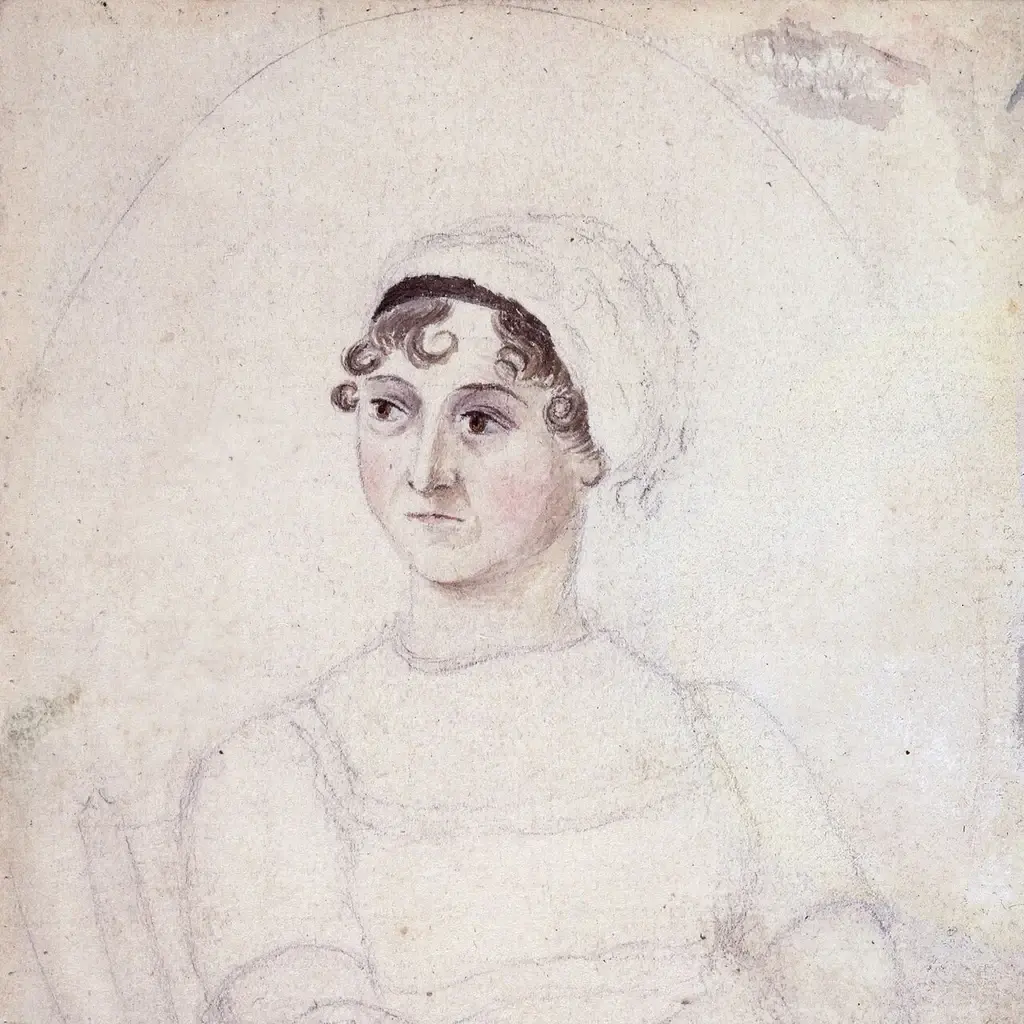
Jane Austen was an English novelist. “Persuasion” explores whether love can survive advice, pride, and mistaken judgments, through Anne Elliot’s renewed meetings with Frederick Wentworth.
Explore more books by Jane Austen