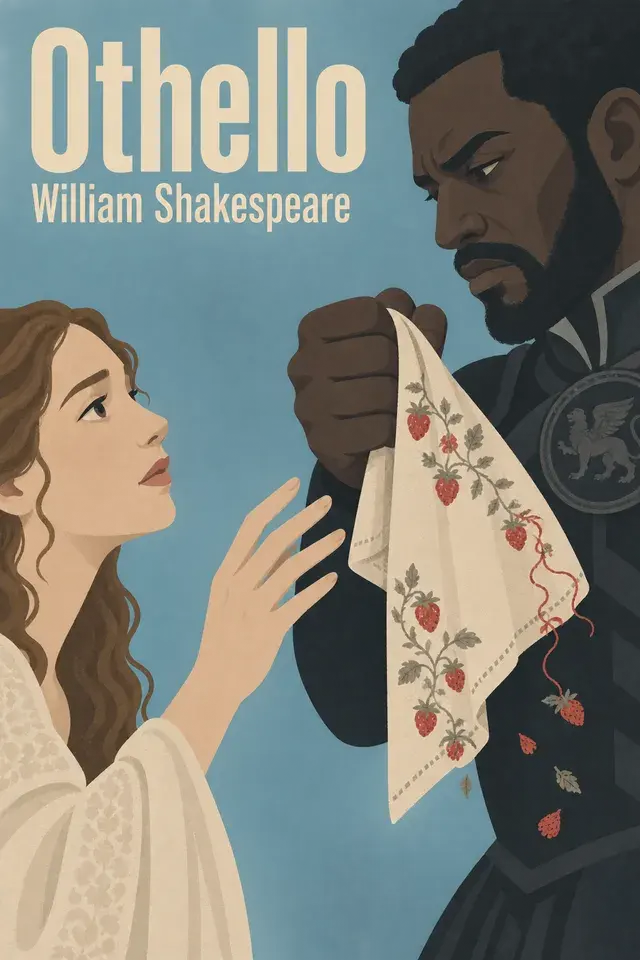
What you'll learn
Key ideas from Othello
These ideas compress the book's argument without treating the author's view as settled fact. Use them as an orientation before reading the full work or listening in Wiseley.
Iago presents Cassio’s promotion as favoritism, then turns his resentment and unconfirmed suspicions into a revenge plan.
Iago presses Cassio to drink and uses Roderigo to provoke a real fight, then withholds his role from Othello.
Othello’s fears about complexion, age, and desirability make betrayal imaginable without making it evident.
The handkerchief reaches Iago through accidental loss; the alleged dream and token do not establish adultery.
Othello rejects Emilia’s observations and Desdemona’s denials, treating both as concealment within his accusation.
Othello rejects Desdemona’s denials and pleas, killing her while claiming justice on the strength of fabricated evidence.
Othello accepts responsibility and asks for an accurate record, but his regret neither absolves him nor restores the dead.
Inside Othello
Read the first chapter in full here. The other 5 continue in the Wiseley app.
Chapter 1 of 6 · 6 min · Audio & text
Public Honor, Private Grievance
Othello, by William Shakespeare.
The opening sets a private grievance beside a public crisis. Roderigo tells Iago that he entrusted him with money and feels betrayed because Iago did not tell him that Desdemona had married Othello. Roderigo wants Desdemona, though her father, Brabantio, had already refused him. Iago turns this disappointment into leverage: he has a grievance of his own, and Roderigo can help him act.
Iago says that three prominent citizens urged Othello to appoint him lieutenant. Othello chose Cassio instead. Iago presents himself as a soldier proven in battle and describes Cassio as bookish and inexperienced in fighting. That is Iago’s case for why he deserved the position, not independent proof of why Othello chose Cassio. Iago interprets the decision as evidence that advancement depends on favor rather than seniority or service. He rejects loyal work that earns only a living and says he serves Othello for his own advantage. His words make clear that the dutiful role he displays does not match his private purpose.
To enlist Roderigo, Iago tells him to wake Brabantio and cry that he has been robbed. He sharpens the alarm with sexual and racial insults. Roderigo helps raise it, and Brabantio discovers that Desdemona has left with Othello. Brabantio concludes that she could not have chosen Othello freely: she had seemed quiet and had rejected other suitors. He alleges spells, drugs, or other coercion. Those are his assumptions, shaped partly by racialized expectations, not evidence that Othello forced her. The Duke later makes the same distinction, saying suspicion is not proof.
Othello refuses to hide from Brabantio and tries to halt the armed confrontation, telling the men to keep their swords up. He says he can answer the charge openly and has also been summoned on state business. At the council, reports about the Turkish fleet conflict in both size and direction. A sailor first says it is heading toward Rhodes. A senator argues that Cyprus is the more valuable and vulnerable target, and a later messenger reports that the fleet has turned toward Cyprus. With the island treated as the urgent destination, the Duke assigns Othello to defend it and values his knowledge of the place.
Brabantio accuses Othello before the council of stealing and enchanting his daughter. The Duke says the law would apply even if his own son were accused, but Brabantio’s suspicions still need proof. Othello acknowledges the marriage and denies using magic. He asks the council to hear Desdemona and stakes his office and life on her testimony if she condemns him.
Othello then explains how their courtship began. He says Brabantio often invited him to speak about his travels, dangers, captivity, and hardships. Desdemona listened, pitied what he had endured, and asked to hear the whole story. Othello recalls that she loved him for the dangers he had survived, while he loved her for her pity. This is his account of their attachment; it does not substitute for Desdemona’s own answer to her father’s charge.
Desdemona gives that answer directly. She says she owes her father respect for raising her, but also owes her husband the kind of duty her mother showed Brabantio. She confirms that she chose Othello. Brabantio accepts that choice, though he warns Othello that she might deceive him as she deceived her father. His warning does not undo her testimony or establish coercion. Desdemona also asks to accompany Othello to Cyprus. She says she chose him for his character and honors and would suffer in his absence. Othello assures the council that her presence will not interfere with his duty. The Duke leaves the decision to them, and they decide to travel together.
After the council, Roderigo despairs and says he will drown himself. Iago tells him that people can govern their conduct through the will, comparing choice to tending a garden. He persuades Roderigo to keep pursuing Desdemona and raise more money. Yet Iago privately calls Roderigo a source of money and amusement. He promises to help him win Desdemona and claims their marriage will not last, relying on racist generalizations about Othello. His private account shows that he keeps Roderigo invested by feeding his hope, not by serving him honestly.
Iago also names another motive for hating Othello: he suspects Othello slept with Emilia. But Iago admits that he does not know whether the suspicion is true and that the rumor may be false. He decides to treat it as fact anyway. The suspected affair is therefore an unconfirmed grievance, not an established event. Iago’s plan also includes seeking Cassio’s position and making Othello suspect Cassio is too familiar with Desdemona. Iago believes Othello is open and trusting, especially toward people who merely appear honest.
That trust shapes the departure arrangements. Othello calls Iago honest, entrusts Desdemona’s journey to him, and asks him to have Emilia attend her. Othello leaves for Cyprus first; Desdemona follows with Iago and Emilia. The council has sent Othello toward an urgent military duty, while his confidence in Iago gives Iago access to the people closest to him.
Chapter 2 of 6 · 4 min · Audio & textIn the app
Cassio’s Fall Is Set in Motion
The storm changes the danger facing Cyprus. Much of the Turkish fleet is wrecked, and Othello arrives safely.
Chapter 3 of 6 · 6 min · Audio & textIn the app
Suspicion Acquires Apparent Proof
The turn toward suspicion begins with a request that has an ordinary explanation. After Cassio’s dismissal, Iago advises him to seek Desdemona’s help because she is generous and can influence Othello.
Chapter 4 of 6 · 7 min · Audio & textIn the app
Jealousy Recasts Every Sign
Jealousy now decides what counts as evidence. Othello’s suspicion feeds on events with ordinary explanations, then absorbs testimony that should challenge it.
Chapter 5 of 6 · 5 min · Audio & textIn the app
A False Verdict and Its Human Cost
Othello has decided that Desdemona and Cassio must die. The attack Iago arranges now seems to confirm that decision, while revealing how much of the scene’s meaning is being manufactured around him.
Chapter 6 of 6 · 4 min · Audio & textIn the app
Truth Reconstructed After the Tragedy
The final accounting begins after the deaths, when accusation can no longer change the outcome. Emilia has exposed the lie behind Othello’s belief, and the survivors now have to establish how that false story became credible.
Chapter 1 of 6 · 6 min · Audio & text: Public Honor, Private Grievance
Wiseley supports reading and listening to summaries in the app.
Continue in WiseleyAbout William Shakespeare
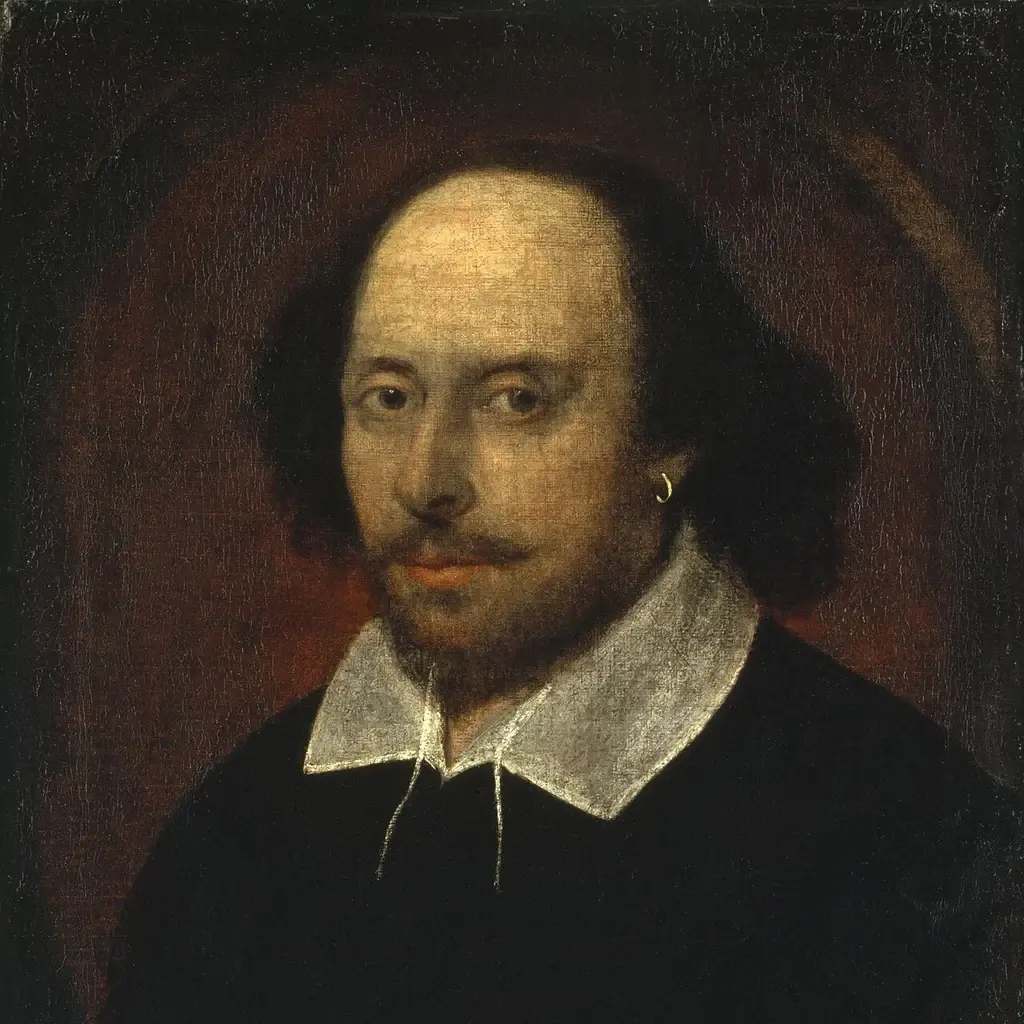
William Shakespeare was an English playwright and poet. “Othello” explores how a respected commander comes to mistake staged appearances for proof of betrayal.
Explore more books by William Shakespeare