What you'll learn
Key ideas from Of Mice and Men
These ideas compress the book's argument without treating the author's view as settled fact. Use them as an orientation before reading the full work or listening in Wiseley.
The mouse and Weed episodes show how gentle intentions become dangerous when Lennie cannot control his strength.
Curley’s position as the boss’s son makes workers treat his provocations as a threat to their jobs and safety.
Carlson’s case for shooting the old dog turns suffering and usefulness into a judgment, while Candy’s grief shows what that calculation leaves out.
Candy’s savings and offer of work make the farm seem financially reachable: George projects $450 toward a $600 price, but no purchase is secured.
Curley’s wife’s loneliness is real, but her racial threat carries force over Crooks and closes the tentative opening toward solidarity.
Her invitation to touch her hair becomes fatal when struggle and panic meet Lennie’s uncontrolled strength, despite his lack of intent to kill.
The timing of George’s concealed shot supports a protective reading, though he never states his motive.
Inside Of Mice and Men
Read the first chapter in full here. The other 5 continue in the Wiseley app.
Chapter 1 of 6 · 8 min · Audio & text
Companionship at the River
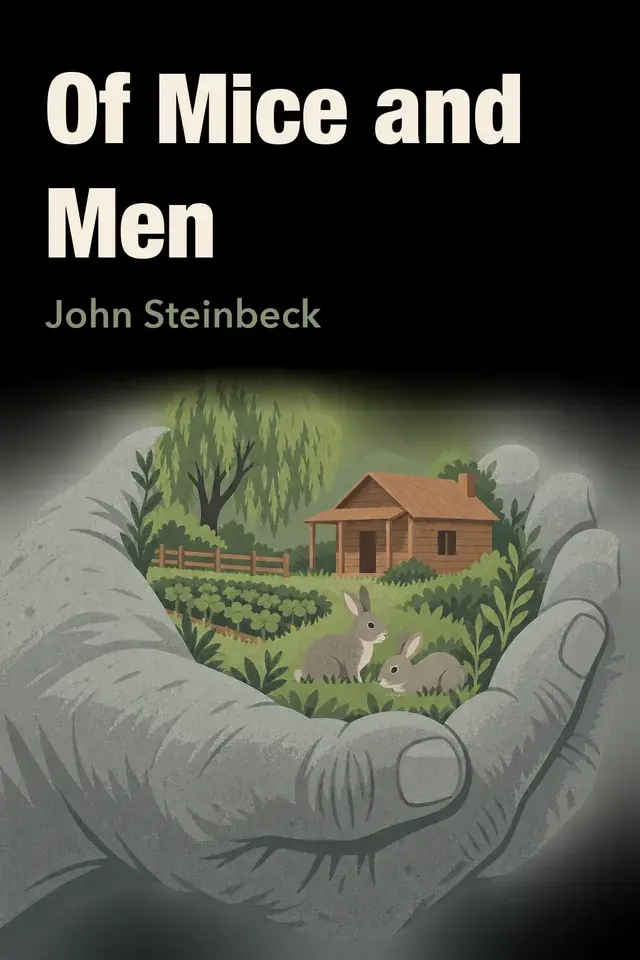
Of Mice and Men, by John Steinbeck.
The story first pauses beside a river pool, under trees, in a clearing marked by old fires and paths. It feels sheltered, but the signs of other travelers make it a stopping place, not a home. George and Lennie have arrived after a bus left them short of their destination. They have walked in the heat with their belongings, bound for another ranch job. This landscape holds the tension that shapes their lives: they need somewhere to rest, yet work keeps them moving. Their stay here is temporary, but the companionship between them gives their journey a purpose beyond reaching the next job.
George is small and quick; Lennie is much larger and physically powerful. Their movements establish a pattern: George leads, and Lennie follows. George carries both work cards and takes charge of practical arrangements. Lennie forgets where they are going and needs directions repeated. The book presents these habits without naming a medical cause. Their immediate effect is clear, though: George must plan for both of them, while Lennie relies on his guidance. That dependence can look one-sided, but George is not merely managing a burden. He wants Lennie with him, even when the work of keeping him safe frustrates him.
The dead mouse makes that strain visible in a small, concrete incident. Lennie has retrieved it from across the river and wants to stroke its soft fur. George discovers it and takes it away after Lennie has crushed it. Lennie resists surrendering the mouse and is upset when George throws it aside. The impulse is affectionate: he wants the comfort of touching something soft. But affection does not prevent harm. Lennie’s strength exceeds his ability to control how firmly he holds what he loves, so a tender gesture ends with a dead animal and a quarrel between the men.
Lennie says his Aunt Clara used to give him mice, then stopped because he kept killing them. He explains that they were small enough to crush when they bit his fingers. This history makes the river episode part of a repeated pattern, rather than an isolated accident. George responds by scolding him and setting limits, but Lennie’s distress is real. Their interaction contains care and authority at once: George tries to stop the harm, while Lennie seeks reassurance and comfort. The mouse is a warning about practical safety, not proof that Lennie intends cruelty. The gap between his purpose and the effect of his touch will matter throughout their partnership.
George’s recollection of Weed shows that the danger extends beyond animals. In his telling, Lennie wanted to feel a young woman’s dress. When she tried to pull away, he held on, and she cried out. George and Lennie hid in an irrigation ditch until the commotion passed, then fled. George recalls the episode to explain why he is cautious about Lennie drawing attention. The story shows how a wish to touch soft material can become threatening when Lennie does not release it. It also shows the cost of an incident: the men lose their place and must move on again.
George’s anger is sharpened by that repeated cycle. He complains that Lennie creates trouble, loses jobs, and makes George responsible for rescuing him. At one point he imagines how much easier life would be alone. But when Lennie offers to leave, George backs away from the harshness of his own words and insists that Lennie stay. His care is genuine, though it does not make him endlessly patient. He can speak cruelly, then feel ashamed and repair the connection. Their partnership is neither effortless nor equal in responsibility; it is a bond George keeps choosing despite the strain.
George describes ranch workers as people who travel alone, spend their wages, and have little to look forward to beyond another job. He contrasts that condition with the two of them: they have each other to talk to, and someone who cares what happens. This is George’s broad judgment, not an independently confirmed account of every worker. Its importance here is personal. He is explaining why having Lennie beside him matters, even when Lennie’s needs complicate his life. Their companionship turns work from a solitary sequence of wages and departures into a life they can imagine building together.
That imagined future takes the form of a small farm. George describes a house and land, animals, a garden, and food they can grow and keep. Lennie’s special place in the plan is caring for the rabbits. He eagerly supplies details and asks George to repeat the story. The dream makes the future concrete enough to picture: work would lead toward a home of their own, and Lennie would have a valued task. Its appeal is emotional as well as material. It offers rest from wandering and a place where the two men belong together.
For now, however, the farm is a hope, not an arrangement they have secured. They still need to obtain the job and save enough to make such a future possible. George’s account of ranch hands gives the dream its contrast: wages disappear, while a home of their own would let them remain. The story also helps in the present. When Lennie grows upset, hearing about the farm soothes him and directs his attention toward what he wants. George can use the promise of tending rabbits to encourage Lennie to remember instructions and avoid trouble. The dream motivates him, but it cannot guarantee that the job or the land will become theirs.
George’s final instruction at the river makes that uncertainty practical. If trouble comes, Lennie is to return to this brush and wait there until George finds him. George asks him to remember the place and the plan, repeating the directions because Lennie has trouble holding onto them. The refuge is both a safe point and evidence that George expects another crisis could happen. His protection takes the form of preparation: he gives Lennie a route back and a simple action to follow. Even this plan depends on Lennie remembering it when he is frightened.
The farm story can be followed as a changing motif by asking what need it serves each time it returns. Here, it turns temporary labor into a shared future, calms Lennie, and gives George a way to encourage him. As the story continues, listeners can notice whether the dream is being treated as comfort, as a practical possibility, or in another role. At the river, it remains vivid but uncertain. George and Lennie’s companionship gives itinerant life a future to imagine, while their dependence and Lennie’s strength leave that future fragile.
Chapter 2 of 6 · 7 min · Audio & textIn the app
Rank, Rumor, and Responsibility
At the ranch, keeping a job depends partly on how George presents Lennie to people with power. George can explain what Lennie can do, answer questions on his behalf, and try to keep his behavior from alarming the boss.
Chapter 3 of 6 · 7 min · Audio & textIn the app
The Farm Becomes Possible
On the ranch, work is temporary and physical, and a man’s place can seem tied to what his body still lets him do. That pressure comes into focus when the men debate Candy’s old dog.
Chapter 4 of 6 · 7 min · Audio & textIn the app
Belonging Behind Closed Doors
Crooks’s room is at once a workplace and the closest thing he has to private territory. It is part of the harness room, where the tools of his job sit alongside medicine, books, papers, and possessions he has gathered.
Chapter 5 of 6 · 8 min · Audio & textIn the app
When Tenderness Becomes Catastrophe
In the barn, Lennie tries to hide the dead puppy. He buries it, uncovers it, and cannot make himself accept that it is gone.
Chapter 6 of 6 · 5 min · Audio & textIn the app
The Story Before the Shot
The final chapter returns to the brush beside the river. Lennie has gone there because George once told him to hide if trouble came.
Chapter 1 of 6 · 8 min · Audio & text: Companionship at the River
Wiseley supports reading and listening to summaries in the app.
Continue in WiseleyWhat Of Mice and Men is about
John Steinbeck’s novella follows itinerant ranch hands George and Lennie as they imagine a farm of their own. It asks how companionship answers loneliness, how power shapes who belongs, and what happens when care cannot prevent harm. Its recurring dream and animal episodes illuminate hope, exclusion, responsibility, and mercy.
About John Steinbeck
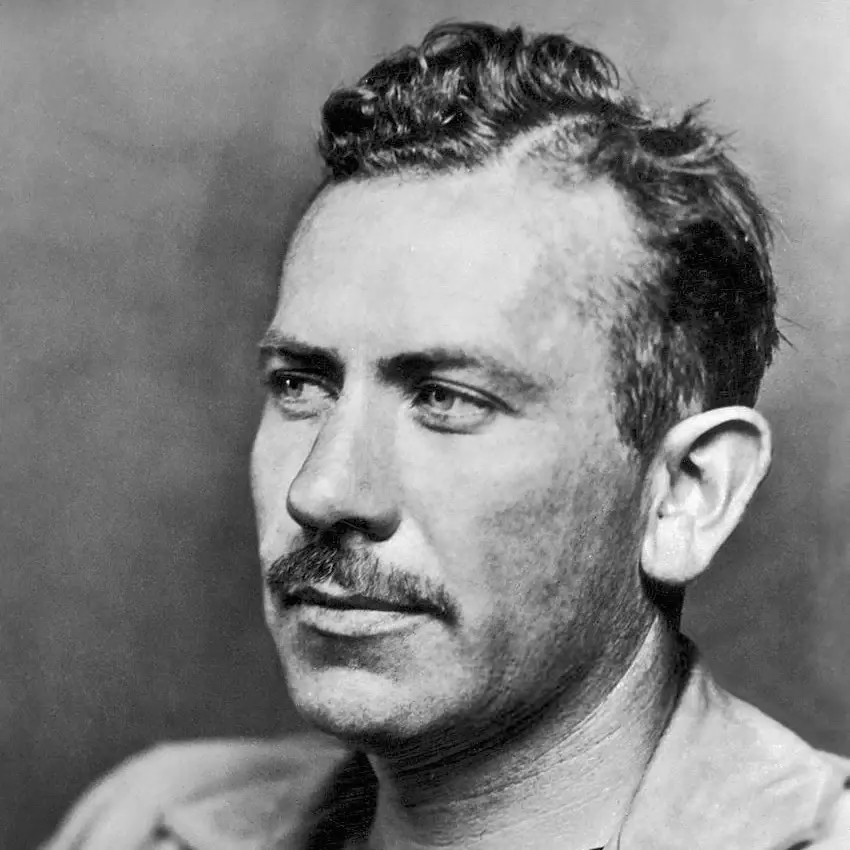
John Steinbeck was an American writer and novelist. “Of Mice and Men” explores how companionship answers loneliness, following the ranch hands George and Lennie and their dream of a farm.
Explore more books by John Steinbeck