
What you'll learn
Key ideas from Longpath
These ideas compress the book's argument without treating the author's view as settled fact. Use them as an orientation before reading the full work or listening in Wiseley.
Longpath creates a pause that widens attention from immediate reactions to distant futures and interdependence.
Awareness, Belief, and Cultivation describe a sequence for noticing short-term habits, recognizing the possibility of change, and practicing new responses.
Understanding the context behind harm can support truth-telling without absolving people or removing responsibility.
Imagined representatives, empty chairs, and family rituals give later generations a place in present deliberation.
The Official Future is a shared script whose familiarity can make it seem inevitable, even when its assumptions deserve examination.
Durable change depends on people coordinating around a shared direction and learning through shared experiments.
Longpath’s fourth invitation makes long-term values visible through attentive, reliable care in everyday relationships.
Inside Longpath
Read the first chapter in full here. The other 6 continue in the Wiseley app.
Chapter 1 of 7 · 7 min · Audio & text
The Intertidal and Longpath
Longpath, by Ari Wallach.
Imagine standing at Rome’s Colosseum and asking what someone in four thousand and twenty might recognize about our world. Wallach invites readers to wonder how people then might understand our technologies, climate choices, and response to a pandemic. They might ask what we built, what we accepted as normal, and what our choices left behind. These questions are provocations, not forecasts. We cannot know what future people will think or which parts of our lives will endure. Their value is to make a later human perspective imaginable, so today’s decisions can be seen as part of a longer story.
Longpath is Wallach’s name for a mindset that widens attention thirty thousand years into both the past and the future, across space, and through the interdependence of living things. It is more than a slogan, a fixed prescription, or a brief timeout. It is a way to distinguish what matters from what merely demands attention right now. Its first move is a pause between a trigger and a response: a chance to notice what is happening in the body and emotions before reacting. From there, attention can move among hours, days, years, and generations.
A school alert says Ruby has not submitted her Spanish assignment. The message can feel like a demand to correct something immediately, sharpened by the guilt of not doing enough for a child. Wallach describes pausing over the alert and considering what matters beyond the single missed assignment. That pause can protect emotional balance and connection with Ruby. It does not make the assignment irrelevant or remove the need to respond. It gives the relationship and the child room in the picture, alongside the school notification.
That balance is central to Longpath. Widening the frame does not mean postponing help or sacrificing present needs for a distant future. People sometimes face immediate dangers or urgent demands that have to come first. Wallach also acknowledges that safety, income, health, and freedom are unevenly available. Someone dealing with poverty, illness, insecurity, or oppression may have to focus on getting through the next day. Long-term attention is meaningful when it includes those conditions, rather than treating everyone as equally free to plan far ahead.
Michelle’s decision about track material shows how a pause can bring immediate and lasting effects into one choice. One option is cheaper and quicker to install. The alternative costs more and takes longer, but lasts five times as long and has a lower manufacturing carbon footprint. Michelle feels the pressure of failing her team and discomfort at choosing an immediate benefit for a few over a longer-term benefit for many. She decides to try to make the more durable material work.
That choice is not a rule that the more durable material is always right. The options involve real trade-offs in cost, time, durability, carbon impact, team incentives, and who benefits. The pause changes the comparison: it makes room to weigh the immediate budget and schedule alongside repeated replacement work and effects on later users. Michelle’s concern about her bonus and her team also matters as part of the decision’s context. Longpath does not supply a cost-free answer; it widens what counts as relevant before choosing.
Wallach calls periods of rapid, interconnected change the Intertidal. The name evokes a shoreline alternately exposed and submerged, where the ground is unsettled and conditions keep shifting. An ordinary change may transform one field while leaving much of life familiar. In an Intertidal, changes across environments, institutions, technology, and social behavior interact and unsettle established ways of living. The present, he argues, is such a transition: old approaches are failing in some places, while new forms are still scattered and unstable.
An Intertidal can open constructive possibilities, but progress is not guaranteed. Wallach presents the Agricultural Revolution as one example of a transition that enabled settled land use, larger communities, and new shared systems. The fall of Rome illustrates a more destructive transition, as several pressures contributed to disorder and contraction. These histories do not predict what will happen now. They show why periods of broad change can lead toward cooperation and new forms of life, or toward fragmentation and loss. The outcome remains unsettled.
In this kind of uncertainty, a quick fix can miss the structure around the visible problem. Wallach compares narrow problem-solving to playing checkers when three-dimensional chess is needed. The metaphor asks people to consider multiple dimensions and time horizons together. Michelle’s track decision, for example, is not only a question about this year’s budget. It also concerns the material’s lifespan, the effects of making it, the people who benefit now, and the work later users may face. The larger frame makes links visible without pretending every consequence can be controlled.
Evidence remains essential to this broader view, but Wallach argues that emotion belongs beside it. Measurements can clarify cost, installation time, durability, and carbon impact. Feelings can signal fear, attachment, discomfort, or concern about who gains and who bears the cost. Michelle’s fear of failing her team and unease about favoring a few people in the present help reveal what is at stake. They do not decide the question by themselves. Wallach recognizes the benefits of scientific and quantitative progress; his point is that analysis is incomplete when it excludes emotional information and motivation. Feelings, too, need to be interpreted and used wisely.
The Intertidal makes this wider perspective urgent because established systems and expectations are in motion, yet no one can guarantee a flourishing outcome. Longpath offers an orientation for acting within that uncertainty: pause, widen attention across time and systems, and consider evidence and emotion alongside present needs. Choices now can influence conditions inherited by later generations, though they cannot dictate exactly what those people will do. The aim is to keep today’s pressures and tomorrow’s possibilities in view at the same time.
Chapter 2 of 7 · 7 min · Audio & textIn the app
Why We Default to the Present
Short-termism can look like a failure of judgment, but it has a history. In dangerous or uncertain conditions, acting quickly could help people find food or respond to a threat.
Chapter 3 of 7 · 6 min · Audio & textIn the app
Inheritance, Accountability, and Self-Compassion
The past does not stay behind us. Longpath asks us to notice how histories we inherited may still shape what we expect, feel, and do.
Chapter 4 of 7 · 6 min · Audio & textIn the app
Bring Descendants into the Room
Descendants are often pictured as one’s own children, but Wallach uses the word more broadly. They include people who will live after us, whether or not we become parents.
Chapter 5 of 7 · 10 min · Audio & textIn the app
Question the Future You Inherited
A future can feel inevitable simply because the people around us keep describing it as normal. Ari Wallach calls this shared, often unspoken script the Official Future.
Chapter 6 of 7 · 8 min · Audio & textIn the app
Small Levers, Shared Direction
Choosing a future direction is only the beginning. The next question is how a small action can affect a system too large for any one person to command.
Chapter 7 of 7 · 6 min · Audio & textIn the app
Practice as a Way of Being
After offering a vision, having a conversation, and facilitating shared work, Longpath turns to a fourth invitation: ways of being. A long-term outlook takes shape not only in plans or public decisions, but in how people treat one another.
Chapter 1 of 7 · 7 min · Audio & text: The Intertidal and Longpath
Wiseley supports reading and listening to summaries in the app.
Continue in WiseleyAbout Ari Wallach
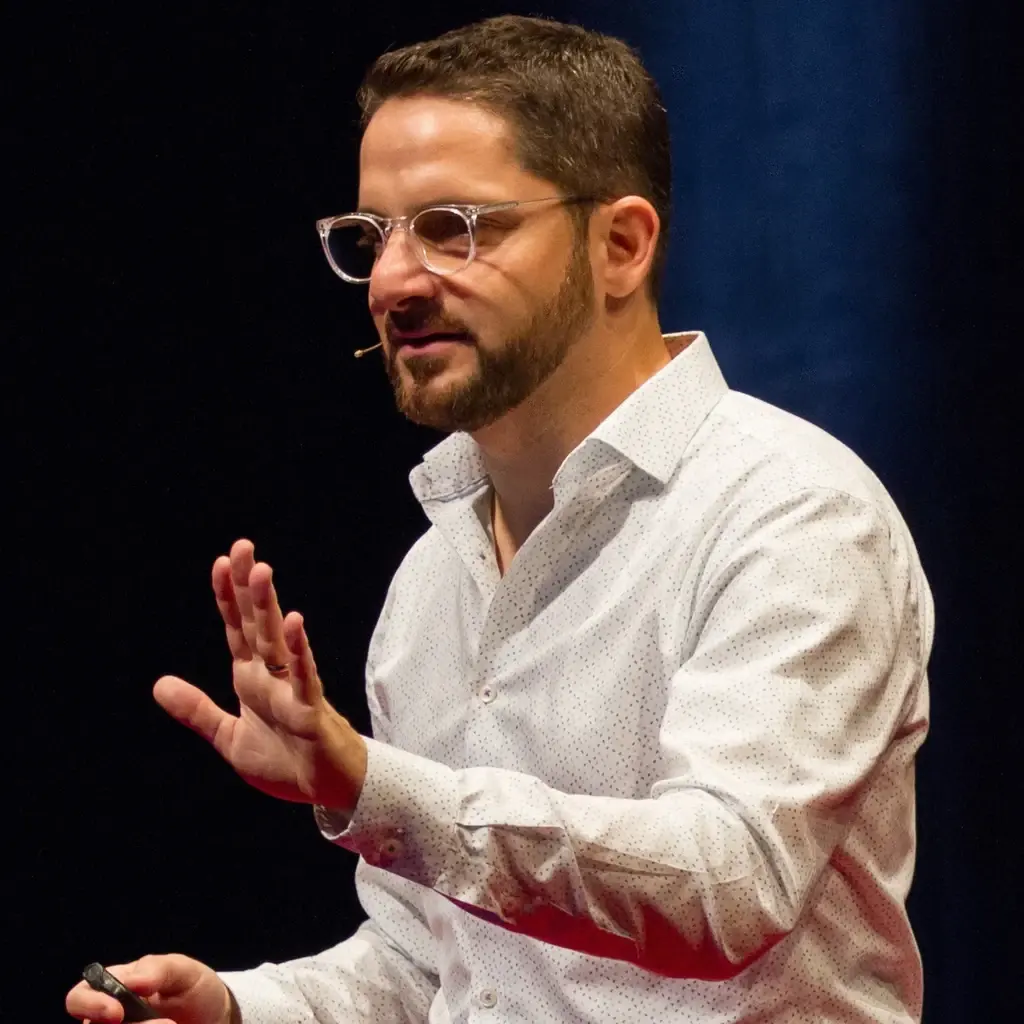
Ari Wallach is an American futurist. “Longpath” explores how people can make present choices that serve both immediate needs and future generations.
Explore more books by Ari Wallach