What you'll learn
Key ideas from Lessons in Chemistry
These ideas compress the book's argument without treating the author's view as settled fact. Use them as an orientation before reading the full work or listening in Wiseley.
Elizabeth and Calvin’s intellectual respect becomes romantic love and shared work, though each still carries a painful history.
Hastings fires Elizabeth despite needing her research, exposing an unwritten standard applied differently to pregnant women and men.
Mad and Elizabeth learn from one another: Elizabeth makes room for Mad’s curiosity, while Mad notices feelings her mother tries to hide.
By rejecting the scripted host and clearing the set, Elizabeth turns a conventional cooking program toward direct instruction.
Elizabeth uses a pot pie to teach mixtures, bonds, structure, and steam while presenting domestic work as skilled and consequential.
The show brings women to rowing and science to attentive viewers, while acceptance remains uneven and public hostility turns dangerous.
Avery and Elizabeth begin a family relationship while Avery still lacks answers about Calvin’s adoption and his path to Hastings.
Inside Lessons in Chemistry
Read the first chapter in full here. The other 11 continue in the Wiseley app.
Chapter 1 of 12 · 4 min · Audio & text
The Scientist on Television
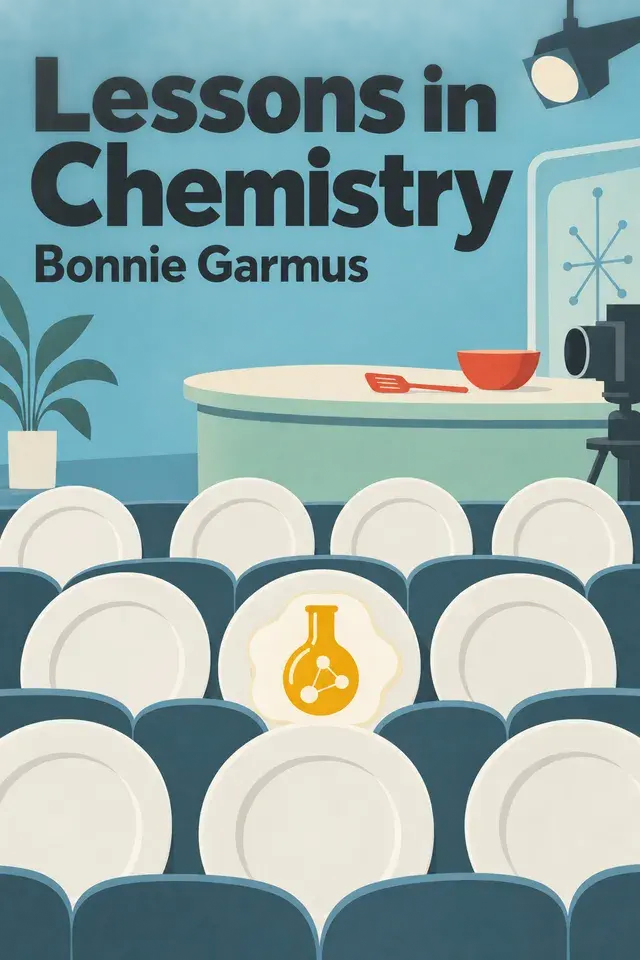
Lessons in Chemistry, by Bonnie Garmus.
Lessons in Chemistry opens in 1961 with Elizabeth Zott already known as the host of Supper at Six. At thirty, she is raising her five-year-old daughter, Madeline, and believes her life is over. Still, she rises early to prepare Madeline’s lunch. The opening gives us a public television star alongside a private, low-spirited mother, then turns back to the events that brought them together.
Madeline is remarkable in ways she keeps hidden. She learned to read at three and has read much of Dickens, but at school she pretends to be nearly illiterate. She wants to fit in, and sees how standing apart has affected her mother. Her advanced reading is not the same as being ahead in everything: some practical skills come more slowly. Madeline’s concealment shows how early talent can become something a child hides when being different feels costly.
The lunch Elizabeth packs becomes the first clue in a small investigation. It is generous and varied: lasagna, vegetables, fruit, cookies, and milk. Madeline gives it to Amanda Pine, who does not mock her, because she thinks friendship means sacrifice. Elizabeth notices Madeline’s clothes hanging on her increasingly thin frame. She knows what she has been feeding her and has calculated that Madeline is getting enough to eat.
Elizabeth considers a growth spurt, but her calculations already account for growth. An eating disorder seems unlikely because Madeline eats heartily at dinner. She dismisses leukemia on different grounds: Elizabeth is not an alarmist who lies awake imagining incurable disease. As a scientist, she seeks a sensible explanation. Then she sees Amanda with sauce on her lips and connects the evidence: Amanda has been eating Madeline’s lunch. Elizabeth’s conclusion comes from close observation and from knowing the ordinary details of her daughter’s routine. Food matters to her as nourishment for a child’s body and mind, so the missing meals are not a minor puzzle.
Elizabeth tracks Amanda’s father, television producer Walter Pine, to his studio. He has not returned her calls, and she confronts him during her lunch hour. When he explains that he and his wife are divorced, Elizabeth points out that a man can make lunch too. She keeps the issue on Amanda’s actions and Madeline’s well-being. Walter mistakes her for someone auditioning for a role, but Elizabeth identifies herself as a chemist at Hastings and says she needs to return to her work at the cyclotron.
She also criticizes the studio’s melodramatic, gimmicky programs. Her question is practical: who has time to teach the whole nation to make food that matters? Walter asks her to explain. Four weeks later, Supper at Six debuts. Elizabeth is not eager to become a television cook; she accepts the job for the pay and to support her child. The show grows because her seriousness and plain speaking carry over to the kitchen.
Her meals are hearty, emphasize the four food groups and decent portions, and take less than an hour to prepare. At the end, she tells children to set the table while their mother takes a moment alone. That invitation treats cooking as real work and acknowledges that mothers need time, too. Within six months the show is a rising star, and within a year it has become an institution. Elizabeth’s public success grows from the same practical attention she brings to food at home.
A reporter’s nickname, Luscious Lizzie, spreads with the show’s popularity. Madeline recognizes its sting: it makes her mother sound like a television personality defined by her appearance, rather than a chemist. Elizabeth feels ashamed and wonders how her life came to this. The opening names Calvin Evans as the answer, then leaves the story ready to rewind. The gap between the scientist Elizabeth understands herself to be and the image the public gives her is already in view.
Chapter 2 of 12 · 6 min · Audio & textIn the app
Talent Against the Laboratory
At Hastings, the gap between Calvin Evans and Elizabeth Zott is visible in the laboratory itself. Calvin has a private lab and an impressive record: he has contributed to Nobel-recognized research, developed a faster method for synthesizing simple proteins, published sixteen papers, and received repeated offers from Harvard.
Chapter 3 of 12 · 8 min · Audio & textIn the app
Love, Work, and Chosen Family
Elizabeth and Calvin’s scientific exchanges have become a way of thinking together, but their growing attraction is harder for them to discuss. Each mistakes the other’s reserve for rejection.
Chapter 4 of 12 · 8 min · Audio & textIn the app
Rowing, Protection, and Loss
Rowing keeps exposing the gap between Elizabeth’s determination and her skill. She and Calvin repeatedly capsize their pair, and his coaching frustrates her: he insists on patience and precise technique while also urging her to move faster.
Chapter 5 of 12 · 10 min · Audio & textIn the app
Motherhood Without a Script
After Calvin’s death, Hastings still needs Elizabeth’s scientific ability. Yet when management learns she is pregnant and unmarried, it treats her as a threat to the institute’s reputation.
Chapter 6 of 12 · 8 min · Audio & textIn the app
Learning Alongside Madeline
As Madeline grows, Elizabeth faces a form of work no handbook has made simple: learning who this child is while building a household around her. She lets Mad investigate ordinary things by touching, tasting, mixing, and asking.
Chapter 7 of 12 · 10 min · Audio & textIn the app
A Kitchen Becomes a Laboratory
Elizabeth returns to Hastings hoping to work as a scientist, but the job leaves her underused. After two months, her pay reflects her low status, her mind has little to do, and she is expected to praise colleagues for minor achievements.
Chapter 8 of 12 · 6 min · Audio & textIn the app
Family Beyond the Tree
Madeline’s family-tree assignment turns a classroom worksheet into a question about who gets to define her family. Mrs.
Chapter 9 of 12 · 9 min · Audio & textIn the app
Cooking, Power, and Conscience
The most revealing lesson on Elizabeth’s cooking show opens with chemical bonds, then turns to a chicken pot pie. She treats a recipe as applied chemistry, showing viewers how careful observation can explain the food they prepare every day.
Chapter 10 of 12 · 9 min · Audio & textIn the app
Fame, Faith, and Exposure
Supper at Six had become more than a studio lesson. Viewers were carrying its ideas into public life, and Elizabeth was learning that a larger audience could bring opportunity, hostility, and unwanted attention at once.
Chapter 11 of 12 · 5 min · Audio & textIn the app
Choosing the Work Again
After Life publishes its false account of Elizabeth, she cannot rely on her usual habit of carrying on. She believes the damage is permanent and that her life is over.
Chapter 12 of 12 · 6 min · Audio & textIn the app
Origins, Kinship, and Beginning Again
Elizabeth has already chosen to leave television and return to research, but the decision has not brought her a scientific job. People around her expected universities and research institutions to call.
Chapter 1 of 12 · 4 min · Audio & text: The Scientist on Television
Wiseley supports reading and listening to summaries in the app.
Continue in WiseleyAbout Bonnie Garmus
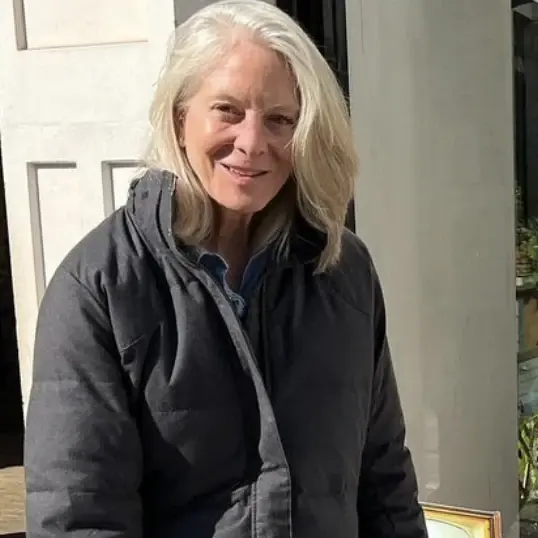
Bonnie Garmus is an American author and former copywriter. “Lessons in Chemistry” explores sexism, grief, and motherhood through the story of chemist Elizabeth Zott, who becomes the unlikely host of a cooking show.
Explore more books by Bonnie Garmus