What you'll learn
Key ideas from Learn Like a Pro
These ideas compress the book's argument without treating the author's view as settled fact. Use them as an orientation before reading the full work or listening in Wiseley.
Focused and diffuse thinking serve different roles; difficult progress often follows serious engagement and later disengagement.
Retrieval and self-explanation strengthen recall, reveal gaps, and help connect ideas.
Interleaving mixed examples can improve discrimination and help learners select what applies in a new situation.
Simplifying, translating unfamiliar terms, and externalizing details can leave working memory available for understanding.
Complete worked solutions support learning when learners reconstruct each step, consult help only as needed, and later solve independently.
Prepared surroundings and repeatable routines reduce reliance on limited self-discipline.
Connecting ideas to prior knowledge and annotating in one’s own words helps make meaning clearer and gaps easier to spot.
Feedback supports a repeating cycle of understanding tasks, setting goals, learning, monitoring progress, and adjusting.
Inside Learn Like a Pro
Read the first chapter in full here. The other 6 continue in the Wiseley app.
Chapter 1 of 7 · 8 min · Audio & text
Attention, Focus, and Productive Unfocus
Learn Like a Pro, by Barbara Oakley PhD and Olav Schewe.
People often treat learning as a fixed measure of ability. Olav’s story suggests that changing how he studied mattered more than simply studying longer. Barbara describes restarting with remedial algebra, then going on to succeed in math, science, and engineering. Their experiences introduce a practical idea: study methods can change what learners are able to do.
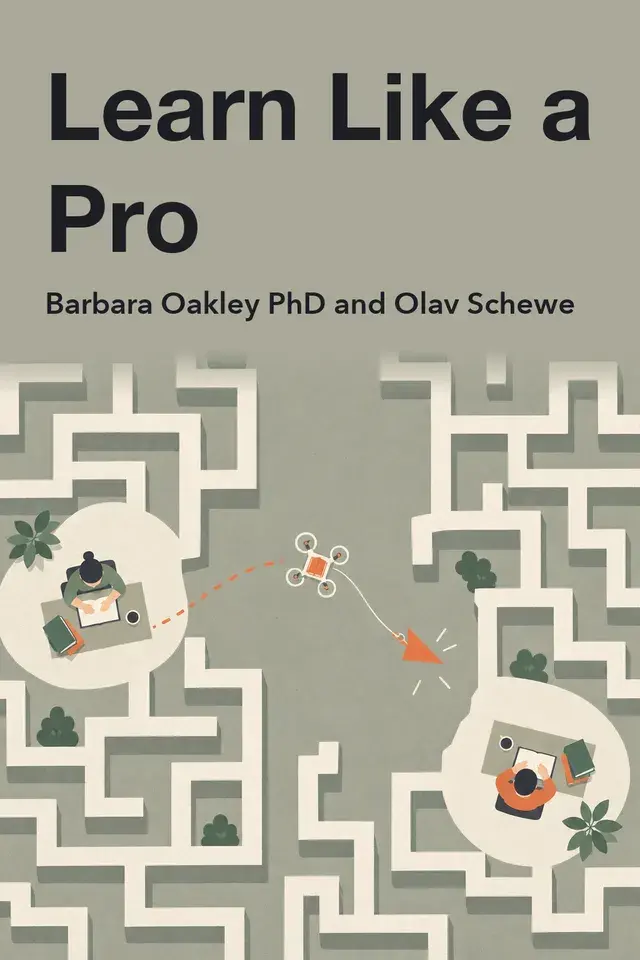
The authors describe two modes of thought. Focused thinking directs attention at a particular subject, like a beam following familiar paths. It helps with practiced tasks and with loading new material into the mind. Diffuse thinking is less directed. When attention relaxes, ideas can connect in ways that focused concentration may miss. The authors use a maze as a metaphor: focused thought follows paths through it, while small drones can travel across the maze and link distant places. This is a model for thinking about learning, not a literal account of what the brain does.
The modes work best in sequence. First, engage seriously with the problem. If progress stalls, stop pressing for a moment and give your mind room to wander. A walk, shower, simple chore, or quiet rest can leave enough attention free for new connections. Then return to focused work and build on any insight. A blink is too brief for much of this kind of disengagement. The time needed varies: a few minutes of daydreaming may be enough to enter diffuse mode, while longer breaks, even several hours or overnight, often help. Diffuse thought is not a substitute for first learning the material.
A Pomodoro session gives focused work a manageable frame. Put away distractions, choose one task, and set a timer for about twenty-five minutes. Work intently, and if an unrelated thought or to-do list item intrudes, jot it down for later rather than following it. When the timer ends, take a short break of about five minutes, then begin another cycle if useful. After three or four cycles, a longer break of ten to fifteen minutes can provide more recovery. The point is to commit to a period of work and a period of rest, not to obey a rigid clock. If you are in a productive flow, you can extend the work period, while still making room for a proper break.
Protecting attention means removing sources of interruption before starting. A phone can distract even when it is only nearby, so put it in a bag or another room. If you use it as a timer, place it out of sight and beyond reach. Disable alerts, close messaging apps, and consider blocking websites that tempt you away from the task. A quiet library or secluded place may help; earplugs or headphones can reduce noise and signal that you are concentrating. Switching repeatedly between tasks leaves some attention attached to the previous one, which can slow work and make errors more likely. The general rule is to avoid multitasking, while recognizing that a deliberate switch can sometimes help when concentration has become fixation.
Breaks should let the mind recover. The authors recommend intervals of complete mental relaxation, often five to ten minutes, rather than filling every pause with another demanding activity. Walking or getting tea can help because these activities leave room for the mind to wander. A phone break may not be restorative: phone use can demand more mental effort than it seems, and nearby alerts invite checking. Rest is part of the work rhythm, not a sign that effort has stopped mattering.
When an interruption cannot be avoided, leave yourself a clear point of return. Before stepping away, note where you are in the task and what you intend to do next. That small plan gives the unfinished work temporary closure and makes it easier to resume without reconstructing your train of thought from scratch.
Olav’s drone problem shows why a change of mode can matter. His drone became trapped high in thin, leafy branches. The tree was too high for a ladder or a thrown rock to reach the drone, and the branches were too thin to climb. After he stopped concentrating on it, he came up with a different approach: attach fishing line to an arrow, shoot the arrow over a branch, then use the line to shake the branch until the drone fell. The useful change was not more forceful concentration. Stepping away made room for another possibility.
The general Hard Start technique uses the same principle during an assignment. Scan the work, mark the hardest items, and attempt the most difficult one first. If you get stuck, switch to an easier item and return after completing one or several. The time away can loosen an unhelpful approach while your mind continues working in the background. This only helps if you have some relevant knowledge to draw on. It also involves a tradeoff: leaving the hard items until too late can bring fatigue, and short deadlines may not leave time for a fresh approach to emerge. For an essay, you can begin by laying out a structure, move to other questions, then return to develop it.
Writing also benefits from separating two kinds of work. Drafting is for getting ideas onto the page; editing is for evaluating and refining them. If you correct every sentence while drafting, you keep stopping before you have built momentum. Try writing without looking back, or cover the screen and uncover it only after you have a first draft. The initial version can be rough. Editing belongs afterward, when you can focus on choosing and improving the words already written.
The best study conditions depend on the task. Quiet may suit memorizing, while mild background noise, such as a coffee shop’s general bustle, may sometimes help with conceptual work by interrupting a fixed line of thought. Music is not a universal aid: the authors say it often slows learning, especially in math, because attention follows the tune and selecting tracks adds more switching. If your work is going well, they see no need to remove music automatically; if you are struggling, try studying without it. They also mention preliminary hints that music may help some people with attentional disorders.
Binaural beats may be worth exploring, but the benefits discussed are modest. Online sources may be unreliable, and adding music to the beats may cancel their focus effects. Focused meditation, such as repeating a mantra, may train attention over weeks or months; open-monitoring meditation may help indirectly through mood. But earlier meditation research often lacked sound scientific procedures, and yoga research is even more preliminary. The authors do not treat these practices as proven shortcuts.
Together, focused effort and suitable disengagement form a flexible rhythm. Protect attention while working, rest fully when needed, and change approach when concentration stops producing progress.
Chapter 2 of 7 · 8 min · Audio & textIn the app
Build Learning That Lasts
Oakley and Schewe use a simplified picture of the brain to explain why learning takes effort. Neurons connect through structures including axons, dendritic spines, and synapses.
Chapter 3 of 7 · 7 min · Audio & textIn the app
Working Memory and Memory Tools
Learning can become difficult when too many unfamiliar ideas demand attention at once. Oakley and Schewe describe working memory as a temporary mental workspace for holding and manipulating information while we solve problems and make sense of material.
Chapter 4 of 7 · 6 min · Audio & textIn the app
From Deliberate Steps to Intuition
You can know the steps of a method and still hesitate when a new problem appears. You can understand how a movement works and still struggle to produce it smoothly during play.
Chapter 5 of 7 · 7 min · Audio & textIn the app
Designing Motivation and Self-Discipline
Self-discipline matters, but Oakley and Schewe describe it as limited. There is no quick, easy way to make its supply inexhaustible.
Chapter 6 of 7 · 6 min · Audio & textIn the app
Reading for Meaning
Reading well is not the same as moving your eyes across a page quickly. The point is to understand what the words mean and bring the important ideas back when the page is closed.
Chapter 7 of 7 · 8 min · Audio & textIn the app
Tests, Feedback, and Lifelong Learning
A strong test result depends on knowing the subject and understanding what the test expects. Familiarity with its format, assumptions, and scoring rules can affect how well knowledge translates into answers.
Chapter 1 of 7 · 8 min · Audio & text: Attention, Focus, and Productive Unfocus
Wiseley supports reading and listening to summaries in the app.
Continue in WiseleyWhat Learn Like a Pro is about
Learn Like a Pro asks how learners can replace guesswork and raw effort with methods that make studying more effective. It explains how to manage attention, overcome being stuck, strengthen memory, and build fluent skill through retrieval and varied practice. It then applies these ideas to motivation, reading, testing, and lifelong learning.
About Barbara Oakley & Olav Schewe
Barbara Oakley
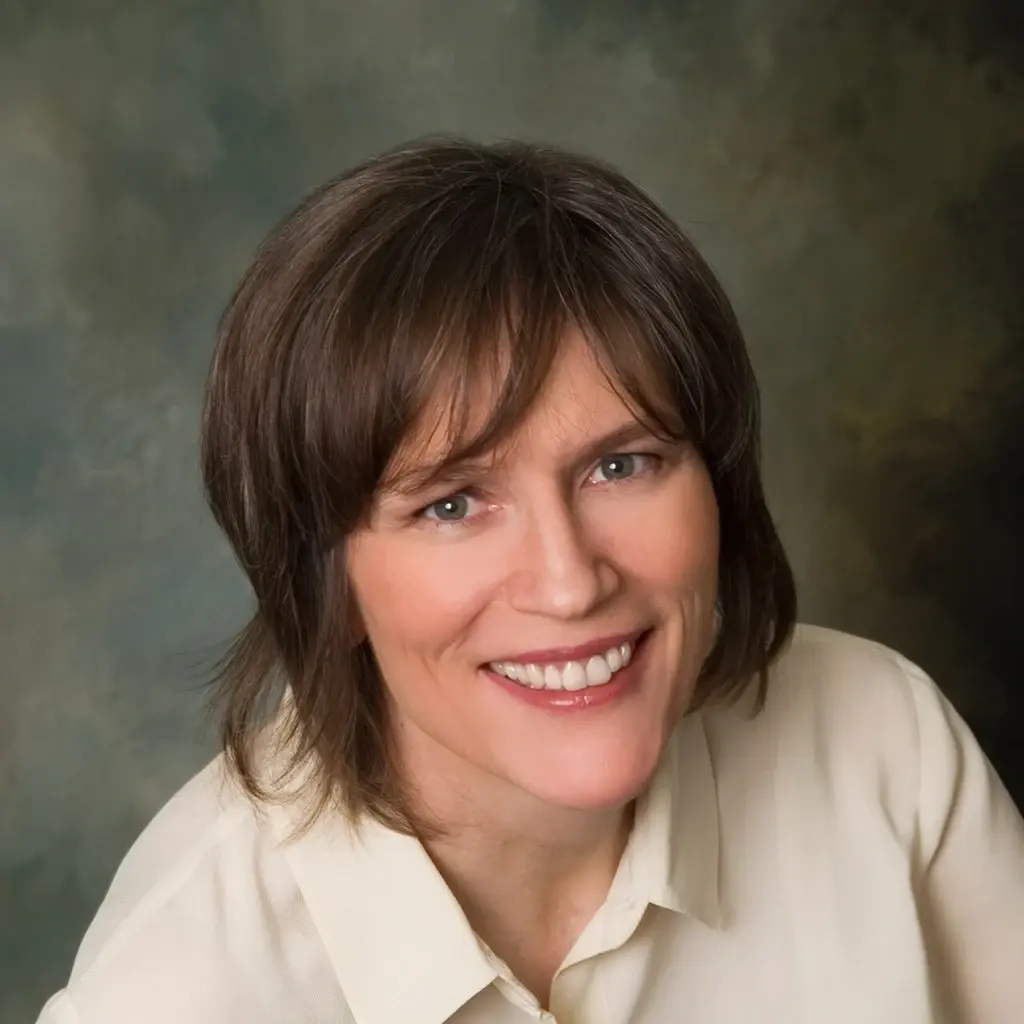
Barbara Oakley is an engineering professor and author. “A Mind for Numbers” explores practical approaches to learning difficult material, especially in mathematics and science.
Explore more books by Barbara Oakley
Olav Schewe
Olav Schewe is a coauthor of “Learn Like a Pro”. The book explores how learners can replace guesswork and raw effort with methods that make studying more effective.
Explore more books by Olav Schewe