What you'll learn
Key ideas from Know Yourself, Know Your Money
These ideas compress the book's argument without treating the author's view as settled fact. Use them as an orientation before reading the full work or listening in Wiseley.
Children learn money patterns from both the emotional atmosphere at home and how openly the family discusses financial choices.
Each tendency offers a useful instinct, while excess can narrow choices or crowd out another value.
Fear can mobilize us in response to a perceived threat, yet persistent fear can narrow attention and obscure choices.
Clear boundaries specify what help is offered, for how long, with what expectations and consequences.
A pause to check approval, personal purpose, and the budget can expose approval-driven or emotional spending.
Vision supplies direction, while practical planning turns possibilities into costs, timing, and achievable steps.
Generosity can support organizations, individuals, or practical needs through time, skills, and possessions, guided by research and discernment.
Zero-based budgets assign income before each month and improve through review as circumstances change.
Inside Know Yourself, Know Your Money
Read the first chapter in full here. The other 7 continue in the Wiseley app.
Chapter 1 of 8 · 5 min · Audio & text
Your Childhood Money Classroom
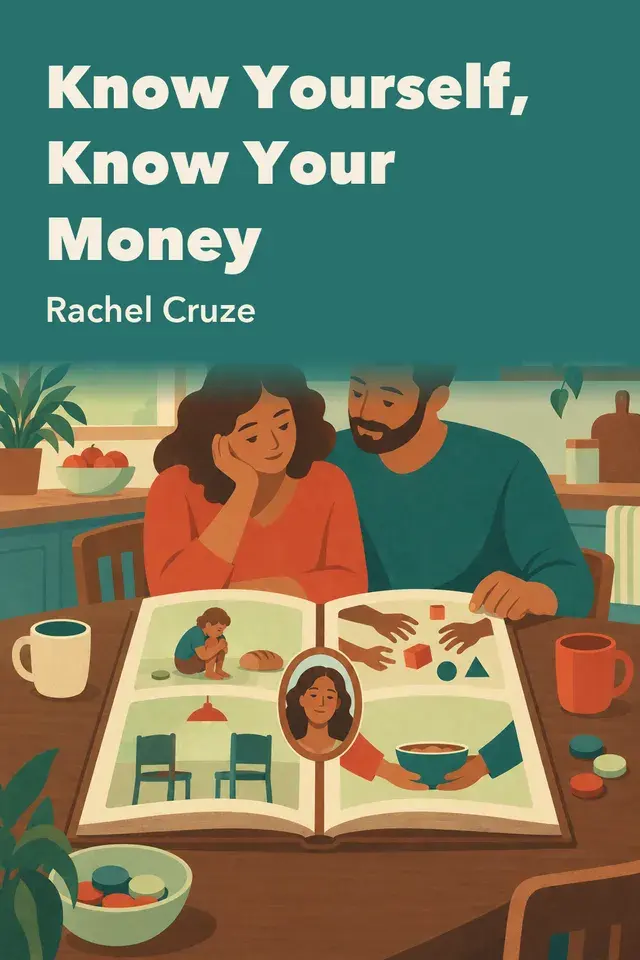
Know Yourself, Know Your Money, by Rachel Cruze.
Rachel Cruze begins with a behavioral idea: managing money is not only a matter of knowing the right rules. It also helps to understand why people make the choices they do. One place those reasons take shape is home. Children learn from what adults explain, but also from the habits, silences, and feelings they witness. Those early lessons can influence adult expectations without dictating them forever.
Cruze describes childhood as a money classroom with two dimensions. One is emotional: did money bring stress and tension, or did it feel calm? The other is verbal: did the family talk openly about money, or keep it private? Combining these dimensions gives four patterns: Anxious, Unstable, Unaware, and Secure. Open discussion does not necessarily mean respectful discussion, and a calm atmosphere does not necessarily mean children understand the family’s finances.
In an Anxious Classroom, money feels stressful and is rarely discussed. A child might hear no clear explanation, but still notice adults’ reactions. Cruze describes a mother insisting on buying expired bread because it costs less, acting anxious at checkout, and sometimes abandoning purchases. The child can absorb the lesson that every penny matters and that spending is frightening, even without being told directly. Adults from this classroom may find it hard to tell a spouse about money worries or uncertainty. The feelings learned early can make honest disclosure seem unsafe.
An Unstable Classroom is also stressful, but money is discussed. The discussions may be arguments that children hear repeatedly, with unpredictable shifts between approval and anger. Seeing the topic raised does not make the home feel secure; it can teach children to expect money conversations to become painful fights. As adults, they may avoid those conversations, doubt that disagreement can stay healthy, or give up on working together. Still, because money problems were visible, people may have an opening to learn a different way of talking about them.
The Unaware Classroom is calm but closed. Children may not worry about money, yet receive little explanation of how it works or what their parents’ finances are actually like. Some parents may keep details private to protect their children from adult concerns. The result can be a peaceful impression without financial understanding. One woman who remembered an abundant childhood later learned her parents had significant credit-card debt and little retirement savings. Her mother had put Christmas expenses on a credit card, and her father did not know she was accumulating debt. That discovery shattered her picture of her parents’ financial health and became a hard Milestone Moment; others may avoid their own finances because they never learned how to manage them.
The Secure Classroom combines calm with open, respectful communication. A college friend of Cruze’s remembered parents who budgeted, made intentional choices, and calmly said no when needed. They worked to pay off debt, involved their children in some decisions, and celebrated progress. Their household showed that security does not require wealth; it can come from managing available money deliberately and discussing choices without fear.
Cruze contrasts that example with the friend’s roommate’s household. The roommate’s parents argued disrespectfully over a purchase, did not resolve the disagreement, and one parent secretly offered a credit card. The contrast shows why openness alone is not enough: children can hear money discussed and still learn that it brings conflict, secrecy, or unpredictable decisions. People raised in secure homes also face a risk. If they did not see the sacrifices behind their parents’ standard of living, they may assume they can afford that same lifestyle immediately.
These classrooms describe patterns, not permanent boxes. A household’s climate can change as income shifts, parents separate or remarry, or adults learn new ways to budget and handle debt. One person may experience more than one classroom while growing up. Even siblings in the same home may remember and interpret events differently, so a shared history does not guarantee identical money lessons.
To identify your own classroom, think about what you heard, saw, and felt about money from childhood until you left home. Notice the atmosphere as well as what people said or avoided saying. Write down Milestone Moments: memorable events that shaped what money seemed to mean. If you have a spouse, compare your money histories and the classrooms you each remember; the differences can help explain why the same conversation feels different to each of you. Then picture a healthier classroom: money handled intentionally, discussed openly and respectfully, and approached with calm. Understanding where your habits began gives you a way to choose what to carry forward and what to change.
Chapter 2 of 8 · 7 min · Audio & textIn the app
The Money Tendencies We Bring
The patterns you learned at home offer context, but they do not decide every choice you make now. Cruze describes seven money tendencies as continua: each has two ends, and neither is a moral verdict or a complete description of who you are.
Chapter 3 of 8 · 7 min · Audio & textIn the app
Name Fear, Choose Your Response
Fear can be useful. Cruze describes it as the body’s response to a perceived threat, an alarm that mobilizes a person to act.
Chapter 4 of 8 · 6 min · Audio & textIn the app
Grace, Truth, and Money Boundaries
Everyone makes money mistakes. Some are small, like a late bill; others involve spending beyond a plan or letting debt grow.
Chapter 5 of 8 · 5 min · Audio & textIn the app
Spend from Values, Not Approval
A purchase is more than a line in a budget. Its motive matters. The same item can serve one person’s purpose and family, while another person buys it mainly to attract attention. Spending for yourself is not automatically selfish, and liking nice things is not automatically a problem. The question is whether a purchase expresses the life you value or tries to secure someone else’s approval. Wanting to belong is human. It becomes costly when the need to fit in takes charge of spending. The target keeps moving: a…
Chapter 6 of 8 · 7 min · Audio & textIn the app
Turn Dreams into Savings Plans
Saving can feel like a loss when its only purpose is to leave money untouched. Cruze argues that saving becomes easier to sustain when it is attached to a future someone wants.
Chapter 7 of 8 · 6 min · Audio & textIn the app
Generosity Beyond Financial Security
Money can seem like a way to buy safety, but the author argues that no balance can quiet fear when a person depends on money for protection. She recounts a businessman who sold his company for thirty million dollars, had no debt and owned two paid-for houses, yet returned to work because poverty in childhood had left him afraid of losing security.
Chapter 8 of 8 · 7 min · Audio & textIn the app
Commitment Becomes a Monthly Practice
Understanding why a money habit formed can help make it visible, but insight alone does not change what happens at the next purchase or paycheck. Rachel Cruze distinguishes commitment from passive involvement.
Chapter 1 of 8 · 5 min · Audio & text: Your Childhood Money Classroom
Wiseley supports reading and listening to summaries in the app.
Continue in WiseleyAbout Rachel Cruze
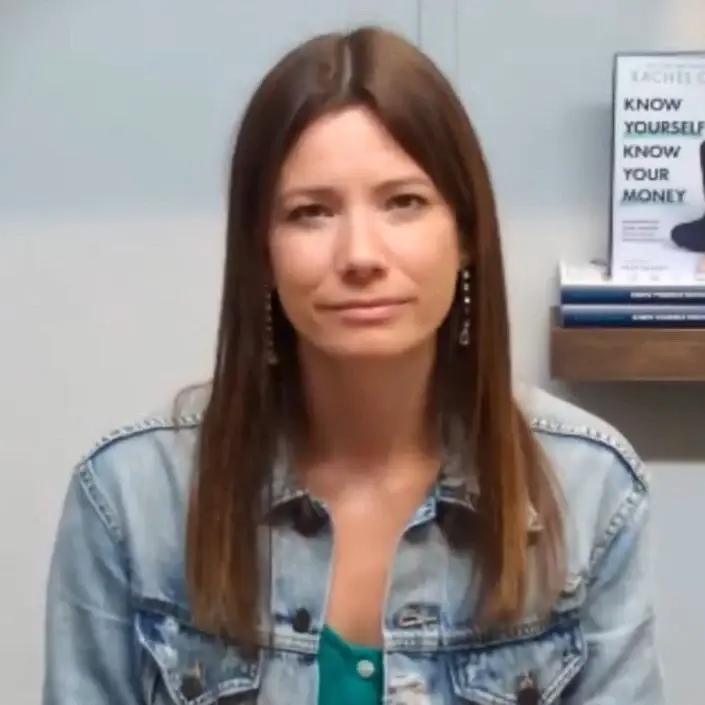
Rachel Cruze is an American personal finance author and cohost of The Ramsey Show. “Smart Money Smart Kids” explores how parents can equip children to manage money and which family habits shape that ability.
Explore more books by Rachel Cruze