What you'll learn
Key ideas from Humankind
These ideas compress the book's argument without treating the author's view as settled fact. Use them as an orientation before reading the full work or listening in Wiseley.
Veneer theory treats civilization as a thin cover over selfish violence, while Bregman argues that ordinary cooperation is a more realistic default.
Together, the studies support a conditional account of harmful participation rather than automatic cruelty or blind obedience.
Destructive belonging begins when loyalty to insiders turns shared commitment into permission to disregard outsiders.
Communication turns private objections into shared commitments that support coordinated resistance and help.
Buurtzorg and FAVI pair local authority with practical support, fewer controls, and accountability for conflict, standards, and failure.
Ostrom’s commons differ from Hardin’s open access: communication, local rules, monitoring, and revision can make shared resources governable.
Trust begins with charitable interpretation but remains open to evidence, deception, and revision.
Inside Humankind
Read the first chapter in full here. The other 11 continue in the Wiseley app.
Chapter 1 of 12 · 9 min · Audio & text
The Human Nature We Expect
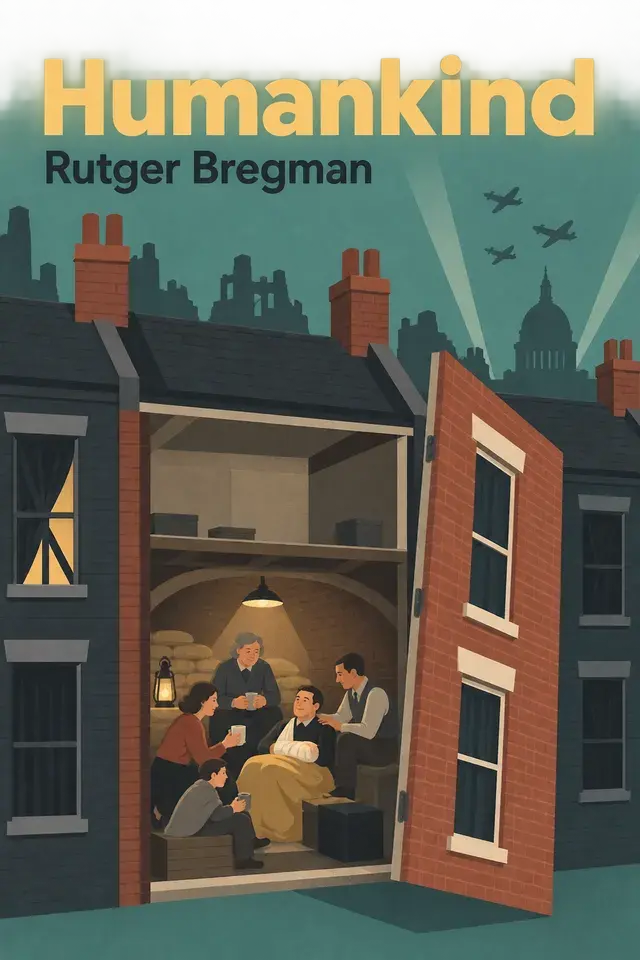
Humankind, by Rutger Bregman.
One of the book’s starting questions is what a crisis reveals about human nature. A familiar answer is that it reveals the truth beneath civilization. Rules, manners, and institutions are only a thin covering over selfishness and violence. When danger removes it, panic and cruelty supposedly emerge. Dutch biologist Frans de Waal calls this view veneer theory. Gustave Le Bon argued that in a crisis people descend several rungs on the ladder of civilization, with panic and violence erupting. It is culturally attractive because any disorder can be read as proof that people were dangerous all along.
Bregman proposes what he calls a new realism. People are not angels, and wrongdoing is real. But cooperation is not a rare miracle added to a selfish nature. It is an ordinary capacity that often appears without central command. This matters because beliefs about people shape institutions. If everyone is presumed unreliable, surveillance, punishment, and elite control seem necessary. Cynicism also protects itself from disproof: a generous act can be reinterpreted as vanity or self-interest. The question is not whether humans can do harm. It is which pattern should be treated as normal under pressure.
The Blitz offered a direct test. Before German bombing began, British officials predicted mass panic, flight from London, psychiatric collapse, and social disorder. Churchill even forecast that millions might flee. The destruction and grief were real. Yet eyewitnesses described children playing, shoppers bargaining, traffic and trains continuing, and people drinking tea while windows rattled. The expected mass breakdown did not occur. The source reports empty psychiatric wards, improved measures of public mental health, and later memories of solidarity. This does not make bombing harmless. It shows that severe danger did not automatically erase social order.
Officials still struggled to accept that lesson. British experts continued to assume bombing could break an enemy’s morale, treating British resilience as a special national trait. Interviews in heavily bombed British cities found no morale collapse, yet the evidence was ignored when it conflicted with the theory. The same assumption helped justify further civilian bombing, even though postwar accounts of German cities also described steady civilians rescuing victims, fighting fires, and helping the homeless and injured. Pessimistic expectations did not merely misdescribe people; they helped authorize policies that caused more suffering.
Hurricane Katrina makes the distinction between real disaster and imagined disorder even sharper. New Orleans suffered terrible loss, displacement, fear, and deprivation. Some looting and wrongdoing occurred. But newspapers and officials circulated dramatic reports of rape, murder, gangs, snipers, and anarchy, as if removing basic necessities had returned the city to a Hobbesian state of nature. Later investigation challenged much of this picture. An apparent shooting sound came from a gas-tank valve. Only six people died in the Superdome, and the police chief could identify no officially reported rape or murder. Looting often involved groups organizing to survive, sometimes alongside police, rather than a general war of all against all.
At the same time, civilians formed rescue squads, outside boats arrived, and groups such as the Robin Hood Looters distributed food, clothing, and medicine. Reviews of disaster research found calm action and widespread altruism rather than total mayhem, while acknowledging that not every individual behaved well. The most damaging second phase came from official suspicion. Negative rumors delayed emergency mobilization, the National Guard was deployed on the assumption that residents needed control, and police killed innocent residents on Danziger Bridge. The pattern is important: spontaneous cooperation can be followed by an authority-driven disaster when leaders mistake help for threat.
This is where self-fulfilling expectations enter. When authorities expect selfishness, they treat ordinary people as potential dangers. That treatment can disrupt cooperation and make the predicted disorder more likely. Expectations are therefore not neutral descriptions.
People also acquire expectations through what they repeatedly hear. Negativity bias draws attention to bad events, perhaps because underestimating danger was historically more costly than overestimating it. Availability bias then makes vivid examples feel frequent: what comes to mind easily is mistaken for what happens often. News intensifies both biases because its normal subject is the unusual event. A disaster, attack, scandal, or act of cruelty is reportable; an uneventful day of strangers cooperating usually is not. Repetition can make exceptional harm appear typical and ordinary stability invisible. Bregman distinguishes sensational daily news from explanatory journalism that helps people understand wider patterns.
That distortion helps explain the cultural power of William Golding’s Lord of the Flies. Its fictional boys abandon shared duties, fear an imagined beast, and descend into violence. The story became a popular model of what isolated humans supposedly do. Bregman asks whether a real deserted-island case would look the same. He finds six Tongan boys who survived for more than a year on ‘Ata. A storm destroyed their boat’s sail and rudder, leaving them adrift for eight days before they sighted the steep island. They had no food and collected small amounts of rainwater in coconut shells; they also tried fishing and boiling seawater. This was not a universal experiment, and one counterexample cannot settle human nature. But it directly challenges the claim that breakdown is inevitable.
On the island, the boys did not simply hope to get along. They built a small commune. They created a food garden, stored rainwater, kept chickens, made places to exercise and play, and maintained a fire continuously for more than a year. They shared scarce resources and divided work into paired teams and a strict roster covering the garden, kitchen, and guard duty. Cooperation here was a practical technology: it turned limited supplies and exposed bodies into a livable routine.
Their arrangement also included care and conflict repair. When Fatai fell from a cliff and broke his leg, the others cared for him rather than treating him as expendable. When quarrels became heated, the boys separated for a cooling-off period. After several hours, they reunited and apologized. Song and prayer helped structure their days, but the most revealing evidence was mundane: someone had to tend the fire, someone had to guard, and everyone had to return after an argument. When they were rescued, the boys were physically fit, and Fatai’s leg had healed.
The ‘Ata story does not prove that humans are naturally good in every situation. People can still steal, injure, deceive, or turn against one another. Its value is narrower: it makes cooperative order observable under conditions often used to predict collapse. Taken together, the Blitz, Katrina, and ‘Ata suggest a better starting assumption. Harm deserves attention, but it should not define the baseline. Ordinary cooperation is quiet and therefore easy to miss. Institutions that expect decency may give it room; institutions that expect predation may suppress it. The human nature we expect can become the human behavior we help produce.
Chapter 2 of 12 · 7 min · Audio & textIn the app
Friendliness and Collective Intelligence
How did a physically weak primate become capable of reshaping the planet? Bregman begins with a question that sounds philosophical but can be investigated empirically: are human beings naturally hostile, or naturally inclined to live together?
Chapter 3 of 12 · 11 min · Audio & textIn the app
Settlement, Hierarchy, and Misread Collapse
If human beings could coordinate in mobile networks, why did permanent hierarchy and organized war become so familiar? Bregman’s answer is historical rather than biological.
Chapter 4 of 12 · 10 min · Audio & textIn the app
Rethinking the Experiments on Cruelty
Famous psychology experiments often arrive as moral verdicts. They seem to show that ordinary people become cruel when a situation is arranged around them, or obey authority while someone else suffers.
Chapter 5 of 12 · 10 min · Audio & textIn the app
When Solidarity Enables Cruelty
The book’s hardest puzzle appears here: how can a species capable of trust, cooperation, and sacrifice also participate in mass murder? Bregman’s answer is not that cruelty is the hidden human essence.
Chapter 6 of 12 · 7 min · Audio & textIn the app
Making Resistance and Help Possible
Conformity becomes strongest when people keep their doubts private. A person can recognize cruelty or danger and still hesitate because nobody else has spoken.
Chapter 7 of 12 · 11 min · Audio & textIn the app
Expectations Shape Work and Responsibility
Organizations do not simply reveal what people are like; they help make certain kinds of behavior easier. An employer that assumes people are capable gives them different attention, opportunities, and responsibility from one that assumes they are lazy or untrustworthy.
Chapter 8 of 12 · 7 min · Audio & textIn the app
Learning Through Freedom and Play
Learning, in Bregman’s account, is not something that begins only when children sit down for a lesson. Play can be the setting in which curiosity becomes judgment, and individual choices become cooperation.
Chapter 9 of 12 · 11 min · Audio & textIn the app
Governing Through Shared Responsibility
Participation becomes civic education only when it changes what people can decide. A public meeting that gathers opinions after officials have fixed priorities may feel democratic, but it requires little judgment.
Chapter 10 of 12 · 9 min · Audio & textIn the app
Safety Through Humane Institutions
Public safety is the hardest test of a humane view of human nature. In prison, wrongdoing is real, victims matter, and staff must control danger.
Chapter 11 of 12 · 8 min · Audio & textIn the app
Contact Across Lines of Conflict
Physical proximity is not the same as contact. Two groups may share streets, workplaces, or a country while remaining strangers, or while one group controls the other.
Chapter 12 of 12 · 8 min · Audio & textIn the app
Practicing Trust With Judgment
Trust, in Bregman’s practical sense, begins before certainty. When another person’s words or actions are ambiguous, start with a charitable interpretation: perhaps they mean well, rather than assuming hidden hostility.
Chapter 1 of 12 · 9 min · Audio & text: The Human Nature We Expect
Wiseley supports reading and listening to summaries in the app.
Continue in WiseleyWhat Humankind is about
Why do we so often expect the worst of one another? Rutger Bregman examines cooperation, cruelty, and the circumstances that encourage each. Through historical cases and contested research, Humankind explores what trust, shared responsibility, and meaningful contact can teach us about work, education, justice, and everyday life.
About Rutger Bregman
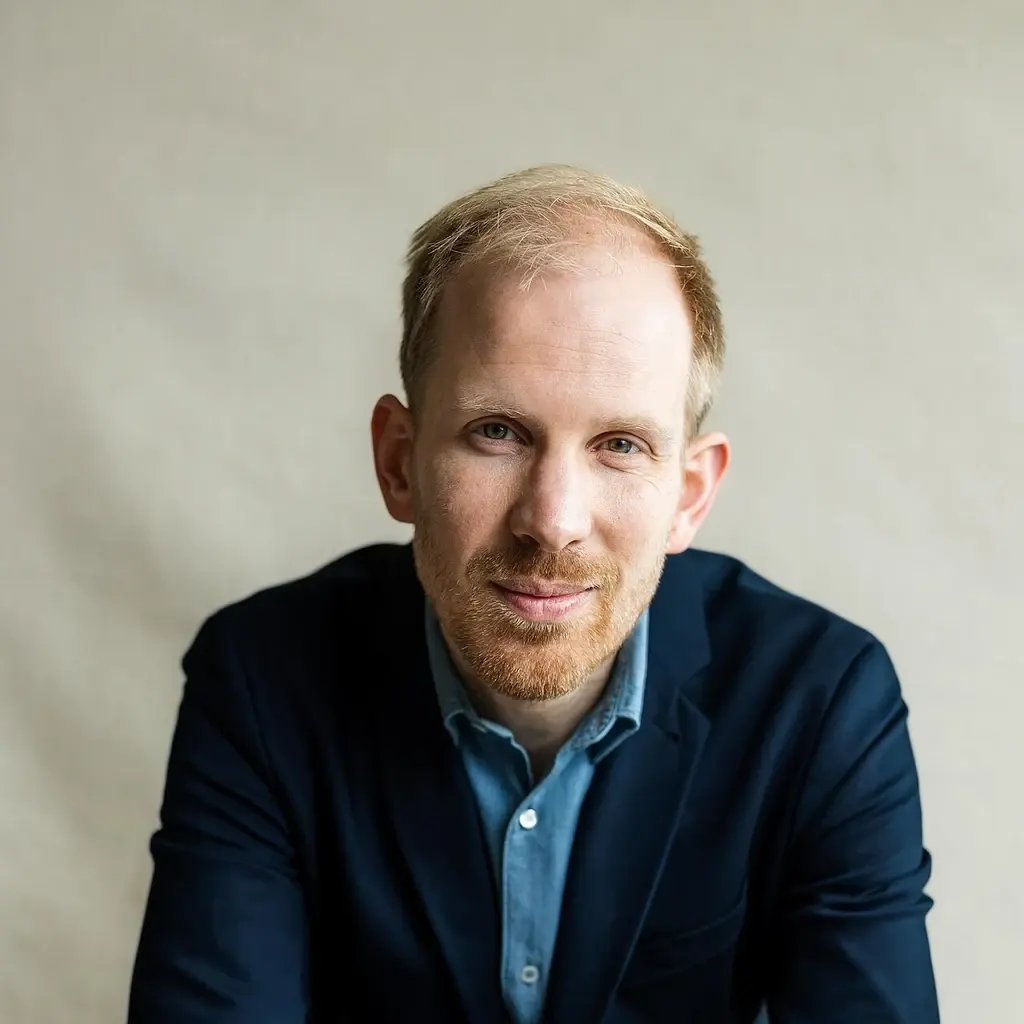
Rutger Bregman is a Dutch historian and author. “Utopia for Realists” explores why material progress has not supplied a shared vision of a better future.
Explore more books by Rutger Bregman