What you'll learn
Key ideas from How We Heal
These ideas compress the book's argument without treating the author's view as settled fact. Use them as an orientation before reading the full work or listening in Wiseley.
Elle presents healing as continuing care, so renewed pain can call for attention without proving that earlier work was lost.
Writing about a present fear can trace its first memory, reveal its effects, and make room for patient attention.
Honest self-inquiry can shape affirmations that support self-compassion, while action—not repetition alone—helps bring change.
Writing can show how formative stories shape present identity while leaving room to choose how to carry them.
Restorative attention can coexist with pain without denying what happened or requiring a person to feel cheerful.
Letting go can create room for new ways to live and relate, even when the work feels hard.
Inside How We Heal
Read the first chapter in full here. The other 4 continue in the Wiseley app.
Chapter 1 of 5 · 8 min · Audio & text
Begin Again with Care
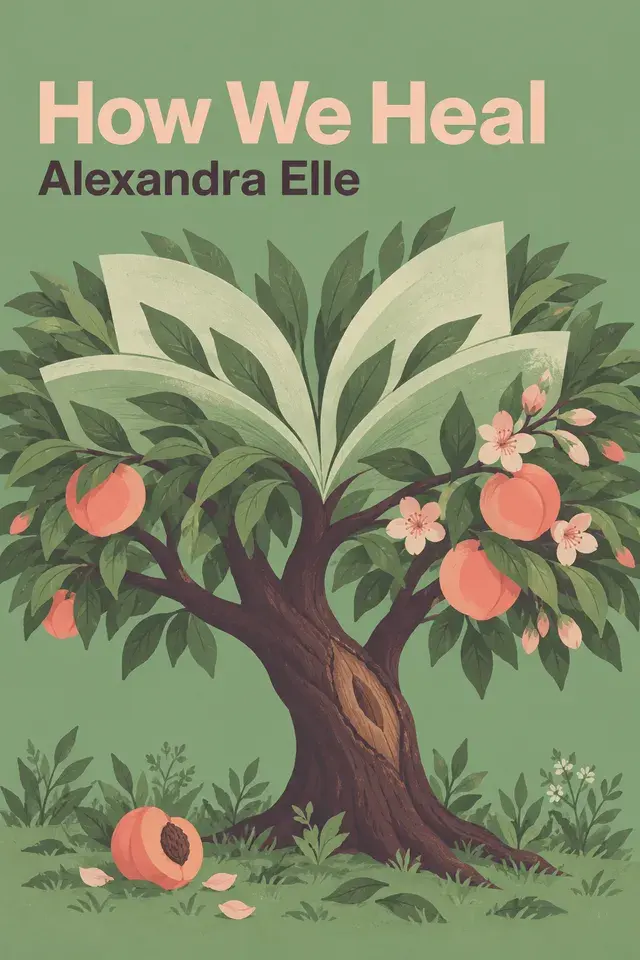
How We Heal, by Alexandra Elle.
For Alexandra Elle, healing is not a finish line where old pain can never return. It is continuing care for oneself. A person may have made real changes and still feel an old hurt again. That return does not make earlier work false. It means there is something tender to notice and tend to now. Elle offers a foundation people can return to, with room to begin again when their needs change.
She is candid about the basis for her guidance. Elle has taught people to use writing to heal, led self-care workshops around the world, and helped thousands of people on their healing journeys. She draws on her own experience of being hurt and healing. She notes that she may not have a psychology degree or a full-time research job. Her account is personal and practical, offered from the perspective of someone who has done this work and facilitated it with others. That qualification matters: she is sharing what has helped her and what she has observed, not claiming every reader will heal in the same way.
Writing is one way she invites people to meet their own experience honestly. In workshops, she saw that people wanted to understand themselves and let go of what held them back, yet many avoided looking at emotional wounds. They feared finding something they would not know how to heal. Elle describes the page as a place where she can arrive as she is, be curious, and work with what is there. Writing can bring self-doubt and needs into view, including the reasons someone might be resisting a change. It need not be polished or performed for anyone else to be useful.
A peach-cobbler text from Elle’s mother shows how a present moment can carry the weight of an older feeling. While away with her friend Erika, Elle received a message that her cooking was improving. She felt angry and hurt, even though cooking had become a meaningful part of her adult life. As a child, she had been kept at a distance from cooking, and the kitchen came to feel forbidden. The message touched that history of feeling discredited, despite the work she had done on her relationship with her mother.
Elle was frustrated that this old hurt still had power and that starting over felt exhausting. Erika listened while Elle described feeling alone in her family’s healing work. The exchange also helped Elle consider making peace with expectations that might not change. She does not present her mother as a villain, or herself as wrong for hurting. Her mother did not experience the message as painfully as Elle did. The episode shows how the same moment can carry different meanings, especially within a complicated relationship. A strong response does not by itself prove that a person has made no progress. Elle’s task was to listen to what the reaction revealed and offer herself compassion rather than self-punishment.
Elsewhere, Elle describes a time when anxiety and depression intensified amid the demands of work and family. With a therapist’s prompting, she wrote down what she wanted to be true, what she had been avoiding, and what she could do to begin healing. Putting those questions on the page helped her see her situation more clearly and remember that she had some agency in how to respond.
Her answers joined a broad wish to practical choices. Wanting mental ease led her to consider asking her doctor about medication options, a conversation she had been avoiding. Wanting greater happiness, she wrote that she had been avoiding her gratitude practice and needed to return to it, paying attention to the beauty in front of her. These steps did not promise an instant cure. They gave her a way to connect what she wanted with an action she could take. The usefulness of the exercise lies in that movement: honest writing can make a need specific enough to answer, one manageable step at a time.
Elle also describes self-forgiveness as part of beginning again. At thirty, after therapy and journaling, she faced anger at herself for past choices and for blaming herself for abuse. She apologized to her younger self and offered the love she had withheld. The letter-writing practice she describes asks a person to choose a significant unresolved moment, write about what they regret and what was outside their control, and allow the feelings that arise. It closes with a promise of forgiveness and love. This does not change what happened or make the practice easy. Forgiveness can be complicated, especially when someone believes they are at fault. For Elle, the letter offered a way to stop treating self-hatred as the only response to the past.
Morgan Harper Nichols’s account shows why care has to fit the person receiving it. After learning at thirty-one that she was autistic, Nichols also came to understand her sensory processing disorder. Water and certain textures on her skin could feel unsettling, so a warm bath—the kind of routine often held up as self-care—did not calm her. Understanding this helped her stop measuring herself against other people’s rituals. Medication before a shower can ease some of her unease, though bathing is not something she enjoys. Drawing, painting, doodling, standing barefoot on grass, watching clouds, and noticing trees are among the small experiences that bring her peace.
Nichols’s examples are particular to her. The point is not that everyone should use those practices, but that a routine that comforts one person may not suit another person’s senses or needs. Learning what works can take time, and it can remain imperfect. Her account makes self-care less like following a standard checklist and more like paying attention to what actually helps one feel safer or steadier.
Rest also belongs within this work. Elle remembers trying to hurry through healing so she could move on faster, then realizing that this pace was not sustainable. She had feared that pausing would cost her progress. Instead, she came to understand rest as a way to replenish the capacity to continue; resting, she says, would not ruin or hinder future healing. When reflection feels too complex, a person can step back and return when ready. Nichols also describes needing space as recognizing her limits, not avoiding the work.
Across these examples, starting again is not a demand to solve everything at once. It can mean telling the truth on a page, noticing what a painful reaction is asking for, writing to a younger self with compassion, or choosing a form of care that suits one’s actual needs. Elle’s guidance remains rooted in her experience, and the practices will not fit everyone in the same way. Her invitation is to meet the present honestly, allow room for rest, and choose a next step without using renewed pain as a reason to punish oneself.
Chapter 2 of 5 · 9 min · Audio & textIn the app
Befriend Fear Without Hurrying
Fear can be difficult to approach because turning toward it may bring back a memory or feeling someone has kept at a distance. Elle’s advice is to slow down and let the fear be present without judging yourself for having it.
Chapter 3 of 5 · 10 min · Audio & textIn the app
Reclaim Voice, Rewrite the Past
Painful experiences can become stories a person tells about who they are: unimportant, difficult to love, or destined to repeat old patterns. Alexandra Elle describes writing as a way to examine those stories and regain a voice within them.
Chapter 4 of 5 · 13 min · Audio & textIn the app
Hold Joy Beside Pain
Healing, in Elle’s account, does not ask anyone to choose between taking pain seriously and making room for relief. Grief, fear, and hard memories may remain present while a person also notices a kind gesture, a moving body, an ordinary meal, or a burst of laughter.
Chapter 5 of 5 · 5 min · Audio & textIn the app
Release without Forcing Closure
After recognizing the stories and burdens that keep us stuck, Alexandra Elle turns toward letting go. She presents release as an active choice: loosening our hold on what no longer serves us so we can make room for new ways to explore who we are, the life we want to create, and the relationships we want with ourselves and others.
Chapter 1 of 5 · 8 min · Audio & text: Begin Again with Care
Wiseley supports reading and listening to summaries in the app.
Continue in WiseleyAbout Alexandra Elle

Alexandra Elle is the author of “How We Heal”. The book explores healing as an ongoing practice of meeting fear and old stories with honesty and self-compassion.
Explore more books by Alexandra Elle