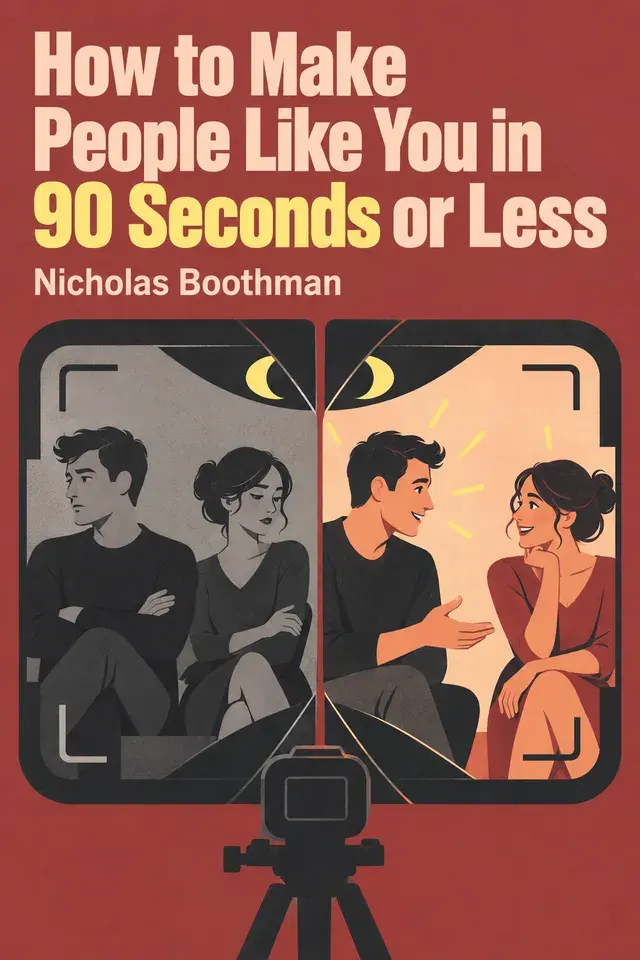
What you'll learn
Key ideas from How to Make People Like You in 90 Seconds or Less
These ideas compress the book's argument without treating the author's view as settled fact. Use them as an orientation before reading the full work or listening in Wiseley.
The five-part greeting turns presence into a deliberate opening: open posture, eye contact, a smile, a warm greeting, and a slight lean.
When circumstances offer no common ground, deliberate rapport begins by finding a point of connection.
Trust is more likely when a message’s words, tone, and visible behavior support one another.
Rapport can be encouraged through temporary, subtle adaptation to another person’s attitude, posture, movement, and rhythm.
Open questions and attentive follow-ups help shared circumstances develop into conversations about what matters to each person.
Visual, Auditory, and Kinesthetic are possible preferences; people use all three channels, and no single clue fixes someone’s type.
The method connects attitude, respectful synchronization, open questions and feedback, and adaptation to sensory preferences.
Inside How to Make People Like You in 90 Seconds or Less
Read the first chapter in full here. The other 9 continue in the Wiseley app.
Chapter 1 of 10 · 5 min · Audio & text
Connection Is a Human Need
How to Make People Like You in 90 Seconds or Less, by Nicholas Boothman.
Boothman begins from a simple premise: a person’s life improves as their ability to connect with other people improves. Connection is not limited to friendship or romance. People rely on one another for family care, emotional support, work, services, money, and practical opportunities. Daily life is already full of direct and indirect links, from shared rituals and cultural life to the networks that bring ordinary goods within reach. The point is not that every contact becomes intimate. It is that human life depends on other people at many levels.
That dependence has a safety side. The author describes connected communities as sources of mutual protection, strength, and security. When people can rely on one another, they can spend more attention on social, cultural, and spiritual life. He also cites evidence linking social and physical activity with longer life. In particular, he reports a nine-year study of 7,000 people aged 35 to 65 in which people with few social and community ties were almost three times as likely to die of medical illness. He presents that finding as support for connection’s importance; it is an association in the account he gives, not proof that connection alone determines health.
Connection also meets an emotional need. People support and validate each other through facial expression, gestures, voice, words, and physical contact. Boothman argues that meeting practical needs does not remove the need for emotional contact. That is why he sees face-to-face interaction as valuable, though he does not dismiss online communities. The internet can bring together people with rare shared interests and help those who are housebound. But screen contact does not reveal the full range of cues and shared atmosphere available in person. In a romantic context, he says, chat alone cannot show all of someone’s spontaneity, openness, conversational needs, supportiveness, or companionship.
Once connection is understood as a need, likability is practical rather than cosmetic. Appearance can play some role, but Boothman says what matters more is how people feel in an encounter: whether they feel welcome, comfortable, and willing to open up. Likable behavior, in his account, conveys sociability, confidence, sincerity, and trust. A favorable first impression can catch attention, while a good interaction gives the exchange room to continue. He also observes that under modern time pressure, people make rapid assessments about whether a stranger seems like a threat or an opportunity, often before anyone speaks.
This is why the book treats connection as a learnable skill rather than a gift reserved for naturally charming people. The author says he came to this view through studying communication practices and through work as a photographer. Photographing models, cruise-line groups, and people in culturally and economically different settings led him to conclude that working the camera mattered less than helping people connect with him. He offers that experience as evidence that rapport can apply across settings, not as proof that every person will respond the same way. The subject is not changing one’s personality or relying on appearance; it is learning to influence the feeling an encounter creates.
The techniques are meant to help people relate at work and at home and approach strangers more confidently and sincerely. Boothman frames the aim as making people like you or establishing rapport in 90 seconds or less, but success is not guaranteed. He does not present the methods as a magic wand, a permanent personality change, or a guarantee that everyone will like you or invite you to dinner. Their value is more modest and usable: if an interaction feels more comfortable, others may be more willing to give attention, time, effort, and cooperation. That possibility makes the skills worth learning, while leaving room for individual differences and encounters that do not connect.
Chapter 2 of 10 · 6 min · Audio & textIn the app
Make the Opening Count
An encounter begins before either person has said much. Boothman treats the opening as a chance to show that you are available, attentive, and glad to meet the other person.
Chapter 3 of 10 · 4 min · Audio & textIn the app
Find or Create Common Ground
Rapport sometimes appears without anyone planning it. People often find ease with those who share an interest, hold similar opinions, behave in familiar ways, or respond with similar emotional signals.
Chapter 4 of 10 · 6 min · Audio & textIn the app
Choose the State You Bring
The book treats attitude as an early decision in communication. An inner orientation shapes thoughts and influences spoken words, voice, facial expression, and bodily behavior.
Chapter 5 of 10 · 5 min · Audio & textIn the app
Make Your Signals Congruent
Body language is part of the message, not decoration around it. The book groups visible signals as open or closed, then asks readers to consider how those signals fit with a person’s words and tone.
Chapter 6 of 10 · 6 min · Audio & textIn the app
Synchronize Without Copying
Rapport can be encouraged by adjusting, for a while, to the other person’s manner and emotional pace. The point is not to imitate them or pretend to share their opinions.
Chapter 7 of 10 · 9 min · Audio & textIn the app
Turn Conversation Into Connection
Conversation carries rapport forward through both what you say and how you say it. Boothman treats voice as another part of synchronization.
Chapter 8 of 10 · 3 min · Audio & textIn the app
Avoid Friction That Breaks Rapport
A connection can begin well and still weaken through small habits that signal disregard. Boothman’s checklist focuses on ordinary behavior that can make an exchange feel one-sided, inattentive, or unpleasant.
Chapter 9 of 10 · 6 min · Audio & textIn the app
Speak in Their Sensory Language
After matching attitude, body, voice, and conversational behavior, Boothman adds another layer: the words people use to describe experience. His Visual, Auditory, and Kinesthetic model suggests that one sensory channel may be more prominent in a person’s language and attention.
Chapter 10 of 10 · 6 min · Audio & textIn the app
Practice the Four-Part Method
Boothman brings the book’s method together as four connected practices. Choose a useful attitude, synchronize respectfully with the other person, ask open questions and listen for feedback, then adapt your words to the way they seem to describe experience.
Chapter 1 of 10 · 5 min · Audio & text: Connection Is a Human Need
Wiseley supports reading and listening to summaries in the app.
Continue in WiseleyWhat How to Make People Like You in 90 Seconds or Less is about
How can rapport form in a first meeting, sometimes within roughly 90 seconds? The book treats likability as learnable: align attitude, body, voice, and words; ask and listen well; and adapt to another person’s cues. Its routines explain how to build comfort while avoiding forced imitation and overconfident assumptions.
About Nicholas Boothman
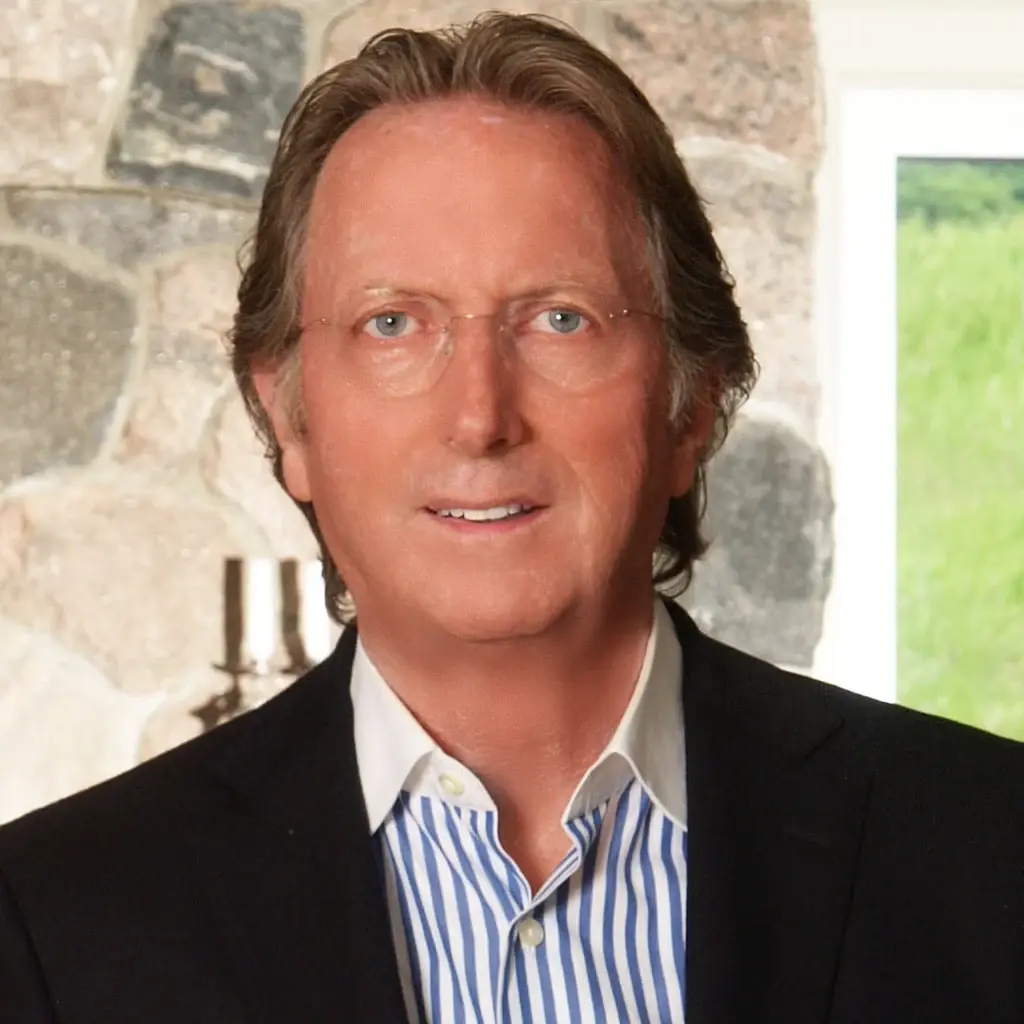
Nicholas Boothman is an English author and speaker. “How to Make People Like You in 90 Seconds or Less” explores likability as a learnable skill of aligning attitude, body, voice, and words in a first meeting.
Explore more books by Nicholas Boothman