What you'll learn
Key ideas from How Not to Age
These ideas compress the book's argument without treating the author's view as settled fact. Use them as an orientation before reading the full work or listening in Wiseley.
A longer lifespan is not the same as a longer healthspan; preserving function matters alongside adding years.
Anti-aging claims require evidence checks, and animal lifespan findings do not establish longer human life.
Replacing a small share of animal protein with plant protein is associated with lower mortality, though cohort evidence cannot establish why.
Exercise has clear health and function benefits, while its independent effect on human lifespan remains uncertain.
Fall prevention pairs targeted training with simple changes that reduce hazards at home.
The book recommends at least 50 different plant foods each week; intact grains and legumes deliver varied fibers and resistant starch to gut microbes.
The book’s final priority is basic habits and minimally processed plant foods, rather than an unproven supplement shortcut.
Inside How Not to Age
Read the first chapter in full here. The other 21 continue in the Wiseley app.
Chapter 1 of 22 · 3 min · Audio & text
Why Aging Is the Target
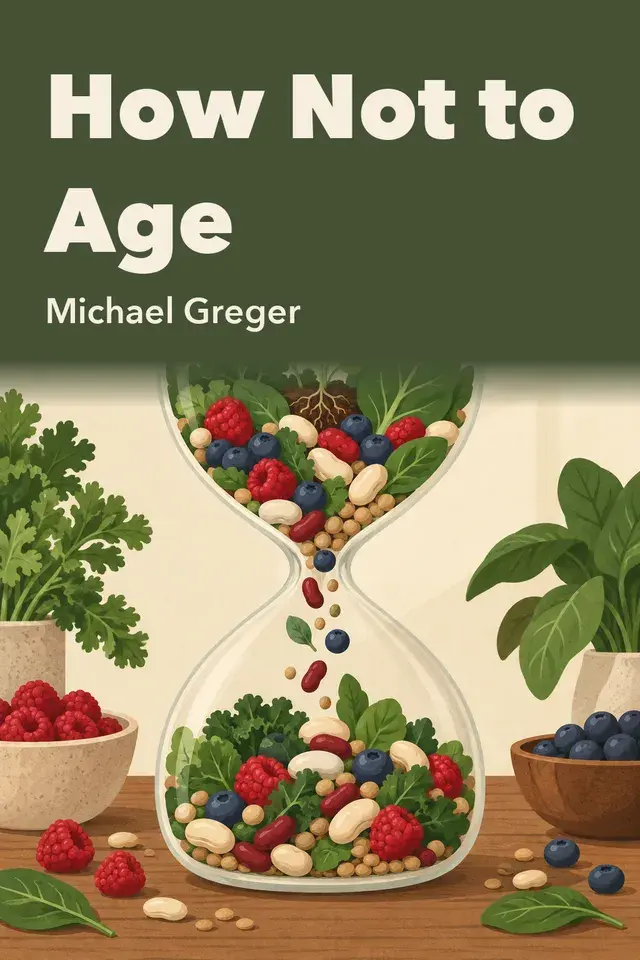
How Not to Age, by Michael Greger.
Greger opens with a question: what if aging itself were a major driver of disease? Heart disease, cancer, stroke, and dementia become more common with age. That raises the possibility that slowing aging could affect several conditions at once, while treating each disease separately leaves the shared risk untouched.
He points to a series of more than forty-two thousand consecutive autopsies. Every examined centenarian had evidence of disease, most often a heart attack, even though many had seemed healthy before death. Other autopsy series found similar patterns among the oldest people. Greger takes this as evidence against the idea that people simply die of old age without an underlying disease. Since age raises the risk of many diseases, he argues that aging may be an upstream cause worth studying. The findings motivate that argument; they do not prove that aging can be slowed in people.
The same reasoning shapes his view of lifespan. Preventing one disease may leave people vulnerable to other age-related conditions. A longer life, by itself, does not ensure more healthy years. Greger distinguishes lifespan from healthspan: the years lived in good health, without chronic disease or disability. He cites estimates that only a minority experience what researchers call successful aging, and that disease is common by age eighty-five. The book’s aim, then, is not simply to add years, but to preserve function and well-being during them.
He also frames aging as potentially modifiable rather than fixed by inheritance. Genes, he says, account for only part of lifespan differences; shared habits may help explain why spouses’ lifespans can resemble each other’s. This leaves room for behavioral and biological influences, but does not mean that genes or any one intervention determine how long someone will live.
That possibility calls for careful evidence, especially in a field with a history of anti-aging fraud. Greger describes products and clinics that borrow scientific language to sell unproven promises. He argues that this should not lead readers to dismiss genuine research, either. His approach is to examine studies and their limits rather than rely on charismatic stories; he reports that his team reviewed more than twenty thousand aging papers. He also acknowledges failures in scientific publishing, while treating peer-reviewed research as the best available basis for health claims. Results that extend life in worms, mice, or rats are not proof of longer human life: the animal findings he discusses have not been replicated in people. Whether radical life extension is possible remains uncertain.
Chapter 2 of 22 · 6 min · Audio & textIn the app
Energy, Recycling, and Senescent Cells
Healthy aging depends in part on how well cells sense energy, repair their equipment, and clear damaged material. The author links these tasks through AMPK and autophagy, then turns to senescent cells, which stop dividing for a protective reason but can become harmful when they accumulate.
Chapter 3 of 22 · 5 min · Audio & textIn the app
Epigenetic Age and Glycation
DNA sequence is only part of what determines a cell’s activity. Epigenetics describes another layer: chemical marks that affect which genes are switched on or off.
Chapter 4 of 22 · 3 min · Audio & textIn the app
Growth Signals and IGF-1
One idea in aging biology is that life shifts from building the body toward maintaining it. Insulin-like growth factor 1 (IGF-1) supports growth and cell division.
Chapter 5 of 22 · 6 min · Audio & textIn the app
Inflammation Meets Nutrient Signaling
Inflammation helps the body respond to injury and infection. That acute response is usually local and temporary.
Chapter 6 of 22 · 7 min · Audio & textIn the app
Oxidation, Sirtuins, and Telomeres
Free radicals are unstable molecules that can take electrons from other molecules. That reaction may injure membranes, proteins, enzymes, and DNA.
Chapter 7 of 22 · 5 min · Audio & textIn the app
Building the Longevity Plate
The dietary case is clearest at the level of a pattern: meals built around whole, minimally processed plants. Four major diet-quality measures favor fruits, vegetables, whole grains, beans, and nuts.
Chapter 8 of 22 · 4 min · Audio & textIn the app
Daily Habits That Change Risk
Food is one part of a practical daily pattern: move regularly, manage body composition, protect sleep, handle stress, and stay connected. Greger presents these habits as supports for health and function, not guarantees of extra years.
Chapter 9 of 22 · 3 min · Audio & textIn the app
Bones, Balance, and Falls
Fracture prevention cannot be reduced to a bone-density scan. Bone density predicts fracture risk, but falls explain much of the age-related rise.
Chapter 10 of 22 · 4 min · Audio & textIn the app
Bowel, Bladder, and Prostate
Constipation is less about how often someone goes than whether stools are hard and passing them requires straining. Greger treats soft, easy stools as the goal, because repeated straining can cause pain and other complications.
Chapter 11 of 22 · 5 min · Audio & textIn the app
Protecting Circulation Over Time
Healthy circulation depends on ongoing repair of vessel walls, not only on opening an artery after symptoms appear. The endothelium is the inner lining that helps blood flow smoothly.
Chapter 12 of 22 · 4 min · Audio & textIn the app
Hair and Hearing With Age
Hair changes have different causes, so “aging hair” is not one condition. Gray and white strands look pale because yellowish keratin reflects light.
Chapter 13 of 22 · 6 min · Audio & textIn the app
Hormones and Immune Resilience
Promises that hormones can restore youth keep returning in new forms. Growth hormone and DHEA have both been marketed as broad anti-aging treatments, yet the evidence cited here does not show general benefits from taking them.
Chapter 14 of 22 · 7 min · Audio & textIn the app
Keeping the Aging Brain
Memory slips do not all mean dementia. Dementia interferes with daily life; occasionally misplacing keys does not.
Chapter 15 of 22 · 5 min · Audio & textIn the app
Strength, Joints, and Independence
Mobility depends on joints that permit movement and muscles strong enough to carry the body. Osteoarthritis can make movement painful, while age-related muscle loss makes everyday tasks harder.
Chapter 16 of 22 · 4 min · Audio & textIn the app
Sexual Function as a Health Signal
Sexual difficulties are often treated as isolated signs of aging, but Greger argues that general health may matter more than age alone. Low desire is the most frequently reported concern among older women, while erectile difficulty is common among men.
Chapter 17 of 22 · 6 min · Audio & textIn the app
Skin, Teeth, and Vision
Skin, teeth, veins, nails, and vision call for different measures. A useful way to sort them is by whether a habit prevents injury, treats an existing problem, or rests on a limited appearance claim.
Chapter 18 of 22 · 3 min · Audio & textIn the app
Dignity Near the End of Life
After focusing on extending healthy years, Greger asks what care should prioritize when cure or more time is no longer the patient's main goal. A good death, in his account, preserves control, dignity, privacy, pain relief, emotional support, respect for wishes, saying goodbye, and freedom from pointless prolongation.
Chapter 19 of 22 · 6 min · Audio & textIn the app
Plant Variety, Adaptive Defense, and Environmental Exposure
The chapter’s point is that variety may matter within a plant-centered diet because foods carry many compounds, not just one active ingredient. One proposal is hormesis: a mild challenge can prompt protective responses, while a stronger dose can overwhelm them.
Chapter 20 of 22 · 5 min · Audio & textIn the app
Feeding the Aging Microbiome
Food supplies gut microbes with material they can use, and the community responds as that supply changes. This makes diet one way to shape microbial activity, though it does not let us prescribe one ideal microbiome for everyone.
Chapter 21 of 22 · 7 min · Audio & textIn the app
Restriction, Protein, and Longevity
People often speak of eating less as if it were one intervention. The evidence asks several different questions: how many calories someone eats, when they eat, how much protein they consume, and which amino acids supply it.
Chapter 22 of 22 · 6 min · Audio & textIn the app
NAD+, Supplements, and Priorities
The book closes by testing a familiar promise: that a pill can make aging itself recede. The author warns that supplement marketing can outrun the evidence, while consumers may assume products are tested for quality, safety, or effectiveness before sale.
Chapter 1 of 22 · 3 min · Audio & text: Why Aging Is the Target
Wiseley supports reading and listening to summaries in the app.
Continue in WiseleyWhat How Not to Age is about
How Not to Age asks whether slowing biological aging can protect both lifespan and the years spent in good health. Michael Greger links proposed cellular pathways to food and lifestyle choices, then surveys ways to preserve bodily function. The book pairs practical routines with scrutiny of evidence, uncertainty, and treatment trade-offs.
About Michael Greger
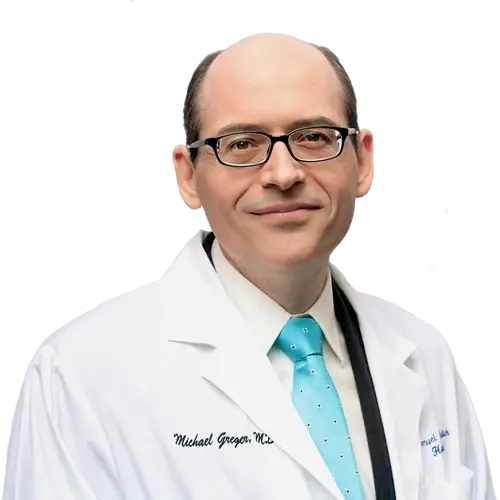
Michael Greger is an American physician, author, and speaker on public health. “How Not to Die” explores the author's interpretation of nutrition research and its relationship to chronic disease.
Explore more books by Michael Greger