
What you'll learn
Key ideas from How Minds Change
These ideas compress the book's argument without treating the author's view as settled fact. Use them as an orientation before reading the full work or listening in Wiseley.
Facts can change one person’s mind while intensifying certainty in others who encounter the same evidence.
Self-persuasion can emerge when people hear their own reasons, encounter ambivalence, and generate counterarguments without being defeated in debate.
Naive realism mistakes a brain’s selected interpretation for unmediated reality, making opposing conclusions seem like errors.
Assimilation absorbs manageable anomalies; accommodation rebuilds categories when old explanations no longer make experience intelligible.
Beliefs fused with belonging become socially costly to revise because they signal loyalty and protect reputation.
Epistemic vigilance can block useful information, while argumentation lets groups expose, evaluate, and refine partial perspectives.
Comfortable discomfort lets people test their reasoning without humiliation, defensive withdrawal, or a forced conclusion.
Social change depends on persistence meeting favorable timing and network conditions, while humility, shared goals, and openness to error remain essential.
Inside How Minds Change
Read the first chapter in full here. The other 7 continue in the Wiseley app.
Chapter 1 of 8 · 6 min · Audio & text
The Puzzle of Mind Change
How Minds Change, by David McRaney.
Why do facts sometimes open a mind and sometimes make someone more certain? David McRaney begins with this puzzle. As the internet increases contact with disagreement and information, arguments about basic reality can grow harsher. “Post-truth” names the anxiety that fake news, alternative facts, filter bubbles, and confirmation bias have divided people into separate realities. The problem may not be a shortage of information. Shared evidence does not guarantee shared meaning.
Charlie Veitch makes the question concrete. Once a prominent nine-eleven truther, he tied his income, public identity, and relationships to conspiracy advocacy. On Conspiracy Road Trip, he met technical experts, eyewitnesses, architects, officials, and relatives of people who died. No single fact caused an instant revelation. Several partly independent explanations weakened his certainty, while grieving relatives made being wrong personal. Charlie eventually reversed his position publicly and argued that truth deserves respect even when it conflicts with a group’s beliefs.
His fellow truthers saw much of the same evidence but grew more certain. They treated experts as compromised and witnesses as actors or manipulated victims. Charlie’s reversal became, for some, evidence of manipulation. He was excommunicated and harassed; abuse reached his family and work. The case shows that evidence can change belief while public belief revision carries severe social costs.
This paradox challenges the information-deficit model, the assumption that disagreement mainly reflects missing facts and that accurate information will produce agreement about what those facts mean. McRaney does not say facts are powerless; Charlie changed because evidence accumulated. He asks why some evidence persuades one person but fails another, and why correction can feel like an accusation of gullibility, stupidity, moral failure, or belonging to the wrong group. Information is inseparable from trust and assumed intentions.
McRaney’s own experience gives the puzzle urgency. Online climate disputes turned expert links into counter-links, anger, and threats. Then the rapid shift in opinion on same-sex marriage unsettled his belief that some views were nearly impossible to change. He compares such reversals with punctuated equilibrium: long stability can give way to abrupt movement. Major opinion change is not always gradual.
The introduction treats certainty as a feeling, not simply a logical conclusion. Its guiding claim is that stronger certainty tends to slow change, though the text does not specify how to measure that relationship. Uncertainty therefore creates room for examination. People can revise beliefs, attitudes, and values, but the ability to change does not say which changes are justified. The ethical question remains: which beliefs or norms are harmful, and who decides?
This concern shapes the definition of persuasion. Persuasion is intentional influence through communication while preserving meaningful freedom to reject the message. Coercion removes perceived choice through threats or dire consequences. Persuasion is not defeating an opponent with facts or moral superiority. People change through their own desires, motivations, and internal counterarguments. Another person can guide that process, but cannot force a mind into revision. Durable change begins when someone feels free to inspect a conclusion and the reasons behind it.
That is why McRaney favors shared inquiry over a contest with winners and losers. The goal is learning the truth, not winning. When he told his father that love and concern, rather than victory, motivated a challenge to his conspiracy theory, their debate shifted toward the reliability of sources. Asking why he wanted his father to change revealed a deeper wish for shared trust and a sense of being on the same side. Stating intentions matters because otherwise people may assign hostile motives.
The opening does not promise control over others or require every disagreement to disappear. It asks readers to carry uncertainty about their own assumptions into future conversations. Its governing wager is that minds can change, but lasting revision begins with self-persuasion, openness, and room for refusal.
Chapter 2 of 8 · 7 min · Audio & textIn the app
Deep Canvassing and Self-Persuasion
Deep canvassing is persuasion turned inside out. Instead of treating disagreement as a contest between facts, it treats the other person’s experience as material for reflection.
Chapter 3 of 8 · 7 min · Audio & textIn the app
Perception Constructs Reality
Disagreement can begin before anyone states a belief or offers an argument. The Dress made that unsettlingly visible.
Chapter 4 of 8 · 10 min · Audio & textIn the app
When Models Must Yield
A mind does not meet the world with an empty slate. It carries a physical, layered model built from sensory traces, categories, language, and past outcomes.
Chapter 5 of 8 · 9 min · Audio & textIn the app
Belonging Defends Belief
How can a person leave a world that has taught them what love, truth, and goodness mean? David McRaney turns to Westboro Baptist Church to examine that question.
Chapter 6 of 8 · 9 min · Audio & textIn the app
Reasoning Beyond Fact Dumping
Why do facts so often fail to change a mind? The chapter distinguishes learning a message from changing an attitude.
Chapter 7 of 8 · 9 min · Audio & textIn the app
Practicing Comfortable Discomfort
Before asking how to change someone’s mind, ask why you want the change. McRaney treats this as step zero: examine the purpose, goals, thoughts, feelings, and values driving the attempt.
Chapter 8 of 8 · 7 min · Audio & textIn the app
From Personal Shifts to Cascades
The book’s account of mind change does not end with one person revising one belief. The same capacities that support assimilation, accommodation, reasoning, perspective-taking, and social learning can operate at cultural scale.
Chapter 1 of 8 · 6 min · Audio & text: The Puzzle of Mind Change
Wiseley supports reading and listening to summaries in the app.
Continue in WiseleyWhat How Minds Change is about
How Minds Change asks why the same evidence can change one person and harden another. David McRaney traces belief revision from predictive perception and disequilibrium through identity, group belonging, reasoning, and conversation, then explains how individual shifts spread through social networks. It offers a grounded way to approach disagreement with humility and care.
About David McRaney
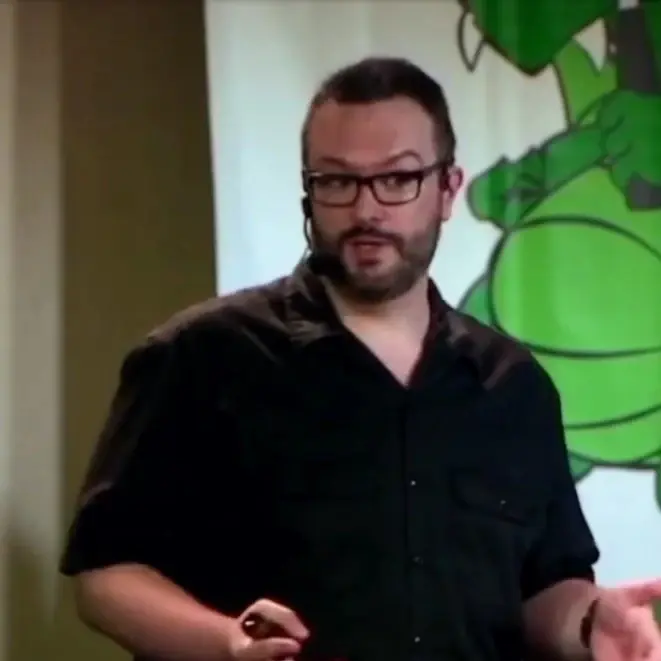
David McRaney is an American science journalist and host of the podcast You Are Not So Smart. “How Minds Change” explores why the same evidence can change one person and harden another.
Explore more books by David McRaney