
What you'll learn
Key ideas from Hidden Potential
These ideas compress the book's argument without treating the author's view as settled fact. Use them as an orientation before reading the full work or listening in Wiseley.
Initial performance reflects available preparation and opportunity, while potential concerns capacity for growth and distance traveled.
Growth begins when learners treat discomfort as a training signal, choose task-appropriate methods, and practice before they feel ready.
Variety, interleaving, and comparison with one’s past self make practice more informative than sheer hours or status comparisons.
Plateaus and lapses can signal a mismatch in direction, method, or motivation rather than a fixed limit.
Shared learning turns individual expertise into collective competence, especially when peers teach, quiz, and organize knowledge for one another.
Collective intelligence depends more on prosocial coordination and shared purpose than on a team’s average IQ or its most confident member.
Credentials and static records are incomplete signals when they hide unequal access, changing demands, or a steep learning trajectory.
Success is measured by character, distance traveled, and opportunities created for others, not status or flawless performance.
Inside Hidden Potential
Read the first chapter in full here. The other 8 continue in the Wiseley app.
Chapter 1 of 9 · 6 min · Audio & text
Potential Is a Journey
Hidden Potential, by Adam Grant.
A person’s first performance is a snapshot, not a verdict. It records what they can do with the preparation, exposure, support, and motivation available at that moment. Potential asks a longer question: how much can they grow, and how far can they travel from their starting point? That distance can matter more than early status or the prestige of a final outcome.
The Raging Rooks make this visible. At the 1991 National Junior High Chess Championships, they arrived from Harlem’s JHS 43 to face Dalton, a defending champion with years of early instruction, elite coaching, and extensive training infrastructure. The Rooks were poor students of color, many from violent, low-income, single-parent neighborhoods. Their captain, Kasaun Henry, had learned chess only at twelve and practiced in a park with a drug dealer. Even the scoring system disadvantaged them: large teams could discard low scores, while the Rooks had barely enough players for every result to count.
Still, they began strongly and reached third place among 63 teams. After a slump dropped them to fifth, they needed four final wins and favorable results elsewhere. In the last round, Kasaun defeated Dalton’s top player, other games broke the Rooks’ way, and they tied for first. They became national champions within two years of being novices. The result did not show that preparation is irrelevant or that effort controls every outcome. It showed that a distant starting point does not establish a fixed ceiling.
Their coach, Maurice Ashley, believed talent was more evenly distributed than opportunity. He selected interested, available middle schoolers, mostly B students without special chess aptitude, rather than searching only for prodigies. He also cultivated character skills: proactivity, prosocial collaboration, discipline, and determination in difficulty. These are learned capacities, not fixed moral qualities or mere force of will. They help people act according to their values when pressure, fear, or instinct pulls elsewhere.
Character is therefore revealed most clearly on a hard day. Personality describes a usual tendency, while character describes what someone can choose to do when circumstances are demanding. Understanding a principle does not guarantee practicing it under stress. The Rooks learned to slow down, manage emotion, take responsibility for mistakes, and hold one another accountable. Those capacities helped them compete, but they also transferred into studying, collaboration, resisting destructive pressures, and helping others.
The idea that character can be learned extends into adulthood. In an experiment with 1,500 West African entrepreneurs, participants were randomly assigned to a control group, cognitive-skills training, or character-skills training. The character course practiced personal initiative through proactivity, discipline, and determination. Over the next two years, firms receiving that training saw average profit increases of 30 percent, nearly three times the reported benefit of cognitive-skills training. The comparison does not make finance or marketing knowledge irrelevant, and an average effect does not guarantee any individual firm’s result. It does suggest that character remains changeable and can help people anticipate opportunities, create new products, and persist through obstacles.
Growth also depends on scaffolding: focused, temporary support that extends a learner beyond current reach and is gradually removed as the learner becomes able to direct development independently. Ashley’s coaching compensated for a broken opportunity system. By giving students an understandable route into chess, it helped motivation emerge where aspiration might otherwise have stopped. The Rooks eventually planned their own path, practiced, read, recruited help, and assumed more control. Support opened the route; it was not meant to replace independent learning forever.
That is why the chapter favors aspiration over ambition. Ambition points toward an outcome, while aspiration concerns the person someone hopes to become. Money, titles, and awards can signal status, but they are weak measures of development. A study of highly accomplished people found that only a handful had been child prodigies; delayed or unremarkable beginnings were common. Early intelligence and preparation matter, especially for children and novices, but they do not fully predict later mastery.
The argument finally reaches institutions. Individuals can build skills and motivation, but opportunity and well-timed support shape whether developing potential becomes visible. Schools, teams, and selection systems can nurture people or write them off too early. The Raging Rooks connect these levels: underestimated learners advanced through coaching, peer accountability, and their own effort, while their example helped adults recognize potential in others. Hidden potential does not reside in individuals alone. It emerges through the interaction of effort, opportunity, support, and time. The fairest measure is not only the peak reached, but the distance traveled to get there.
Chapter 2 of 9 · 7 min · Audio & textIn the app
Train Through Productive Discomfort
Potential is not unlocked by waiting until growth feels natural. Grant presents three learned character capacities: becoming a creature of discomfort, a human sponge, and an imperfectionist.
Chapter 3 of 9 · 5 min · Audio & textIn the app
Design Practice to Sustain Growth
Difficult work does not become sustainable merely because we demand more willpower. Adam Grant treats motivation as a design problem.
Chapter 4 of 9 · 5 min · Audio & textIn the app
Use Detours to Get Unstuck
When a promising route stops working, the first question is not whether ability has run out. A plateau may signal a wrong direction, poor method fit, or depleted motivation.
Chapter 5 of 9 · 6 min · Audio & textIn the app
Rise Through Shared Effort
People often describe achievement as pulling themselves up by their own bootstraps. Taken literally, the image is absurd; that absurdity opens a more useful interpretation.
Chapter 6 of 9 · 7 min · Audio & textIn the app
Build Environments That Open Doors
Talent does not grow in a vacuum. Curiosity, mathematical ability, or an inventive idea needs teachers, examples, tools, encouragement, and time.
Chapter 7 of 9 · 6 min · Audio & textIn the app
Make Collective Intelligence Visible
Complex problems invite a familiar answer: gather the leading experts and let them decide. The 2010 Chilean mine rescue complicates that instinct.
Chapter 8 of 9 · 7 min · Audio & textIn the app
Select for the Slope
Selection is one of the most consequential forms of judgment because a college admission or job offer is also a gateway to future opportunity. Yet most systems must make life-changing choices from thin slices of information.
Chapter 9 of 9 · 5 min · Audio & textIn the app
Help Others Travel Farther
At the end of Hidden Potential, the question shifts from how growth happens to what growth is for. A person’s starting point is a snapshot; a meaningful measure follows the distance traveled, the character developed, and the people enabled along the way.
Chapter 1 of 9 · 6 min · Audio & text: Potential Is a Journey
Wiseley supports reading and listening to summaries in the app.
Continue in WiseleyWhat Hidden Potential is about
Hidden Potential examines why early performance can obscure later capability. Adam Grant connects productive discomfort, adaptive practice, feedback, temporary support, and social learning to growth, then asks how schools, teams, and selection systems can widen opportunity and recognize late bloomers. It offers a way to develop overlooked ability and judge progress in context.
About Adam Grant
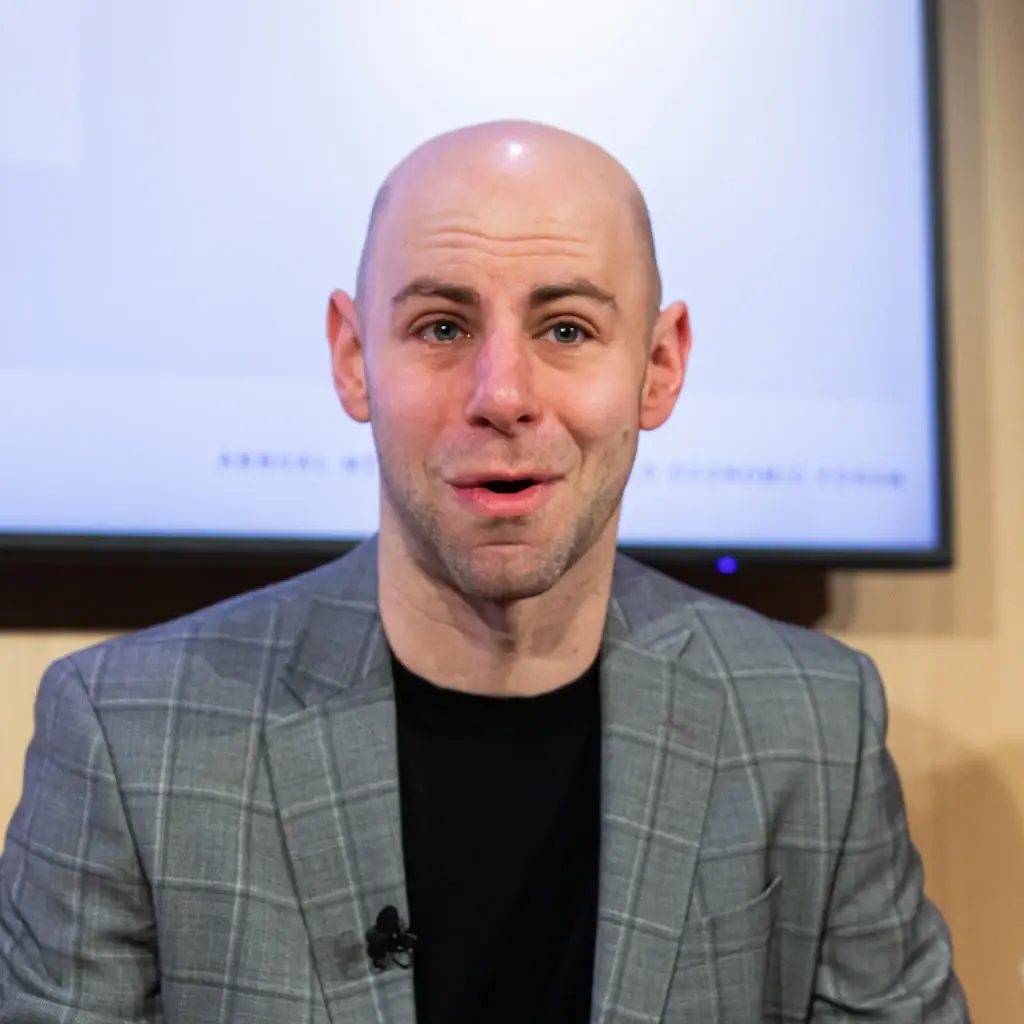
Adam Grant is an organizational psychologist and author who studies how people think and work. His books include Give and Take, Originals, and Think Again.
Explore more books by Adam Grant