What you'll learn
Key ideas from Excellent Advice for Living
These ideas compress the book's argument without treating the author's view as settled fact. Use them as an orientation before reading the full work or listening in Wiseley.
Curiosity makes disagreement useful by shifting attention from defending a belief to examining what might change it.
Fifteen minutes of focused practice can create continuity, letting modest effort support gradual learning without depending on inspiration.
A rough prototype reveals resistance and confusion that an imagined project can conceal, even when the first version is discarded.
Hidden costs and opportunity costs reveal what a choice consumes while showing which future paths it closes or keeps open.
Protecting focus often begins by limiting urgency, commitments, and possessions that consume attention beyond their apparent price.
Trust grows through repeated attention, honesty, appreciation, and generosity that make people feel heard and respected.
A fulfilling life joins becoming fully oneself with work and choices that benefit people beyond the self.
Inside Excellent Advice for Living
Read the first chapter in full here. The other 6 continue in the Wiseley app.
Chapter 1 of 7 · 6 min · Audio & text
Learn Without Defending Your Certainty
Excellent Advice for Living, by Kevin Kelly.
Kevin Kelly’s advice is easiest to use when you treat each maxim as a seed, not a finished argument. He compresses larger lessons into memorable lines meant to be expanded into reflection and applied to your situation. A seed has potential, but it does not determine what will grow in every setting. You supply the questions, context, and judgment. Ask what the line illuminates, what it leaves out, and what small experiment could test its value. The book therefore invites thought rather than obedience.
That distinction matters because compressed advice can sound more certain than it is. The maxims are often aphoristic and categorical, and most are not presented as empirical arguments. A slogan, percentage, or absolute claim is best treated as a prompt for reflection, not automatically as a measured fact. The point is not to distrust every recommendation. It is to interpret it, adapt it to the situation, and notice what happens when you try it.
Curiosity makes that willingness possible. It shifts attention from defending an opinion to finding out what you may be missing. Kelly says disagreement can teach when you search for whatever truth may exist in another person’s belief instead of dismissing it wholesale. He also favors learning from people smarter than you, especially when they disagree. Curiosity does not require treating every claim as equally sound. It requires enough openness to understand the claim, its reasoning, and the evidence that could change your view. The stronger your belief, the stronger the reason to question it regularly.
Defending certainty can turn an opinion into a possession. Once preserving it becomes the goal, contrary information is judged mainly by whether it threatens the conclusion. Kelly’s advice offers a different balance: hold a view strongly enough to reason from it, but lightly enough to revise it. The goal is not permanent indecision. It is confidence that remains answerable to questions and evidence. Curiosity may reduce certainty, yet it expands what you are able to consider.
Imagine holding a settled view on a contentious question and meeting someone you respect who reaches the opposite conclusion. Begin before the rebuttal. Listen carefully, as though you could be wrong, and restate the other person’s position so its underlying logic is visible. Then identify the assumption in dispute. Are you disagreeing about the facts, about what outcome matters, or about how one fact leads to another? Naming that assumption turns a vague clash into a question you can investigate.
Evidence does not settle every disagreement, because people can use the same facts while pursuing different outcomes. That is why naming the disputed assumption matters. If the disagreement is factual, seek better evidence. If it concerns values, clarify the priority instead of pretending a statistic can decide it. If it concerns cause and effect, examine whether the proposed link really follows. The process turns listening into learning rather than passive exposure.
Next, ask what evidence would support each side. Kelly’s rule is that extraordinary claims require extraordinary evidence. In practice, that means looking for observations that could weaken your preferred explanation, not only examples that confirm it. If the evidence exposes a weak assumption, revise the explanation instead of protecting it with ever more exceptions. Changing your mind is not the opposite of learning; it is one of learning’s visible results. Kelly even treats willingness to change one’s mind as a measure of youthfulness.
Now explain the revised understanding to someone else. Kelly presents teaching what you know as a powerful way to learn it more deeply. Explanation forces hidden steps into the open. As you describe the original assumption, the evidence that challenged it, and the conclusion you now hold, gaps become audible. You may discover that you changed your answer without understanding why, or that one piece of evidence was carrying too much weight. Those discoveries are not detours from learning. They show you what to investigate next. Writing can perform a similar service, because Kelly says writing reveals what you think.
Listening has a precise role here. It is not surrender or agreement; it is a way to get another person’s reasoning into view before evaluating it. Kelly pairs confidence with humility: speak as though you are right while listening as though you may be wrong. This keeps inquiry between two errors: certainty that cannot hear and doubt that cannot act.
Because the maxims are compressed, applying them always involves context, trade-offs, and consequences. You are not required to plant every seed or mistake a memorable sentence for a universal rule. The reader’s thought is part of the advice’s completion.
That is the foundation for the rest of the book. Advice becomes material for thoughtful experimentation; disagreement supplies friction, evidence supplies correction, teaching reveals structure, and revision keeps curiosity honest. Learning improves when protecting an existing opinion matters less than understanding what could change it.
Chapter 2 of 7 · 6 min · Audio & textIn the app
Make Progress Through Repeated Practice
Progress is often imagined as a dramatic event: a burst of motivation, a decisive breakthrough, or a perfect plan. Kelly offers a quieter account.
Chapter 3 of 7 · 7 min · Audio & textIn the app
Create Before You Judge
Creative work improves when possibility, production, criticism, and revision are treated as different jobs. The first job is to generate options without asking too early which one is good.
Chapter 4 of 7 · 6 min · Audio & textIn the app
Choose Direction While Preserving Possibility
Choosing a direction is different from predicting a destination. Kelly treats life as nonlinear: worthwhile places are often reached through detours, and fortunate breaks may appear away from the original goal.
Chapter 5 of 7 · 6 min · Audio & textIn the app
Protect Time Through Simpler Systems
Time is often lost through demands that seem small when considered separately. Kelly’s advice begins from a blunt premise: people do not need more time; they need more focus.
Chapter 6 of 7 · 8 min · Audio & textIn the app
Build Trust Through Everyday Generosity
Trust, in Kevin Kelly’s advice, is not mainly a promise people make about one another. It is a pattern built from ordinary encounters.
Chapter 7 of 7 · 6 min · Audio & textIn the app
Become Yourself While Contributing Beyond Yourself
The closing test for any piece of advice is larger than whether it makes a person more efficient or successful. Ask what kind of person it helps you become, and what it makes possible for other people, now and later.
Chapter 1 of 7 · 6 min · Audio & text: Learn Without Defending Your Certainty
Wiseley supports reading and listening to summaries in the app.
Continue in WiseleyWhat Excellent Advice for Living is about
How can everyday choices add up to a life worth living? Kevin Kelly’s practical maxims explore learning, creative work, relationships, and the use of time. This summary connects those ideas into adaptable methods for making progress, exercising judgment, and becoming yourself without treating any rule as universal.
About Kevin Kelly
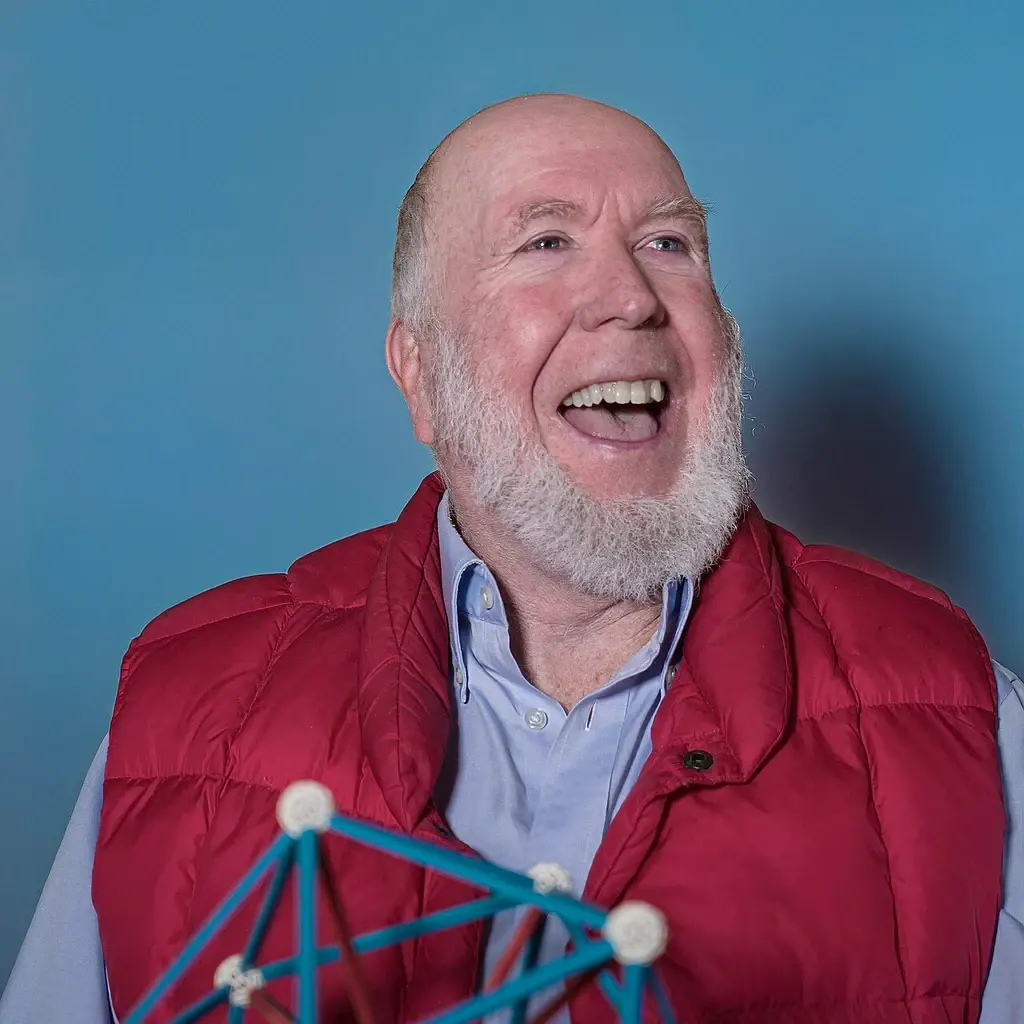
Kevin Kelly is an American magazine editor. “The Inevitable” explores technological forces that the author argues will shape how people live and work.
Explore more books by Kevin Kelly