What you'll learn
Key ideas from Deeper Dating
These ideas compress the book's argument without treating the author's view as settled fact. Use them as an orientation before reading the full work or listening in Wiseley.
Core Gifts are distinctive sensitivities that shape a person’s strongest joys, hurts, and capacity for connection.
Immediate intensity is an unreliable guide to lasting fit; consistent care, respect, integrity, and repair offer stronger signs.
Specific, spontaneous warmth makes interest visible and lets each person learn from the response.
Respectful pacing leaves room to observe feelings, recall valued qualities, and address real concerns without forcing closeness or staying through harm.
Kindness, disclosure, shared novelty, appreciative attention, and wanted touch can give attraction room to grow, though desire cannot be forced.
Sexual intimacy can join tenderness and passion through mutual listening, consent, and playful exploration within each partner’s boundaries.
Core Gifts can enrich creativity, spiritual life, work, and intimacy, especially when valued by trusted people.
Inside Deeper Dating
Read the first chapter in full here. The other 8 continue in the Wiseley app.
Chapter 1 of 9 · 7 min · Audio & text
A New Map to Lasting Love
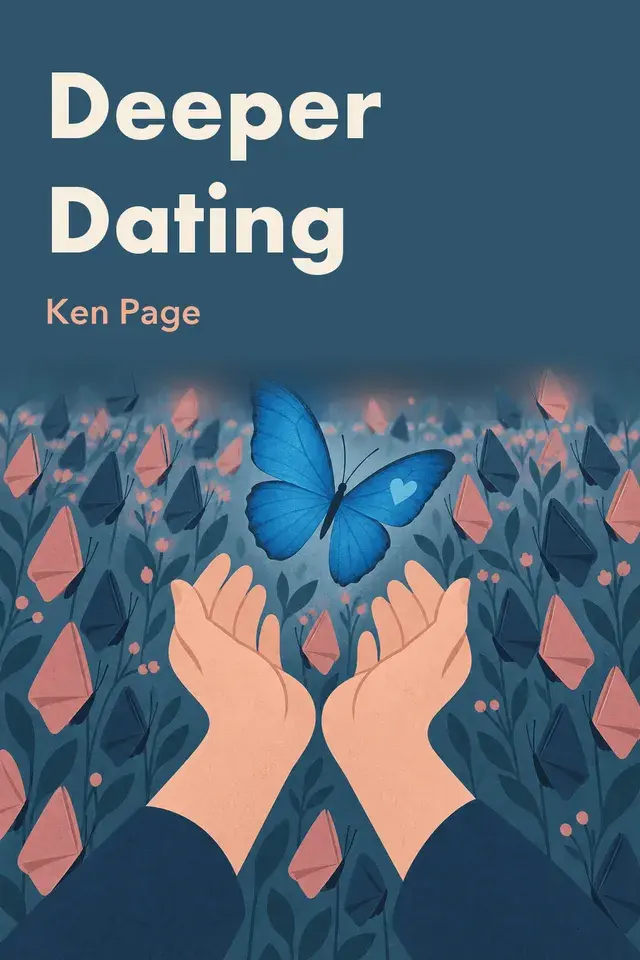
Deeper Dating, by Ken Page.
Many familiar dating prescriptions ask people to improve their appearance, perform confidence, play hard to get, or date more often. Page argues those tactics may create more dates or sexual opportunities, but do not necessarily lead to healthy, lasting love. His alternative begins with Core Gifts: the tender, distinctive sensitivities that show up in what moves, inspires, or hurts us. He asks readers to consider that qualities they have treated as flaws may hold clues to their most authentic selves. Intimacy, in his account, means connecting with that deeper nature and sharing it bravely with people who merit that trust. It also means seeing one another. The guide becomes the quality of connection, not how convincingly someone performs.
Page offers his own dating history as the reason this shift mattered to him. He says he spent years trying to make himself more marketable, playing it cool, and seeking love in ways he later saw as disconnected from it. He also found himself drawn to people who did not reciprocate, while feeling less drawn to kind, available people. Eventually, he realized he had been seeking love without learning how to build it. Page treats longing for love as wisdom rather than weakness: it can prompt a person to examine repeated choices and habits that may push connection away. Wanting love becomes a reason to look honestly at those patterns, not a reason for shame.
That work has limits. Page offers no seduction gimmick or timetable by which love will arrive. He says its timing and discovery remain partly mysterious and outside personal control. The book offers a path of practice, not a guarantee. Page distinguishes seeking a partner from learning how to build intimacy, and says inner work matters alongside the outer work of dating.
He lays out four stages. The first identifies Core Gifts and explores how they shape romantic history, while introducing dating skills from the start. The second examines attractions associated with inspiration or deprivation and adds a five-minute process for connecting with the source of love inside you. The third brings the work into real-world dating, including meeting people and responding to habits that can push intimacy away. The final stage turns to emotional, romantic, and sexual intimacy in healthy relationships. This map shows how the early work of recognizing authentic qualities connects to the later work of choosing, dating, and building closeness. Later chapters explain each stage’s methods in detail.
The opening exercises help readers make a personal commitment before moving deeper. Page first invites a brief pause to acknowledge the beginning of the journey, bring to mind people who have loved them, imagine that support, and breathe it in. For the mission statement, readers recall safe, trusted experiences of intimacy, including kinds of love beyond romance. Then they picture a future surrounded by love, with a loving partner and supportive community, and write why pursuing love matters now. Page suggests keeping and revisiting the statement as a reminder of what makes the work meaningful.
The course is meant to unfold at a humane pace. Page suggests spending about a week on each chapter, while allowing readers to repeat a chapter or the whole course. He encourages pausing over material that resonates, using the brief meditations as insights arise, and recording reflections. The exercises touch personal material, so he urges gentleness. Returning to old patterns can happen; mistakes can teach, and small new behaviors can have an effect. The point is to engage with the work steadily rather than force a quick transformation.
Page strongly encourages support, but does not require a learning partner. A partner can serve as a co-coach: someone discreet, hopeful, emotionally safe, insightful, and reliable. Regular conversations can help make the exercises concrete and give readers a place to discuss difficulties and progress. Page suggests allowing at least thirty minutes for a chapter conversation. If a partner is not available, readers can seek a supportive friend, a class or study group, a coach, or work independently with selected exercises. The level of support is a choice, and asking for it can be an early act of courage.
Page cautions that many exercises and approaches may not work, and may even worsen problems, when untreated or undertreated emotional or psychological disorders are present or when someone has an active addiction. He advises anyone whose addiction or psychiatric condition is getting in the way of life to seek help from a licensed mental health professional, a twelve-step program, or other appropriate support, and to address these issues before beginning the course. Without that support, the deep work may be harmful or destabilizing. With this care in view, the opening commitment is simple: take longing seriously, approach familiar patterns with curiosity, and practice connection without expecting a guaranteed timetable for love.
Chapter 2 of 9 · 10 min · Audio & textIn the app
Finding the Gift Beneath Pain
People often learn to call their strongest feelings weaknesses. They may think they are too sensitive, too intense, too needy, or too easily hurt, and try to correct or hide those qualities.
Chapter 3 of 9 · 10 min · Audio & textIn the app
Learning to Love Yourself
Recognizing a tender quality is a beginning; the next question is how to care for it. Ken Page describes defenses such as humor, anger, or people-pleasing as ways people may have learned to protect vulnerable parts.
Chapter 4 of 9 · 14 min · Audio & textIn the app
Read the Pattern of Attraction
In the three preceding chapters, you began discovering and naming your Core Gifts. Now the book moves into its second stage, bringing those gifts into dating.
Chapter 5 of 9 · 6 min · Audio & textIn the app
Listening for Inner Guidance
Ken Page suggests that the search for love can include listening inward. The practice in this chapter is a way to notice what matters and choose a next step, not a formula for finding a partner.
Chapter 6 of 9 · 13 min · Audio & textIn the app
Practice Deeper Dating
Once you bring what matters to you into dating, the next step is to let it shape how you meet and respond to people. Page’s practical advice is not to adopt a new persona.
Chapter 7 of 9 · 13 min · Audio & textIn the app
Stay Present Through Fear
Fear can arise when a relationship becomes more intimate, even when the other person is kind and available. Ken Page calls one response the Wave of Distancing: affection suddenly seems to vanish, and a caring partner begins to look irritating, dull, or full of flaws.
Chapter 8 of 9 · 9 min · Audio & textIn the app
Grow Desire Through Intimacy
Once a promising relationship has begun, intimacy can become a way of growing romantic love and sexual passion. Page describes this as a stage of building closeness within safe, stable love.
Chapter 9 of 9 · 6 min · Audio & textIn the app
Being Loved into Fullness
The book’s closing thought reaches beyond the search for a partner. Dating differently can help a person find love, but the deeper work is learning to value and express the tender qualities that make life feel like one’s own.
Chapter 1 of 9 · 7 min · Audio & text: A New Map to Lasting Love
Wiseley supports reading and listening to summaries in the app.
Continue in Wiseley