What you'll learn
Key ideas from Change Your Paradigm, Change Your Life
These ideas compress the book's argument without treating the author's view as settled fact. Use them as an orientation before reading the full work or listening in Wiseley.
A paradigm is a program of automatic habits that shapes perception and much everyday behavior.
A vivid C goal can orient learning and action while its path and timing remain uncertain.
A worthy ideal makes success a matter of progress rather than a fixed social or financial position.
Creativity is a capacity everyone has, and people can use it to find more effective methods.
Proctor links earnings to service need, provider ability, and replacement difficulty; greater difficulty corresponds to greater earnings.
Repeated study, present-tense goals, visualization, and focus form a continuing practice rather than a one-time decision.
Inside Change Your Paradigm, Change Your Life
Read the first chapter in full here. The other 9 continue in the Wiseley app.
Chapter 1 of 10 · 6 min · Audio & text
The Program Beneath Behavior
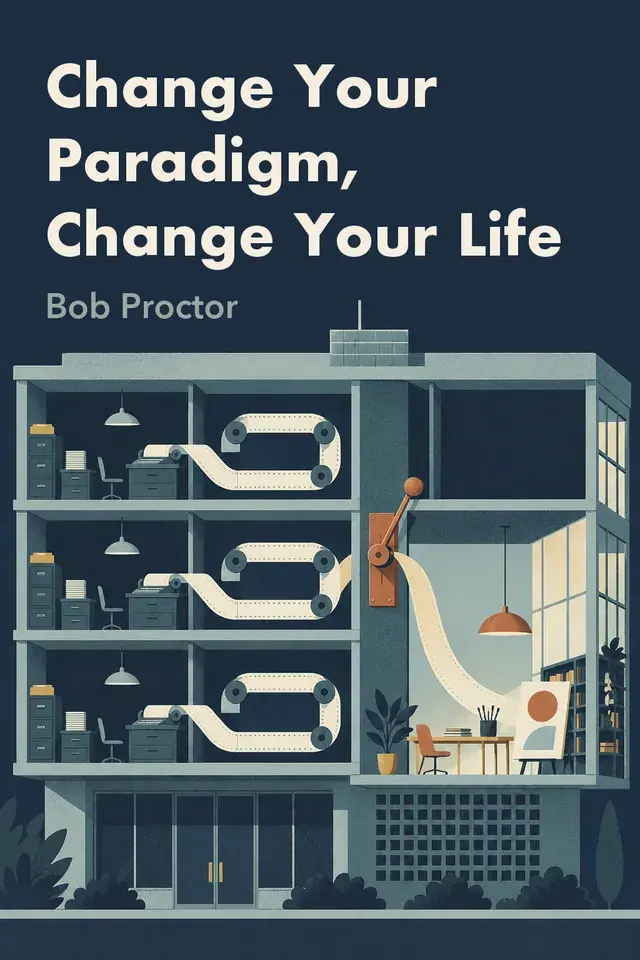
Change Your Paradigm, Change Your Life, by Bob Proctor.
In Proctor’s account, a paradigm is a program of habitual ideas and behaviors. A habit is an idea that has become automatic, so it can steer action before a person stops to choose. The pattern also shapes what seems possible and how a person interprets circumstances. Proctor compares a paradigm to a program installed through repeated messages, often passed along by people who received the same messages themselves. A person may follow such a pattern without being able to explain it. Proctor says some successful people cannot describe why their approach works; in his view, their results may come from a settled way of thinking and acting, rather than a conscious calculation each time. He asks readers to notice whether their ordinary behavior matches what they say they want.
That distinction helps explain why information alone may not change a habit. People can know what they should do and still act according to familiar patterns. Credentials and accumulated knowledge do not automatically produce effective action, Proctor argues, especially when people do not examine the gap between what they know and what they do. A single reading or a short-lived change in behavior may leave the underlying program untouched. Since a paradigm is built through repeated influences, he says, it takes more than one exposure to a new idea to change it.
Proctor uses his own history to explain why he began asking what governs results. Before his Nightingale-Conant period, he had worked in building maintenance and cleaned offices. Separately, he reports that in 1961 he earned four thousand dollars a year while carrying six thousand dollars in debt. Five years later, he says, his income was more than one million dollars a year, and he owned a company with offices in several cities. He initially could not explain how his fortunes had changed. He had held two distinct assumptions: that earning a lot required exceptional intelligence, and that not attending school meant he could not get a good job. His later success challenged both beliefs.
After a life-changing experience, Proctor says he spent nine and a half years consciously investigating why he had become successful. He had been in building maintenance and had started by cleaning one office, eventually cleaning offices in several cities; he says he left that work to join Nightingale-Conant. Separately, he reports that his earnings went from over one million dollars a year to eighteen thousand dollars. He valued access to its material and the chance to learn from Earl Nightingale and Lloyd Conant. He describes that decision as part of his search to understand change. He also questions an education that emphasizes intellect while neglecting awareness. He says a person may hold doctorates in several subjects yet lack awareness of how to earn money, build a business, or develop personally. What he wants people to become aware of, he says, is their oneness with God and infinite intelligence; he believes greater awareness is reflected in results.
Proctor distinguishes thinking about an idea from internalizing it. Someone may consciously want a different result while remaining emotionally attached to older expectations. In his account, the passing thought does not automatically replace the deeper pattern. Awareness helps a person notice the mismatch between intention and routine action; emotional engagement gives a new idea more weight. Repetition matters because familiar patterns were also formed through repeated exposure. He argues that people must return to a different idea long enough for it to begin influencing behavior.
He also draws on the language of energy and vibration to explain this process. Proctor argues that thought is energy and that people are drawn toward what matches their inner state. A conscious wish, in this framework, may not be enough if a person’s habitual expectations remain unchanged. These are Proctor’s explanations for how change works; his account does not independently demonstrate energy or vibration as mechanisms.
The same model informs his view of organizations. Proctor argues that a business is fundamentally its people: remove the staff from a hotel and what remains is a building and its contents. He urges companies to develop employees’ potential. Managers, he says, should learn what employees want for themselves and connect improvement with those aims. He also argues that people are more likely to act when they understand why their results look as they do and see how they can change their own behavior.
Proctor extends the idea to leadership. Drawing on Gandhi as an example, he says leaders should embody the standards and aims they want others to adopt. They should also study and learn alongside their employees. In an insurance-company example, agents were asked to meet prospects before nine in the morning and ask them to buy policies worth one hundred thousand dollars. Proctor reports that weekly sales of those policies then exceeded what had previously been sold in a year. He presents this as an illustration of changed understanding paired with repeated practice, not as a guaranteed result.
The chapter’s central point is that results are shaped by more than conscious intentions or information. In Proctor’s model, change begins by noticing the habitual program behind behavior, then repeatedly practicing a different pattern until it can guide action.
Chapter 2 of 10 · 6 min · Audio & textIn the app
Choose and Picture a Larger Ideal
Proctor says that almost everyone has had their paradigm built by a parent, guardian, or someone else; only very rarely does a person live with a paradigm they built themselves. He says that paradigm controls a person’s whole life.
Chapter 3 of 10 · 5 min · Audio & textIn the app
Confidence and a Worthy Ideal
At a human-resources congress in 1969, Bill Gove told listeners that freedom meant being oneself instead of performing an imagined role for a spouse, children, or anyone else. He added that a person must know who they are.
Chapter 4 of 10 · 5 min · Audio & textIn the app
Why Old Patterns Return
Proctor uses cybernetics to explain why a decision to change may not be enough to sustain new behavior. He describes cybernetics as the study of control and communication, then offers two familiar examples.
Chapter 5 of 10 · 5 min · Audio & textIn the app
From Belief to Deliberate Response
Proctor recounts a conversation with his mentor Val Vanderwall, who said that a belief system is based on evaluations and that reevaluating a situation can change a belief. Proctor asked him to repeat the idea, then recognized how his own repeated reading and listening had led him to reevaluate himself.
Chapter 6 of 10 · 5 min · Audio & textIn the app
A Routine for Embodied Change
Proctor turns a chosen goal into a pattern to practice. Begin with a definite aim, then commit to returning to it through visualization and disciplined action.
Chapter 7 of 10 · 5 min · Audio & textIn the app
Emotional Practice and Personal Freedom
Proctor presents gratitude and love as deliberate ways to change the emotional position from which a person meets a problem. When someone is troubled, he recommends finding a quiet place and writing down what they appreciate.
Chapter 8 of 10 · 5 min · Audio & textIn the app
Time, Creativity, and Better Methods
For Proctor, a change in perception matters partly because it can change what a person notices as possible in an ordinary day. People have the same amount of time, he says, but may accomplish different things when they see their abilities differently.
Chapter 9 of 10 · 4 min · Audio & textIn the app
Money as a Changeable Paradigm
Proctor treats money as one area where a paradigm can shape the limits people expect for themselves. In his account, a paradigm may establish an upper boundary on earnings.
Chapter 10 of 10 · 7 min · Audio & textIn the app
The Lifelong Practice of Study
Proctor closes by presenting paradigm change as a continuing practice of study, repetition, and action. He contrasts two paths.
Chapter 1 of 10 · 6 min · Audio & text: The Program Beneath Behavior
Wiseley supports reading and listening to summaries in the app.
Continue in WiseleyAbout Bob Proctor
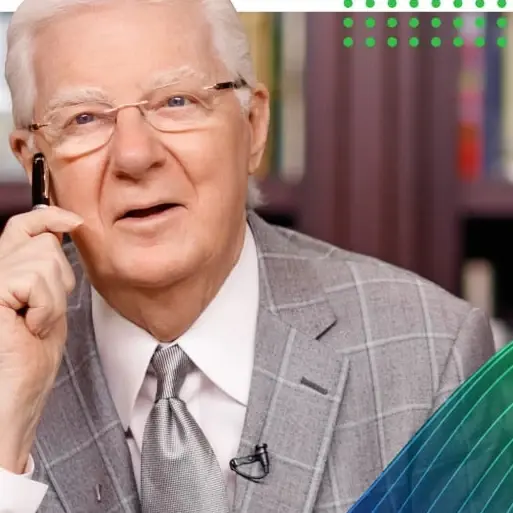
Bob Proctor was a Canadian self-help author and speaker. “Change Your Paradigm, Change Your Life” explores how inherited beliefs and habits shape behavior, ambition, and income, and how a person can change them.
Explore more books by Bob Proctor