
What you'll learn
Key ideas from Catch Me If You Can
These ideas compress the book's argument without treating the author's view as settled fact. Use them as an orientation before reading the full work or listening in Wiseley.
After leaving home, Abagnale knowingly continued passing worthless checks, using self-serving rationalizations to quiet his doubts.
The pilot persona combines uniform, forged identification, borrowed terminology, and confident conduct.
In the hospital, interns and nurses took the lead, yet Abagnale’s assigned supervisory role left children exposed to serious risk.
His Houston illustration shows how a routing mismatch could send a check toward San Francisco, then back by its printed Houston address, delaying notice five to seven days.
Abagnale’s Las Vegas connection moves him from making checks individually to producing hundreds of Pan Am copies.
Recognition in Montpellier turns concealment into custody, and Abagnale’s denials cannot restore control once police identify him.
The many charges ended in a twelve-year sentence; Abagnale served four years.
Abagnale proposes teaching people who handle checks or cash vouchers to prevent fraud.
Inside Catch Me If You Can
Read the first chapter in full here. The other 7 continue in the Wiseley app.
Chapter 1 of 8 · 9 min · Audio & text
A Search for Self Becomes Fraud
Catch Me If You Can, by Frank Abagnale.
Frank Abagnale’s first frauds begin not with a polished disguise, but with a teenager trying to satisfy his wants and make sense of who he is. He recalls his parents separating when he was twelve and divorcing when he was fourteen. He loved his father and hoped they would reunite, but his father repeatedly asked him to carry messages and gifts to his mother. Abagnale says his mother felt used as a pawn. He wanted the family back together, yet he rejects the idea that the conflict excuses what he did.
After the divorce, he chose to live with his father because he thought his father should not be alone. He describes a childhood that had been comfortable, followed by a closer look at his father’s adult world: business, politics, bars, and a wide circle of acquaintances. He began skipping school and spending time with boys from troubled families. At the time, he had a vague notion that misbehavior might bring his parents together by giving them a shared concern. That is his explanation, not a justification. When the boys stole a car, police stopped them, but his father used political connections to get him released and remove his name from the record. Abagnale says he then dropped those companions, returned to school, and took a part-time job. His father bought him an old Ford.
The car became part of a new preoccupation. Abagnale describes himself as consumed by the pursuit of women and says his wages could not pay for the dates and spending he wanted. He asked his father for a Mobil gas card, saying he would try to pay the bill himself and promising not to abuse his father’s generosity. His father agreed and made him responsible for the account. Abagnale says he meant the promise when he made it. He paid the first bill with a money order, but the payment left him short of cash. Wanting more money, he began looking for a way to turn the card into cash.
At a Mobil station, a sign advertising tires gave him the idea. He proposed charging a set of tires to the card, taking one hundred dollars in cash, and leaving the tires with the station owner to sell. The charge was for more than fuel, and Abagnale’s Ford did not need new tires. The owner saw a possible profit, checked Abagnale’s license and card, and sought approval from Mobil. Abagnale left with five twenty-dollar bills. The apparent success mattered beyond that first payment: he had found a way to make the card produce money without taking the goods himself.
He repeated the arrangement at other Bronx Mobil stations over the following weeks. Tires, batteries, and other accessories became sources of cash. Sometimes, an attendant gave him ten dollars in cash while Abagnale signed a ticket for twenty dollars’ worth of gas and oil. The receipts carried his father’s signature, which Abagnale says he wrote himself. He was fifteen, though he looked older to the station owner. These details show the early pattern: a legitimate source of trust, a false account of what he was buying, and repeated transactions that made the scheme larger than the original request.
Abagnale connects the spending to his desire for women, but he also describes the attraction of the deception itself. He reflects that some people feel temptation and resist it, while others turn wrongdoing into a contest. In his account, getting away with the act can become part of the reward. He compares that outlook to playing chess without expecting to be checkmated. This is his explanation of his thinking, not proof that he lacked awareness. He says he knew the scheme was wrong. In proposing the first tire deal, he told the station owner that his father would pay Mobil. Later, he recalled that the first bill made him realize his father would be responsible and that he had not thought of his father as the patsy. The recollections conflict on when he understood that his father would bear the cost; his account of the bill still shows him choosing concealment once it arrived.
After the bill arrived, he did not tell his father what had happened. He threw away the first bill and a later notice, postponing the moment when the account would be examined. That concealment let him continue spending while leaving his father to face the bills and hiding his misuse of Mobil’s account. Abagnale describes his desire as overwhelming his conscience, but the account also makes the choice plain: he recognized the debt and deliberately hid the evidence rather than confess.
The concealment ended when a Mobil investigator brought the account to his father’s attention. The investigator asked how one Ford could have generated a bill of three thousand four hundred dollars in three months. He said fourteen sets of tires had been bought in the past sixty days and twenty-two batteries in the past ninety days. He had hundreds of receipts bearing the father’s signature, written in Abagnale’s hand. The receipts connected the repeated purchases to the unusual bill; the investigator’s question made the scale of the fraud difficult to dismiss.
His father asked how and why he had done it. Abagnale first denied knowing about the fraud, but neither his father nor the investigator believed him. His father offered to pay the bills if he would explain. Abagnale said the motive was women, and his father responded sympathetically rather than punishing him. That sympathy did not erase the deception or make the card charges harmless. Abagnale says his mother blamed his father for his delinquency and used her custody to send him to a private school for boys with problems. He resented being sent there, especially because his father had forgiven him. At school, he regarded his father as the sole victim of his crimes, though the scheme involved false charges to Mobil.
While Abagnale was at school, his father lost his business and many of the possessions that had marked his former prosperity. Abagnale felt guilty, but his father told him the three-thousand-four-hundred-dollar theft had not caused the collapse. That distinction matters: the family’s financial reversal followed the card scheme, but the father explicitly separated the two events. He urged his son to value character and self-knowledge over possessions. Abagnale recalls that he did not yet know who he was. The fraud had brought money and excitement, but it had not answered that question.
At sixteen, he left home for New York, unhappy but, as he tells it, not forced out. He had no clear destination or occupation, though he wanted to succeed and reach the top of some field. A job paid too little for the life he wanted, so he began supplementing his wages with checks drawn on an account that held two hundred dollars. He altered the birth year on his driver’s license to appear older, hoping that employers would pay him more. When the higher age did not solve his money problem, the same false age helped him present checks for cash.
At first, he wrote small checks against the account. Within days, he knew it was overdrawn and the checks were worthless, but he continued. He passed them at his bank and at businesses willing to cash personal checks, then increased the pace to two or three a day. He quit his job and lived on the proceeds. To excuse himself, he told himself that his father would cover the checks, that merchants who failed to verify them deserved the loss, and that juvenile authorities would be lenient. These were rationalizations, not facts he could rely on. He also understood the risk: he expected that continuing would eventually bring the police and cheated businesses after him.
After two months, he called himself a crook and a professional paperhanger, a term he used for someone who passed bad checks. He was less troubled by the label than by the danger of being caught. The account’s early progression is therefore not a sudden transformation into someone else. It is a sequence of decisions: accepting a trusted card, converting purchases into cash, hiding the bills, and then continuing to pass checks after he knew they were worthless. Financial pressure and adolescent uncertainty help explain what drew him in; the thrill of succeeding at deception helps explain why he kept going. Neither removes his responsibility for choosing it.
Chapter 2 of 8 · 10 min · Audio & textIn the app
The Pilot Persona and Borrowed Trust
Abagnale’s pilot identity was not built from flying skill. It was assembled from things other people could see and hear: a uniform, identification, occupational language, and the ease of someone who seemed to belong.
Chapter 3 of 8 · 11 min · Audio & textIn the app
Professional Roles, Unequal Risks
The pilot identity had depended heavily on visible signs: a uniform, identification, and the confidence to act as though he belonged. In the professional roles that followed, Abagnale borrowed authority from credentials and from people who vouched for him.
Chapter 4 of 8 · 7 min · Audio & textIn the app
How Check Systems Bought Time
A check presents information in two forms. Its printed face tells a person where it appears to come from; its routing numbers guide how it moves through financial systems.
Chapter 5 of 8 · 9 min · Audio & textIn the app
Fraud Becomes an Enterprise
Abagnale’s earlier check schemes depended on making each encounter work. Here, he tries to scale the fraud by producing documents in quantity, moving across borders, and adding people who believe they are supporting a legitimate airline operation.
Chapter 6 of 8 · 14 min · Audio & textIn the app
Capture and the Varieties of Confinement
By the time Abagnale settled in Montpellier, he says he hoped to leave his criminal life behind. He was still living under the name Robert Monjo, presenting himself as an American writer.
Chapter 7 of 8 · 8 min · Audio & textIn the app
Escape Extends the Pursuit
The Swedish judge arranged for Abagnale to be sent back to the United States, where the FBI would be waiting. Abagnale promised to make something worthwhile of his future, but broke that promise within eighteen hours.
Chapter 8 of 8 · 6 min · Audio & textIn the app
Redirecting Skill Toward Prevention
When Abagnale leaves prison on parole, freedom does not mean a clean start. He is sent to Houston and ordered to report to a U.S. parole officer within 72 hours of his arrival and, if possible, to find gainful employment within that same period.
Chapter 1 of 8 · 9 min · Audio & text: A Search for Self Becomes Fraud
Wiseley supports reading and listening to summaries in the app.
Continue in WiseleyAbout Frank Abagnale
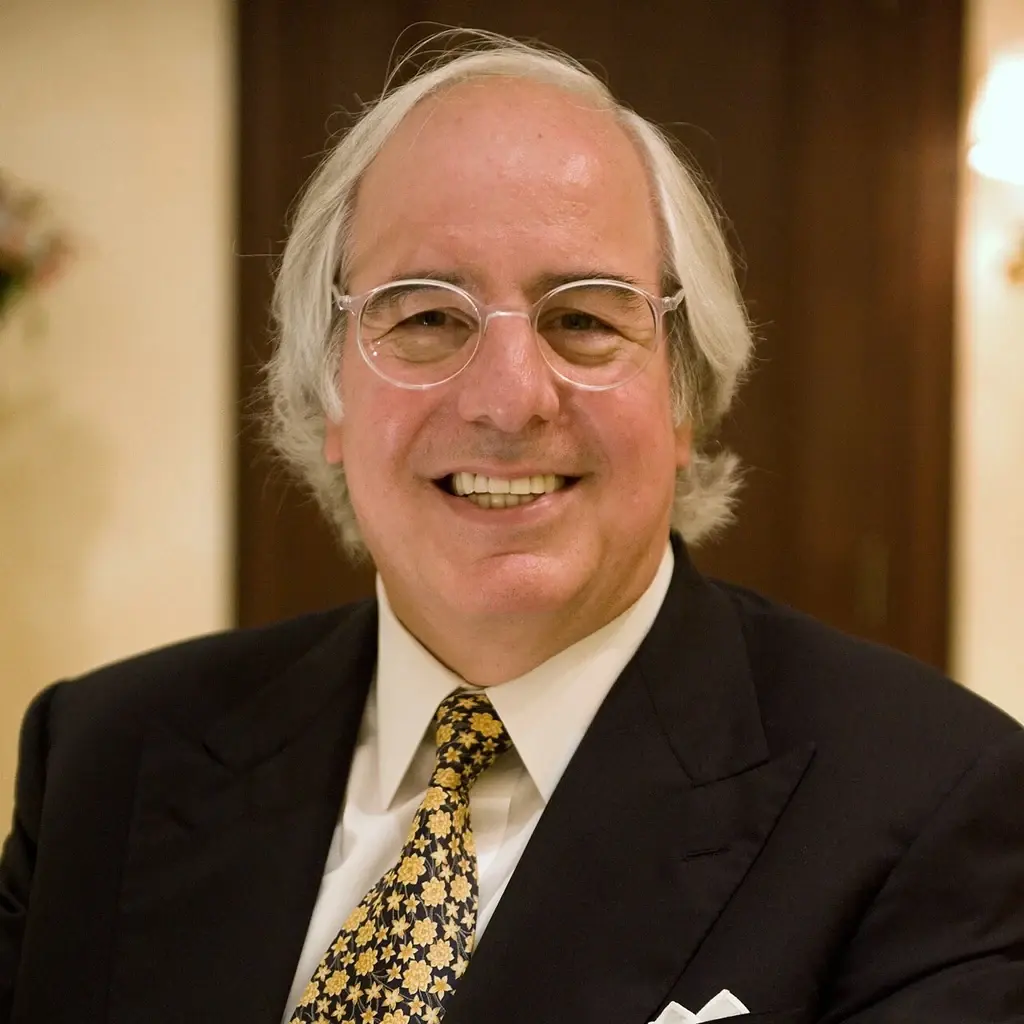
Frank Abagnale is an American security consultant and convicted fraudster. “Catch Me If You Can” explores how a teenager’s first check fraud grew into years of impersonating pilots and other professionals.
Explore more books by Frank Abagnale