What you'll learn
Key ideas from Built to Move
These ideas compress the book's argument without treating the author's view as settled fact. Use them as an orientation before reading the full work or listening in Wiseley.
Mobility is coordinated, usable capacity for everyday life, not passive flexibility or performance in one specialized activity.
The ten Vital Signs pair repeatable assessments with practices that reveal changing needs and connect measurement to action.
Walking accumulates through meals, calls, school routes, waiting, and errands, linking movement with circulation, cognition, and social connection.
Food is framed as movement infrastructure: produce supplies micronutrients, while protein supports muscle, connective tissue, tissue repair, and recovery.
Pain can signal that something should change without proving either harmlessness or tissue damage.
Sleep supplies the recovery and learning support that lets movement, nutrition, and practice become durable.
A durable routine uses ordinary anchors, accepts interruptions, and resumes with the next manageable action.
Inside Built to Move
Read the first chapter in full here. The other 10 continue in the Wiseley app.
Chapter 1 of 11 · 6 min · Audio & text
Build Capacity for Everyday Life
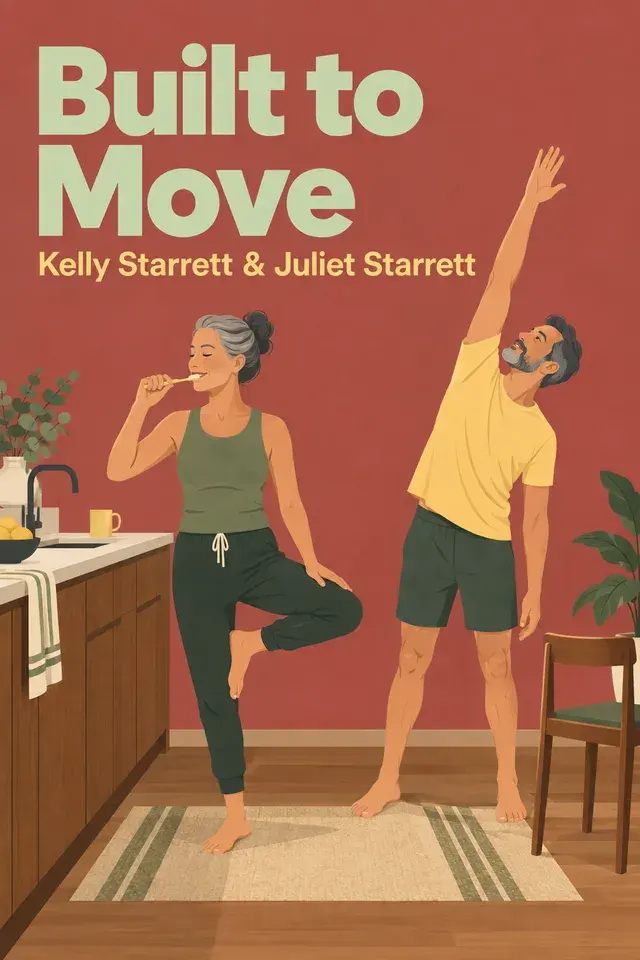
Built to Move, by Kelly Starrett & Juliet Starrett.
Imagine being seventy-six and joining a sixteen-day journey through the Grand Canyon. Warren paddled, hiked difficult trails, scrambled, camped, loaded gear, and handled Class Four and Five rapids through heat, sandstorms, and monsoon rain. He was more tired than younger travelers, but he did not miss out. Others admired his agility and stamina. Warren credited genetics and a lifetime of moving; the authors believe lifelong movement mattered more. His story opens a practical question: what do you want to be able to do later, and what would that life require from your body?
Working backward from a desired activity changes how physical preparation looks. A demanding trip might require walking capacity, joint range, strength, balance, coordination, breathing, and the ability to recover between efforts. A quieter future might require getting down to the floor, carrying groceries, climbing stairs, or standing comfortably. These are not separate athletic tricks. They are expressions of usable capacity. The authors encourage writing down future activities as a source of motivation, then treating the book as a starting point for preserving the abilities those activities need.
Built to Move organizes this work around ten Vital Signs. The idea expands familiar health measures beyond pulse, blood pressure, and cholesterol to include functional movement, balance, breathing, nutrition, sleep, and related signs of recovery and activity. Each Vital Sign pairs a repeatable assessment with a practice or strategy. The test shows what deserves attention; the practice supplies a response. The chapters are arranged to ease readers into new behaviors, not to rank one capacity above another. The framework can therefore serve a sedentary person, an athlete, or someone adapting to limitations.
The central term, mobility, means more than passive stretching or a joint being pushed to an extreme position. The authors describe it as coordinated work among joints, muscles, tendons, ligaments, fascia, nerves, the brain, and blood vessels, producing movement that is free and usable. Mobilizations explore neglected positions, reduce the effects of staying fixed, build patterns, and help the nervous system treat a position as safe. They may include breathing, contraction, relaxation, and control. Stretching can feel good and may ease stiffness, but the authors present mobilization as the broader tool for making range available when life suddenly asks for a longer stride, a lower position, or a quick change of direction.
This is also why exercise and movement maintenance belong together but are not interchangeable. Exercise is structured activity: running, cycling, swimming, lifting, or another form you enjoy. Movement is the rest of the day—walking, bending, reaching, shifting weight, changing position, and other ordinary actions. An hour of exercise does not make prolonged sitting harmless. The book does not reject workouts; it argues that a workout cannot substitute for the varied, lower-intensity practice that keeps everyday capacities available.
The operating cycle is simple. First, test yourself to see what is already working and where effort may help. Then practice the associated movement or lifestyle change, and retest. A score is a baseline, not a verdict, diagnosis, or measure of personal worth. Range of motion, sleep, eating, breathing, and other Vital Signs can change with stress, work, training load, and the circumstances of a particular day. A lower result may identify a useful priority rather than a failure. A passing result changes how much maintenance is needed; it does not eliminate maintenance. People who already possess an ability may need less practice than people building it, but the ability still benefits from rehearsal.
Maintenance does not need to become another demanding workout. The authors describe about ten minutes of mobilization a day as a practical investment, with at least one mobilization daily, while noting that every mobilization need not occur every day. A short practice can attach to television time or to an existing workout cooldown. The best time is the time that gets done. Use breathing as feedback: tolerable tension or some soreness may be acceptable, but pain is not required, and a sharp jab is a red flag. You should still be able to take a full breath; detailed decisions about pain belong later. Here, the rule is to keep the practice usable.
The larger lesson is a way of planning. Start with the life you want, identify the capacities beneath it, measure them without judgment, and give the weakest links repeatable attention. Then check again and adjust. Passing a test is evidence of present capacity, not permission to abandon the habit. Long-term capability grows when exercise is supported by movement spread through the day and by small practices that can survive ordinary schedules.
Chapter 2 of 11 · 8 min · Audio & textIn the app
Reclaim the Ground Beneath You
At the Olympic Club, a group of athletic adults was asked to use the floor. Some could not sit cross-legged, kneel, or sit sidesaddle; they had to lie down.
Chapter 3 of 11 · 8 min · Audio & textIn the app
Restore the Hip Extension You Use
To move well, the hip must do more than fold. Hip extension opens the hip so the thigh travels behind the body, as the rear leg does in a lunge.
Chapter 4 of 11 · 8 min · Audio & textIn the app
Breathe for Movement and Regulation
Breathing is where movement mechanics and internal regulation meet. The Starretts treat it as a capacity to train, not merely an automatic background function.
Chapter 5 of 11 · 9 min · Audio & textIn the app
Organize Your Shoulders for Reach
Reaching overhead is not simply a test of shoulder strength. It asks the upper back, shoulder blades, rotator cuff, arms, and neck to coordinate.
Chapter 6 of 11 · 8 min · Audio & textIn the app
Train Balance Through Sensory Practice
Balance is not a fixed trait reserved for athletes, nor merely the absence of falls. The authors present it as a trainable coordination skill and a form of mobility infrastructure.
Chapter 7 of 11 · 10 min · Audio & textIn the app
Make Your Day Invite Movement
Movement does not have to arrive as a single workout. In Built to Move, Kelly and Juliet Starrett ask readers to inspect two ordinary features of a day: how many steps it contains and how many hours it keeps the body sitting.
Chapter 8 of 11 · 11 min · Audio & textIn the app
Feed the Capacity You Want
To maintain movement capacity, the authors say, you have to feed the structures that make movement possible. Food is both building material and fuel.
Chapter 9 of 11 · 6 min · Audio & textIn the app
Respond to Pain with Discernment
Pain is not a one-size-fits-all instruction. The authors describe it as the brain interpreting bodily input as a threat, so pain can be a request for change without proving that tissue is damaged.
Chapter 10 of 11 · 8 min · Audio & textIn the app
Protect the Recovery Behind Movement
Movement does not end when a walk or mobility practice ends. The authors present sleep as the tenth Vital Sign and the recovery process behind the others.
Chapter 11 of 11 · 5 min · Audio & textIn the app
Turn Assessments into Lasting Routines
Built to Move’s final implementation question is not whether someone can complete every test and practice. It is whether an observation about the body can become an action that fits a real day.
Chapter 1 of 11 · 6 min · Audio & text: Build Capacity for Everyday Life
Wiseley supports reading and listening to summaries in the app.
Continue in WiseleyWhat Built to Move is about
How can everyday habits preserve the ability to move comfortably and independently? Kelly and Juliet Starrett connect simple movement assessments with practical work on mobility, walking, breathing, nutrition, and sleep. Their approach helps readers identify limitations, adapt their surroundings, and build consistent routines alongside exercise.
About Kelly Starrett & Juliet Starrett
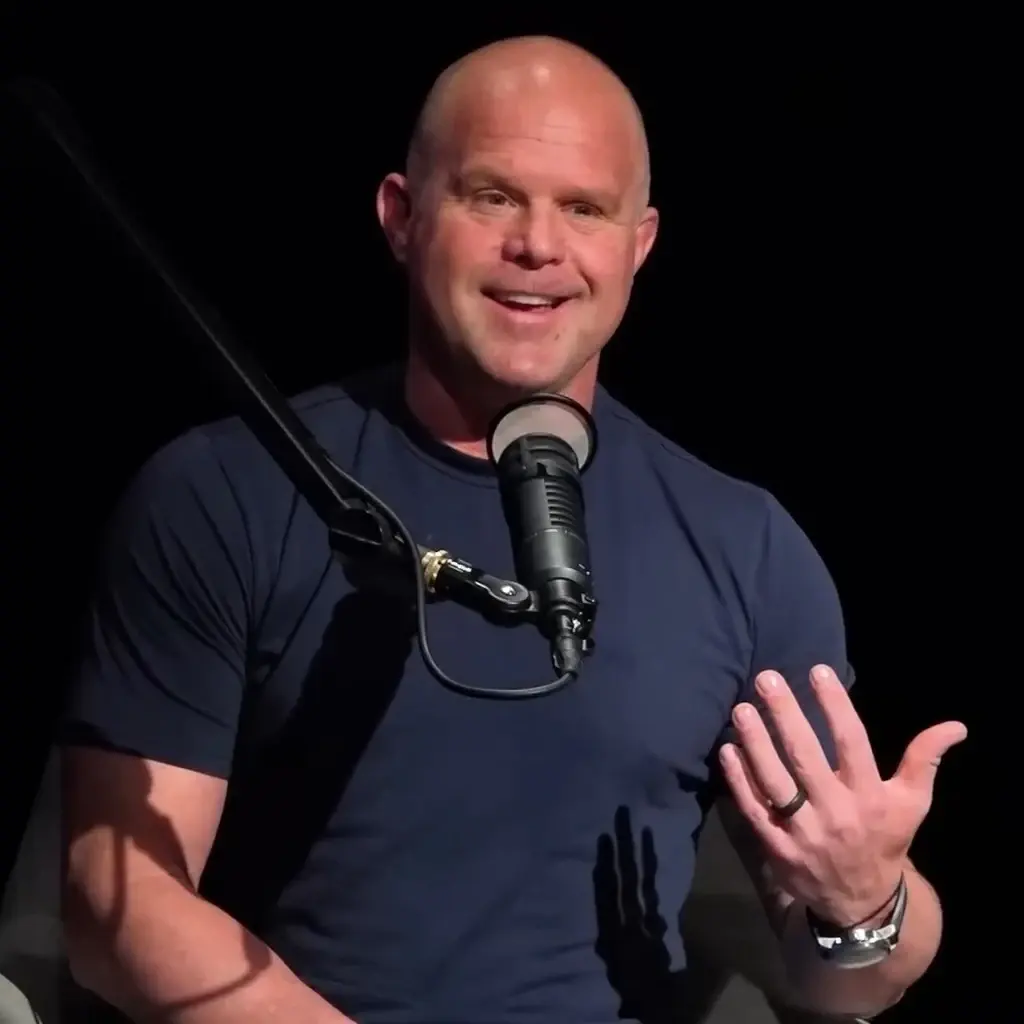
Kelly Starrett
Kelly Starrett is an American physical therapist, author, and coach. “Built to Move” explores how everyday habits can preserve the ability to move comfortably and independently.
Explore more books by Kelly Starrett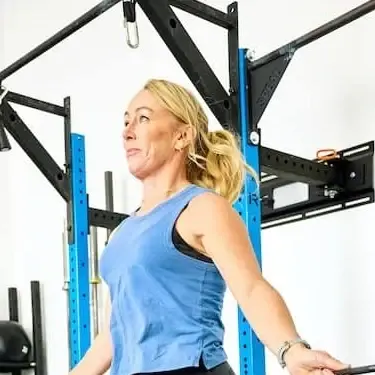
Juliet Starrett
Juliet Starrett is an entrepreneur, author, and former whitewater rafting world champion. “Built to Move” explores how everyday habits can preserve the ability to move comfortably and independently.
Explore more books by Juliet Starrett