What you'll learn
Key ideas from Building a Second Brain
These ideas compress the book's argument without treating the author's view as settled fact. Use them as an orientation before reading the full work or listening in Wiseley.
A Second Brain addresses information overload by giving useful ideas a dependable place outside biological memory.
Capture is selective curation: a trusted knowledge garden contains resonant fragments rather than an exhaustive record of the information stream.
PARA places information according to the outcomes it can support, making actionability more important than subject labels.
Progressive Summarization layers excerpts, bold points, selective highlights, and occasional summaries without removing original context.
Intermediate Packets make work easier to share, critique, revise, and assemble without holding an entire project in memory.
Creative work advances by alternating open-ended exploration with selective narrowing, because divergence and convergence require different behaviors.
Flexible weekly and monthly reviews reset inputs, synchronize projects and goals, and realign priorities with current reality.
Delegating routine memory frees attention for judgment, creation, self-knowledge, and a more deliberate relationship with information.
Inside Building a Second Brain
Read the first chapter in full here. The other 7 continue in the Wiseley app.
Chapter 1 of 8 · 6 min · Audio & text
Why Build a Second Brain
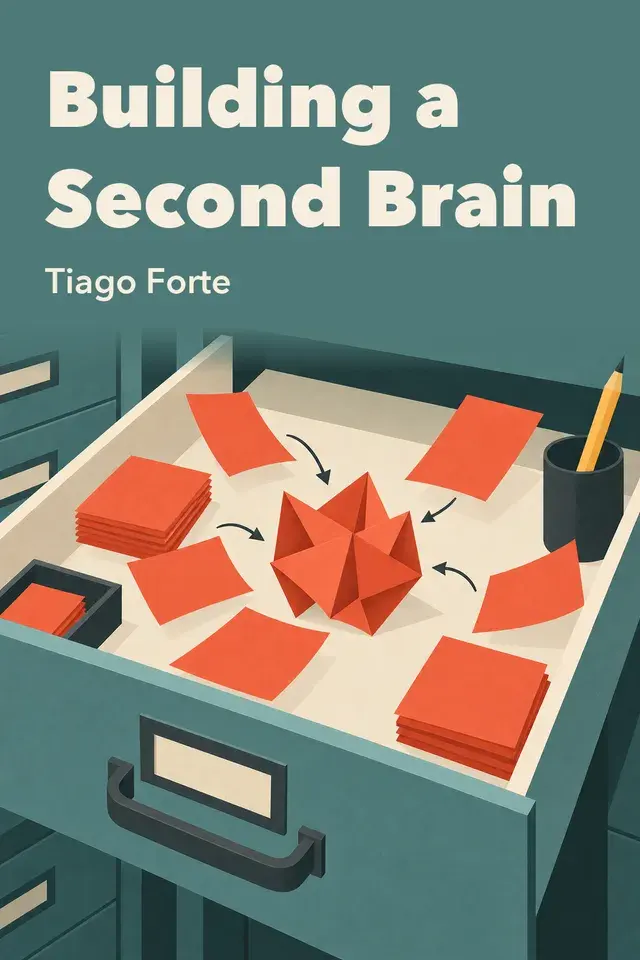
Building a Second Brain, by Tiago Forte.
Information is now both the raw material of work, learning, and personal projects and a source of strain. Books, podcasts, articles, videos, messages, and advice are easy to access, but access does not guarantee application. Ideas arrive before they are relevant, fade from memory, or remain as an anxious pile of things to revisit. Forte’s problem is not that this material lacks value. Consumption has outpaced application while attention and unaided memory remain limited.
A Second Brain is his answer: an external, digital commonplace book for material a person wants to remember, develop, and use. It is a private library of memories, ideas, knowledge, and notes, not raw accumulation. A useful note has been interpreted through personal perspective, translated into personal language, connected to experience, or otherwise made meaningful. Outside the head, it can be searched, rearranged, and recovered when circumstances make it relevant. This is personal knowledge management: giving information a trusted home.
Forte says the idea became real during a severe health crisis involving chronic throat and swallowing problems. Symptoms, treatment advice, questions, and records were scattered across experience and paper. He documented the condition and obtained his complete patient record, turning a cumbersome archive into material he could search, rearrange, annotate, and share. Bringing observations, medical guidance, treatment results, and questions together made patterns easier to see. Notes helped him participate in decisions and design changes in diet, meditation, and voice exercises. They did not replace care; they helped convert information and experience into practical options. The habit later traveled through study, teaching, and consulting.
The historical model is the commonplace book. Readers broke sources into excerpts, rearranged and reread them, then connected them with their own observations. Reading and writing became one act of sense-making. The commonplace book supported conversation, synthesis, and original thought, not just storage. Its digital successor adds search, synchronization, backup, links, images, files, annotations, and sharing. It can be a study notebook, journal, and idea sketchbook—a private laboratory for refining thoughts.
Digital tools can therefore extend cognition, not merely store information. A calendar extends event memory, a smartphone communication, and cloud storage memory across data and locations. A Second Brain applies that logic to personal knowledge. Outsourcing some remembering and juggling can preserve the biological brain for invention, pattern recognition, intuition, collaboration, investigation, planning, and judgment. The system supports thinking rather than replacing it. A professional note may be an annotated passage, image, link, plan, audio memo, or saved text. What defines it is interpretation: it becomes a knowledge building block that can stand alone, then be searched, moved, combined, and recombined into larger work.
Forte describes four cognitive superpowers. First, externalized notes make ideas concrete: vague thoughts become visible objects that can be inspected, edited, rearranged, and tested. Second, they reveal connections. When quotations, screenshots, research, plans, and observations share one flexible space, distant ideas can meet, making creativity the discovery of useful associations.
Third, the system incubates ideas over time. Immediate brainstorming favors what is easiest to recall, while recency can make the newest idea seem best. Persistently saved material allows slower accumulation, so an idea can mature without a breakthrough on command. Fourth, the system sharpens personal perspective. Examples, stories, research, analogies, and observations make a point of view more persuasive and distinct. Creative blockage may reflect a shortage of raw material rather than talent.
A digital notetaking app usually sits at the center, within a wider ecosystem of calendars, email, task lists, reading tools, and work software. Its value is flexibility: it stays informal while offering search, links, editing, synchronization, backup, and sharing. A familiar tool used reliably matters more than a perfect feature set.
The system’s value unfolds from remembering to connecting to creating. It preserves hard-to-retrieve information, relates knowledge across contexts, and finally supports new, shareable work. These are not rigid stages; they describe an external collection becoming more useful as life changes.
The broader architecture is CODE: Capture, Organize, Distill, and Express. Later chapters make those words practical. Here, they establish the promise: meaningful information becomes reusable building blocks available for future action. The aim is not perfect self-optimization, but a dependable thought partner that lets the biological mind return to judgment, creativity, exploration, and what matters.
Chapter 2 of 8 · 5 min · Audio & textIn the app
Capture What Resonates
Capture is not a race to build the largest archive. The author treats it as selective curation: deciding what deserves a trusted place before it disappears into the stream.
Chapter 3 of 8 · 6 min · Audio & textIn the app
Organize for Action
Once useful information has been captured, a new problem appears: where should it live? Capture can make ideas feel safe from forgetting, but it also creates a larger collection to sort and use.
Chapter 4 of 8 · 6 min · Audio & textIn the app
Distill for Future Retrieval
Once notes have been captured and given a place in the system, they are still raw material. Distillation is the move from adding knowledge toward attaining wisdom: removing what obscures what matters.
Chapter 5 of 8 · 7 min · Audio & textIn the app
Express Through Building Blocks
Once information has been captured, organized, and distilled, it should not merely sit in a better archive. It should help us remember what matters, connect separate ideas, and create something concrete.
Chapter 6 of 8 · 6 min · Audio & textIn the app
Alternate Divergence and Convergence
Once the earlier chapters have supplied captured, organized, and distilled packets, the next problem is execution: what should be explored, and what should finally be made? Tiago Forte presents creative work as an alternation between divergence and convergence.
Chapter 7 of 8 · 6 min · Audio & textIn the app
Maintain the Knowledge Flywheel
Once a Second Brain contains useful material, the challenge is keeping it easy to enter and use as life changes. Forte treats maintenance as ordinary work, not a separate reorganization campaign.
Chapter 8 of 8 · 5 min · Audio & textIn the app
From System to Self-Expression
The book ends by changing the question from how to build the perfect system to how to live with a useful one. A Second Brain succeeds when it helps its owner make progress and experience some delight, not when it looks orderly to outsiders.
Chapter 1 of 8 · 6 min · Audio & text: Why Build a Second Brain
Wiseley supports reading and listening to summaries in the app.
Continue in WiseleyAbout Tiago Forte
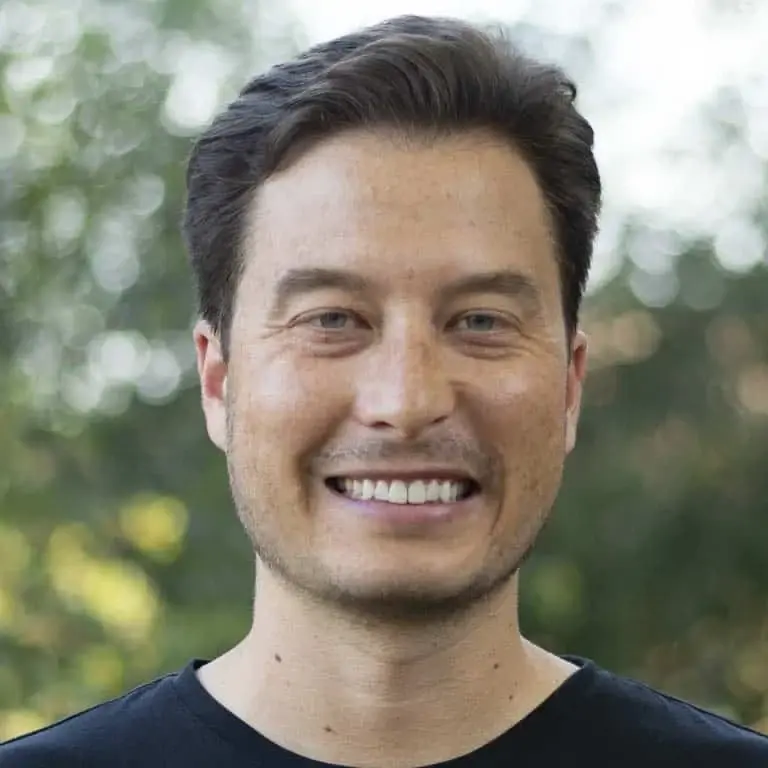
Tiago Forte is a productivity writer and founder of Forte Labs. “Building a Second Brain” explores how to turn scattered digital information into a trusted, reusable knowledge system.
Explore more books by Tiago Forte