
What you'll learn
Key ideas from Be Useful
These ideas compress the book's argument without treating the author's view as settled fact. Use them as an orientation before reading the full work or listening in Wiseley.
Vivid visualization can guide preparation, but it does not replace planning, work, learning, or practice.
An ambitious goal can challenge the limits others assign to a person’s role.
Tracking repetitions makes planned work concrete; proper form, completion, and full effort give practice its quality.
Delegating work does not remove responsibility for checking that dependencies are in place and intended results are complete.
Persuasion begins by identifying whose approval or participation matters and understanding what that person values.
A loss becomes useful feedback when distress is acknowledged and the evidence is examined honestly.
Humble questions and attentive listening help people retain knowledge and consider unfamiliar possibilities.
People can contribute through available time, skills, money, attention, or experience, at a scale that fits their circumstances.
Inside Be Useful
Read the first chapter in full here. The other 7 continue in the Wiseley app.
Chapter 1 of 8 · 7 min · Audio & text
Build a Vision You Can Test
Be Useful, by Arnold Schwarzenegger.
A useful direction begins with a picture of the life you want and some sense of how to move toward it. Schwarzenegger calls this a vision: both an image of a destination and a plan for reaching it. That picture can help make daily choices easier to judge. Does a choice bring the desired future into clearer view, or take you farther from it? The answer gives small decisions a connection to something larger.
Not everyone starts with a clear destination. Schwarzenegger says it can take years to discover one, and suggests beginning with small, concrete goals. A manageable accomplishment in a day can change what you notice and make a larger direction easier to imagine. Daily aims can develop into weekly or monthly ones. The point is to begin from where you are, then let experience help clarify what matters. He also recognizes that people do not choose their origins or histories; his argument is that a direction can still be chosen from the present onward.
That discovery needs room for thought. Schwarzenegger describes growing up with time to daydream, while observing that adult responsibilities and constant distractions can crowd out reflection. The space does not need to be elaborate. A walk, a ride, or a quiet interval can let ideas surface when attention is not fixed on demands and devices. Walking is one possible way to make that space, not the only one.
Jono Lineen’s walks show how a person’s purpose can change during that space. His Himalayan walk first seemed to be a test for himself. After months of walking with his thoughts, he realized he was not there to test himself but to fix himself: he was coming to terms with his younger brother’s death. He had struggled with sadness in the years after the loss, and the walk gave him clarity that helped pull him out of it. Later, walking the Camino helped him recognize that he needed to leave a stressful job. By the end of the Camino, he had decided to quit his job. He credited walking with helping turn his life in a new and wonderful direction. The walk did not hand him a fixed plan; it gave him room to understand what his experience was telling him.
Schwarzenegger’s own direction began broadly. As a boy of about ten, he formed an image of America from school, magazines, newsreels, buildings, cars, films, music, and pictures of California. It was an imperfect picture of the place, but its vividness mattered: it drew him toward a future beyond the one he knew. He recommends looking back at early enthusiasms, too. Childhood interests may offer clues about what holds someone’s attention before outside judgments shape their choices; they need not amount to a career plan.
That broad image became more specific when Schwarzenegger encountered Reg Park, a bodybuilder who also acted. Park helped him connect America with a possible route through bodybuilding and movies. In the book’s map comparison, this is like moving from a view of the whole world toward a particular city and street. Specificity does not shrink an aspiration. It reveals what pursuing it might involve. The destination can differ from person to person—a career, a move, a hobby, or a cause—but it needs to become concrete enough to guide choices.
Specificity also means knowing why a goal matters. “Getting fit” says too little by itself. Someone may want to improve their health, look a certain way, or play actively with their children. Those aims can call for different kinds of preparation. The body and training suited to bodybuilding are not the same as those suited to distance running, climbing, or wrestling. A goal becomes useful when its personal purpose is clear enough to shape the next steps.
Schwarzenegger also describes making a destination vivid in his imagination. When he pictured winning a bodybuilding contest, he imagined the podium, other competitors, judges, crowd, and the sensations of the event. He treated this kind of detailed image as a future memory: a way to see the desired result clearly before facing it. His early image of America worked similarly, even though it was not factually precise. Sensory detail gave the aspiration emotional force and made it easier to recognize the direction he wanted to pursue.
A vivid picture is not a substitute for planning or effort. Schwarzenegger explicitly rejects the idea that imagining an outcome makes it happen on its own. Visualization can help direct preparation, but a person still has to learn, work, encounter setbacks, and keep learning. He points to athletes who picture precise performances, such as Michael Phelps imagining split times and Formula One drivers rehearsing circuits and controls. In these examples, mental rehearsal serves the performance; it does not replace the skill and practice behind it.
Clarity also helps distinguish the desired destination from a near substitute. Schwarzenegger recalls being offered a highly paid role as spokesman for Jack LaLanne’s health-club franchise. He declined because the commitment would have prevented him from pursuing movies, which had become his actual vision. The offer was attractive, but recognizing what did and did not count as success made the choice clearer. A specific vision can therefore help sort opportunities: some fit the direction, while others would pull it out of focus.
A vision still needs to be checked against the person making choices now. Schwarzenegger uses the mirror as a metaphor for examining whether present conduct fits the person one hopes to become. That can be uncomfortable when the current picture conflicts with the imagined one. But without self-examination, it is easier to lose sight of one’s purpose or let shallow aims take its place. The vision should remain clear enough to guide choices, yet it can evolve as the person changes.
Private reflection is not the only way to test a vision. Real-world evidence can show whether the intended effect is actually happening. Schwarzenegger points to votes and polling in public service, and to the camera and audience in acting: intention alone cannot determine how other people experience the result. Looking at that evidence does not mean adopting every outside expectation. It means facing the gap, if there is one, between the picture in your mind and what your choices produce. A sound direction can be reviewed, tested, and revised without losing its personal meaning.
Chapter 2 of 8 · 6 min · Audio & textIn the app
Aim Beyond the Familiar
Once a direction is clear, ambition determines how far a person is willing to follow it. Schwarzenegger says that people around him often treated success as a reason to stop: by the late 1980s, he was already an action star.
Chapter 3 of 8 · 5 min · Audio & textIn the app
Work Through Repetition and Discomfort
Schwarzenegger presents work as preparation for the moment when action is required. A chance, performance, or crisis may arrive before there is time to learn what the task demands.
Chapter 4 of 8 · 5 min · Audio & textIn the app
Turn Plans into Follow-Through
A plan can assign tasks and set a direction, but it cannot confirm that the work has happened. In Schwarzenegger’s view, follow-through means staying responsible for the result: checking what conditions actually exist, finding gaps, and circling back until important parts are complete.
Chapter 5 of 8 · 7 min · Audio & textIn the app
Make the Vision Understandable
A worthwhile vision still needs to make sense to other people. Their understanding can lead to the approval, effort, or participation that helps a goal take shape.
Chapter 6 of 8 · 9 min · Audio & textIn the app
Shift Gears When Plans Fail
A setback can demand two responses. First, acknowledge what has happened and how it feels.
Chapter 7 of 8 · 7 min · Audio & textIn the app
Learn Beyond the Classroom
Learning does not begin only when someone enters a classroom. It can begin with a real problem, a question, or a person whose experience reveals something you do not yet understand.
Chapter 8 of 8 · 7 min · Audio & textIn the app
Make Usefulness a Shared Practice
Achievement can feel like a personal story: one person sets a goal and does the work. Schwarzenegger does not deny the work.
Chapter 1 of 8 · 7 min · Audio & text: Build a Vision You Can Test
Wiseley supports reading and listening to summaries in the app.
Continue in WiseleyWhat Be Useful is about
How can ambition become a useful life? Drawing on Arnold Schwarzenegger’s experiences in bodybuilding, film, and public service, the book examines how to clarify a vision, commit to demanding work, persuade others, adapt after setbacks, keep learning, and turn achievement into service. Its methods help readers connect daily choices with long-range aims.
About Arnold Schwarzenegger
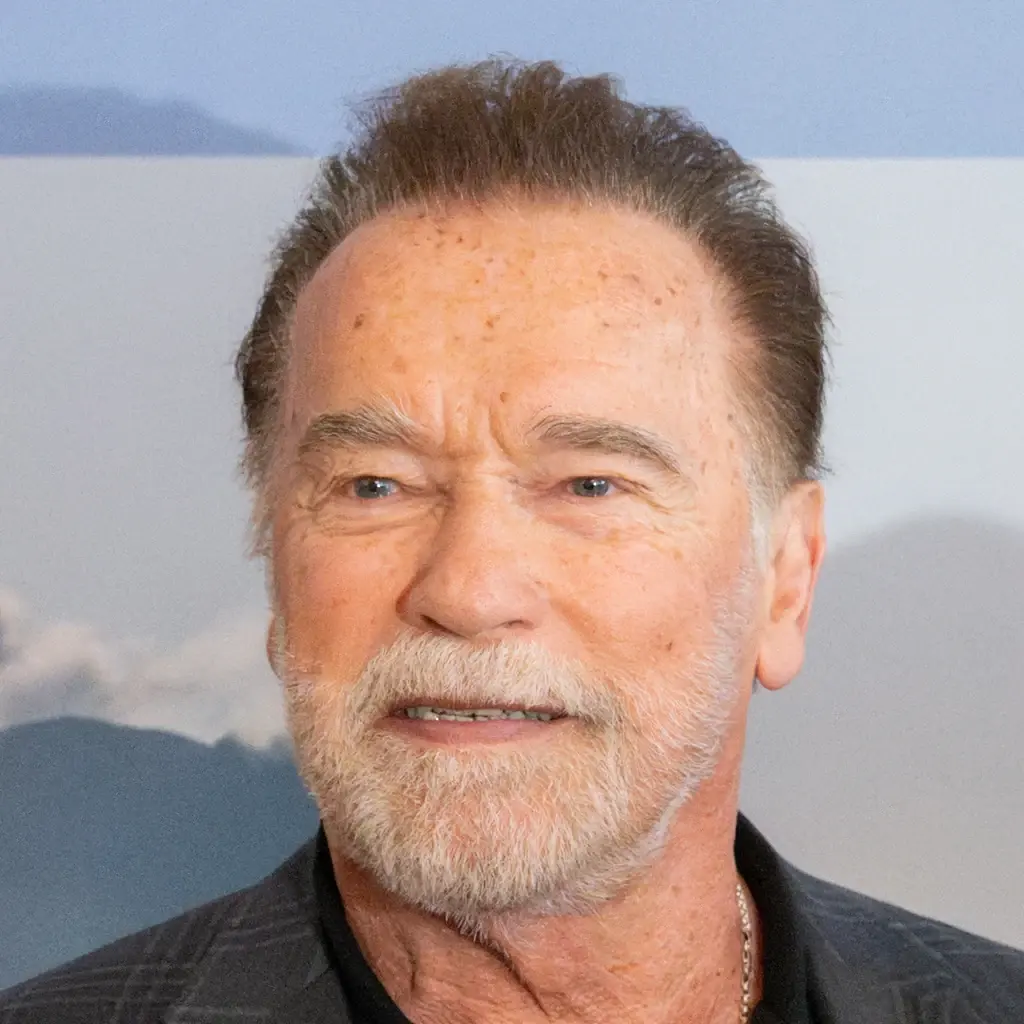
Arnold Schwarzenegger is an Austrian and American bodybuilder, actor and politician. “Be Useful” explores how to clarify a vision, commit to demanding work, and turn ambition into a useful life.
Explore more books by Arnold Schwarzenegger