
What you'll learn
Key ideas from Bad Therapy
These ideas compress the book's argument without treating the author's view as settled fact. Use them as an orientation before reading the full work or listening in Wiseley.
The book centers ordinary or moderate childhood distress while preserving the need for psychiatric care when illness is profound.
Avoidance may preserve fear, while graduated exposure gives a person practice testing feared situations and building coping capacity.
Skill instruction, voluntary support, and referral for serious distress serve different purposes and should not collapse into routine disclosure.
Retrospective recall, selective samples, and confounding factors can make associations between childhood adversity and later problems look causal.
Baumrind’s authoritative style combines warmth and discussion with firm standards; authoritarian control centers obedience and resists discussion.
Anxiety and sadness can carry information about danger, loss, or a harmful situation, though excessive, impairing distress can warrant treatment.
Children gain practice and confidence when adults leave room for meaningful responsibility and manageable mistakes while remaining available for serious needs.
Inside Bad Therapy
Read the first chapter in full here. The other 10 continue in the Wiseley app.
Chapter 1 of 11 · 7 min · Audio & text
When Help Becomes Harm
Bad Therapy, by Abigail Shrier.
Abigail Shrier begins with a question about what happens when care itself causes harm. Therapy is usually understood as help: someone is struggling, a professional listens, and treatment is meant to improve things. But a good purpose does not guarantee a good result. Shrier asks readers to judge psychological care by its effects, including effects that were never intended.
She draws a boundary around the book’s subject. Some young people have profound mental illness that can prevent them from working or maintaining relationships. They need psychiatric care, and Shrier is not arguing that they should go without it. Her focus is the larger group whose difficulties may be worry, loneliness, sadness, fear, or other ordinary and moderate distress. The question is whether those struggles call for treatment, and what happens when they enter a system built to diagnose and intervene.
Shrier uses the term iatrogenesis for harm that originates with a healer or treatment. It can follow an error or negligence, but it can also arise from ordinary risks, or from treating a problem as though it were something else. The word does not by itself accuse a clinician of malice or incompetence. It names a possible cost of intervention, even when people involved are trying to help.
That possibility matters because treatment is not the same as everyday advice. Encouraging a child to sleep well or eat vegetables does not presume that the child is deficient. An intervention, by contrast, is usually meant to correct a presumed problem or incapacity. For someone who is seriously ill, the chance of improvement may justify the risks. For someone who is generally well, the balance may be different: there may be less to gain, while the risks remain. Shrier’s standard is not to reject care, but to ask whether its expected benefit warrants its costs.
She illustrates the question with a visit to urgent care with her twelve-year-old son, who had a stomachache. The doctor had ruled out appendicitis and suspected dehydration. A nurse then sought to screen him privately for suicidal thoughts, following a written staff script. The script said to ask the questions away from parents and to notify them if safety concerns arose. Shrier says there was no sign her son had a mental illness. She wondered whether a child might try to give an adult the answer he thought was wanted, and whether an affirmative answer could affect whether she could take him home. Her concern is about applying a serious mental-health procedure without an apparent psychiatric reason, not a claim that asking about suicide is never appropriate. The encounter leaves a practical question: does routine screening in this situation protect a child, or could it introduce anxiety and confusion?
Shrier places that episode beside D.A.R.E., a school drug-prevention campaign that used group techniques shaped by therapy. Students discussed personal problems, confessed drug use, and rehearsed refusing drugs. The effort aimed to prevent substance use, but Shrier cites follow-up studies suggesting the program may have increased teen alcohol and drug use. She proposes that inviting children to discuss a problem they did not already have could sometimes introduce it. The example shows why an intervention’s purpose cannot stand in for evidence about its effects.
This scrutiny is not a claim that therapy never helps. Shrier describes her own experiences as mixed: therapy could be comforting or enlightening, and some focused treatments have shown success. She specifically acknowledges evidence that cognitive behavioral therapy can help with phobias. Nor does she portray clinicians as uniformly bad actors; therapists generally want to help. Her argument is that sincerity, protocol, and professional status cannot settle whether a particular treatment helps a particular person.
The question has special weight when the patient is a child. Shrier argues that children and adolescents may not yet have the self-knowledge or confidence to challenge an adult’s interpretation of them or their family. That makes it important to notice not only whether help is offered, but how the child is doing afterward. Immediate reassurance, a sense of being heard, or a brief feeling of relief may matter, but none alone establishes lasting improvement.
Measuring that improvement is difficult. Shrier says therapists often do not track side effects, and the profession does not require such tracking. It can also be hard to agree on what counts as harm: crying or a divorce might signal worsening distress, but could also be interpreted as part of change or progress. If outcomes remain undefined, clinicians and patients may miss cases where treatment made things worse. The difficulty of measurement is a reason for greater care in evaluating treatment, not a reason to assume either that harm is common or that it never happens.
The governing question, then, is not whether help is well meant. It is whether the benefits outweigh the risks for the person receiving it, and whether anyone is checking. Serious illness can make treatment’s risks worthwhile. Targeted therapy can bring real benefit. But when ordinary childhood distress becomes a reason to intervene, good intentions alone are not enough. Care must be judged by what it does, including the harms it may cause.
Chapter 2 of 11 · 8 min · Audio & textIn the app
The Therapy Era Paradox
Nora describes a peer world in which anxiety, depression, self-harm, and other mental-health labels are familiar. Many of her friends have been in therapy for years, and several take psychiatric medication.
Chapter 3 of 11 · 10 min · Audio & textIn the app
How Treatment Can Entrench Distress
Attention is not always neutral. Shrier’s concern is that care can make distress more central when it repeatedly asks a young person to inspect feelings, explain them, and treat them as a guide to action.
Chapter 4 of 11 · 9 min · Audio & textIn the app
Schools Become Emotional Clinics
Shrier takes the book’s argument about therapy-like attention into the place most children encounter every weekday: school. At a teachers’ conference, she saw social-emotional abilities assessed alongside academic ones, and heard about routines that brought mindfulness, emotion monitoring, and psychological support into classrooms.
Chapter 5 of 11 · 10 min · Audio & textIn the app
Accommodation Without Expectations
A one-to-one shadow can make school possible for a child who needs substantial help. The arrangement originally supported inclusion for students with autism or severe learning disabilities.
Chapter 6 of 11 · 9 min · Audio & textIn the app
What Trauma Evidence Can Establish
A painful reaction can be real without revealing its cause. Shrier questions popular accounts that treat trauma as a hidden force stored in the body, passed between generations, or visible in brain scans.
Chapter 7 of 11 · 7 min · Audio & textIn the app
Surveying the Inner Life
A survey can seem like a neutral way to collect information. Shrier describes a more consequential kind used in schools: questionnaires developed largely by the Centers for Disease Control and Prevention and administered under state education systems.
Chapter 8 of 11 · 6 min · Audio & textIn the app
Connection, Empathy, and Fair Judgment
Shrier links self-focus to a larger question: what helps a child feel located in a life with other people? Drawing on Peterson, she describes close attention to one’s feelings as closely tied to neurotic suffering, anxiety, and depression.
Chapter 9 of 11 · 9 min · Audio & textIn the app
Reclaiming Parental Authority
Shrier asks what happens when parents treat emotional attunement as the whole of discipline. A child can be heard and comforted, she argues, while still being told to stop.
Chapter 10 of 11 · 8 min · Audio & textIn the app
When Distress Becomes Medical
When a child is restless, distracted, panicked, or persistently sad, adults face a real question: are they seeing a disorder that needs treatment, a response to circumstances, or both? Shrier’s discussion does not make medication a moral test.
Chapter 11 of 11 · 13 min · Audio & textIn the app
Childhood Needs Room to Grow
Shrier’s closing advice is less a new parenting program than a subtraction: stop managing every hour, smoothing every inconvenience, and stepping between children and ordinary problems. Children need adults to protect them from serious harm, but they also need chances to act without an adult directing each move.
Chapter 1 of 11 · 7 min · Audio & text: When Help Becomes Harm
Wiseley supports reading and listening to summaries in the app.
Continue in WiseleyAbout Abigail Shrier
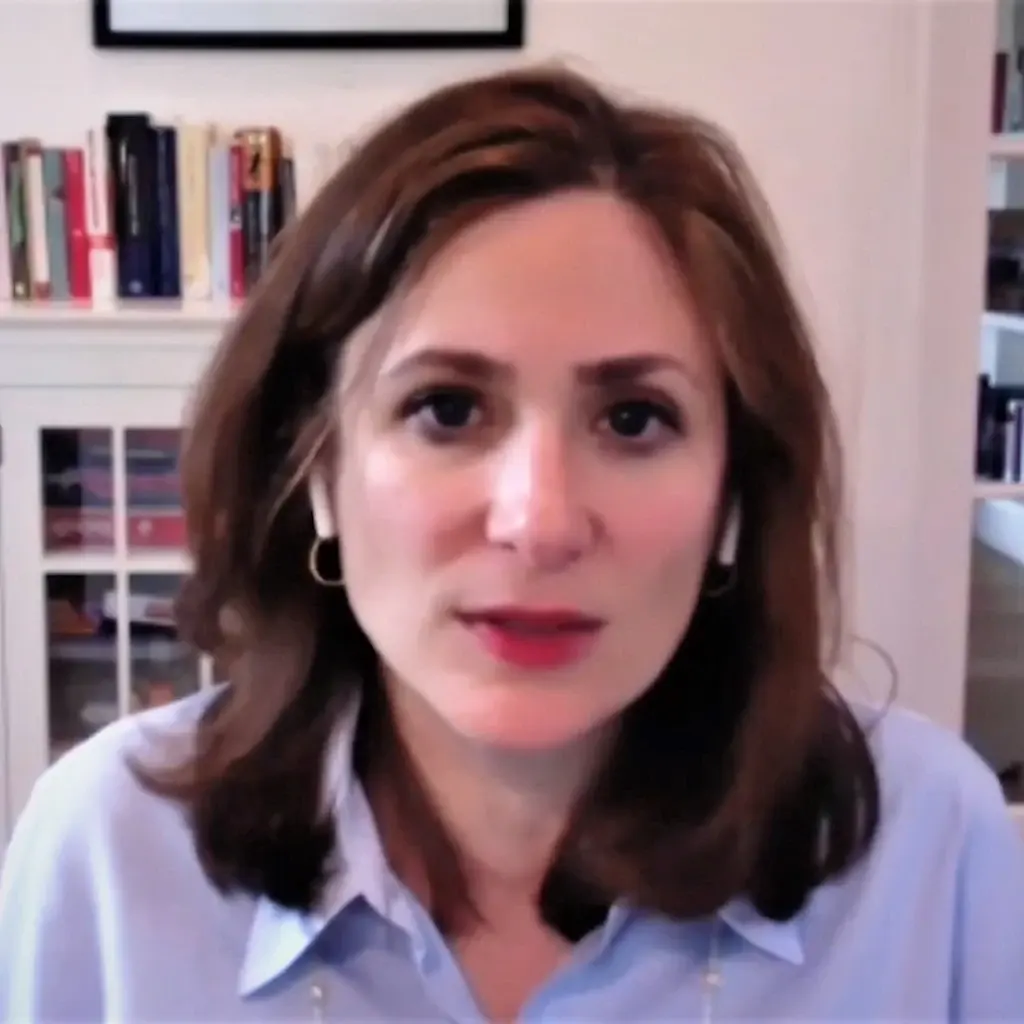
Abigail Shrier is an American freelance journalist and author. “Bad Therapy” explores why therapy, diagnosis, and medication have become so prominent in children’s lives and what that may cost them.
Explore more books by Abigail Shrier