What you'll learn
Key ideas from 1929
These ideas compress the book's argument without treating the author's view as settled fact. Use them as an orientation before reading the full work or listening in Wiseley.
The crash grew from credit, confidence, and human choices; debt was a recurring vulnerability, not a complete explanation.
Raskob’s two-hundred-dollar entry expanded access to five hundred dollars in stock through borrowing, increasing both participation and exposure.
Rising margin demands turned cash shortages into broker liquidations, which pushed prices lower and prompted further calls.
Delayed prices and press misreadings made public messaging part of the rescue, but reassurance could not resolve the underlying vulnerabilities.
The bankers focused on shares with no buyers because they could not sustain every threatened stock price.
After 1930’s brief rebounds, falling prices and fragile collateral reinforced contractions in lending and public confidence.
The nationwide holiday interrupted withdrawals and created time to assess banks, but limited inspection capacity made reopening a form of triage.
Bank separation and deposit insurance promised safeguards while raising disputes over disruption, cost, and risk-taking.
Inside 1929
Read the first chapter in full here. The other 13 continue in the Wiseley app.
Chapter 1 of 14 · 5 min · Audio & text
A Boom Built on Borrowed Confidence
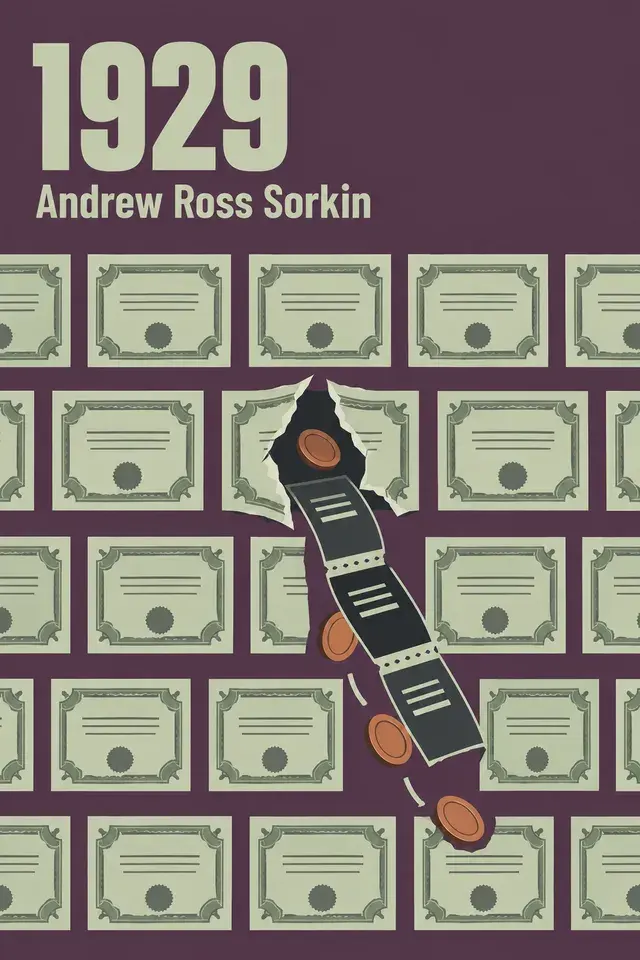
1929, by Andrew Ross Sorkin.
People often remember 1929 as the year the stock market crashed. Andrew Ross Sorkin starts with that familiar event but gives it a wider frame. The break was not a self-contained market episode with one cause. It followed years in which credit, rising prices, and confidence reinforced one another. In the Author’s Note, Sorkin describes a human history built from years of reporting and documentary fragments, focused on people who helped set events in motion. His image is confidence eroding gradually, then disappearing all at once.
After a week of declines, the market closed 13 percent lower on Monday, October 28, 1929. Charles Mitchell, National City’s chairman, felt exposed. The bank’s position in its own stock had become vulnerable as prices fell. His predicament briefly signals that the boom’s reversal could endanger institutions as well as individual investors.
Borrowing had become part of ordinary economic life. As workers moved from farms and small towns to cities, cars, radios, and dishwashers became part of a new consumer economy. Credit made them accessible: General Motors sold cars on credit, Sears offered installment plans, and banks extended such arrangements to smaller merchants. A household could use a product now and pay from later earnings. Borrowing moved expected future income into present life. But prosperity was uneven. More efficient farming displaced workers and harmed rural communities even as urban and financial wealth expanded.
Stock buying carried the same expectation into the market. A margin buyer paid 10 or 20 percent of a stock’s price and borrowed the rest. With prices climbing, a small initial stake controlled a larger position, and gains on that position made the loan look easy to carry. Investors could expect to roll debt into a brighter future. But the debt remained even when a stock fell. A broker could demand more cash to support the loan; that demand was a margin call. The arrangement tied an investor’s ability to hold a stock to cash and continued price strength.
Groucho Marx makes this mechanism personal. He questioned how RCA could rise to $535 without declaring a dividend. His broker assured him that a worldwide market would keep rising and that investing was safe even for a family man. The answer did not settle Marx’s question about the price; it made continued gains seem plausible enough to trust. His later purchases followed two other tips: an elevator operator tipped him to buy Union Carbide, and a fellow actor told him about Goldman Sachs Trading Corporation. Marx bought shares in both. After a margin call, he mortgaged his home and later blamed his decision to listen. His story holds skepticism and susceptibility together: he noticed a reason for doubt, yet confident assurances and tips still shaped his choices. Borrowed money made those choices more exposing when the call came.
The wider climate helped make confidence persuasive. As industrial companies sought capital through the New York Stock Exchange, the market grew more central and trading volumes rose. Media made financiers and business leaders household names, and wealth could be mistaken for proof of good judgment. Sorkin also describes a political climate favoring lower taxes and a smaller federal government, with businesses making many of their own rules. Long booms, he argues, can make tips, deals, and slogans blur the difference between sound opportunities and bad ones. He portrays people at the top as flawed and self-interested, sometimes bold and sometimes blind, rather than as actors who knew disaster was coming. Repeated success could make it harder to judge risk clearly.
Debt links these examples because it brings expected future wealth into present use and leaves a claim to meet later. Sorkin treats it as a recurring thread in financial crises, while acknowledging that there is no clear universal line between manageable and excessive borrowing, or one universal remedy. Credit can finance consumption and investment; debt alone does not explain every crisis. In 1929, the danger grew as expanding credit met rising prices and decisions shaped by the expectation that growth would continue. When confidence weakened, the obligations remained.
Chapter 2 of 14 · 7 min · Audio & textIn the app
Bankers as Market Makers
By the late 1920s, Thomas Lamont had become one of J. P. Morgan & Co.’s most consequential partners. He treated credit as a way to make large obligations manageable over time and saw himself as an ambassador of American finance. His career joined private banking to public affairs, while raising an old question: when bankers acted for the public good, who could hold them to account? Lamont reached Morgan by an unusual route. Raised with little money, he studied at Exeter and Harvard, then worked as a journalist…
Chapter 3 of 14 · 9 min · Audio & textIn the app
The Fight Over Credit
In February 1929, the fight over stock credit was also a fight over who had authority to judge risk. The Federal Reserve was built as a compromise between regional banks and central oversight in Washington.
Chapter 4 of 14 · 6 min · Audio & textIn the app
Who Could Own the Boom?
By spring 1929, the question of who benefited from financial credit also appeared in proposals presented as productive expansion. Thomas Lamont had been negotiating a combination of RCA, Western Union, and ITT; word of the talks became public on March 29.
Chapter 5 of 14 · 5 min · Audio & textIn the app
Debt Diplomacy Beyond Wall Street
The Young Plan negotiations took finance into diplomacy. In Paris, American businessmen, including Thomas Lamont and Owen Young, acted as agents of the United States.
Chapter 6 of 14 · 5 min · Audio & textIn the app
Summer Confidence and Warnings
By late June 1929, the Dow Jones Industrial Average had climbed 11 percent in a month, reaching a record 331.65. The rise was not just a figure on a board.
Chapter 7 of 14 · 5 min · Audio & textIn the app
When Falling Prices Forced Sales
By October, falling prices posed a danger beyond the losses they caused. Investors who had borrowed to buy shares could be forced to sell when their accounts no longer met margin requirements.
Chapter 8 of 14 · 8 min · Audio & textIn the app
Black Thursday’s Rescue
On the morning of October 24, fear was already visible outside the New York Stock Exchange. People gathered before the opening, while businesses prepared to feed and house as many as 100,000 market workers if another collapse left them stranded.
Chapter 9 of 14 · 5 min · Audio & textIn the app
The Limits of Private Support
The days after October 24 tested what private support could actually do. The bankers could help when a stock had no buyer, but they could not absorb every threatened share.
Chapter 10 of 14 · 7 min · Audio & textIn the app
A Panic Without an Ending
By November, the crash was reaching people far from the exchange. James Riordan, president of the County Trust Company, had built a high-priced Wall Street favorite on a relatively modest business.
Chapter 11 of 14 · 11 min · Audio & textIn the app
From Market Crash to Depression
The first rally after the crash recovered a substantial part of the October losses, but by late spring 1930 it had ended. Prices then drifted down, and the damage accumulated without another single day that seemed to explain it all.
Chapter 12 of 14 · 7 min · Audio & textIn the app
A New Government, A Fragile System
The transfer of power in early 1933 exposed a difficult question: could public statements stop withdrawals from banks too impaired to honor all claims? Hoover thought fear was worsening a crisis already marked by weakened banks, failures, hoarding, gold outflows, and economic suffering.
Chapter 13 of 14 · 11 min · Audio & textIn the app
Investigation, Reform, and Judgment
By 1933, anger at Wall Street had become both a public investigation and a fight over what the banking system should allow. Ferdinand Pecora’s hearings brought executive decisions into view; Charles Mitchell’s tax trial later tested whether particular conduct could be proved criminal.
Chapter 14 of 14 · 7 min · Audio & textIn the app
The Long Shadow of 1929
The final pages trace the different paths taken by the people around the 1929 boom and crash. Their later lives resist a single verdict about who was responsible, who understood the danger, or who could have changed events.
Chapter 1 of 14 · 5 min · Audio & text: A Boom Built on Borrowed Confidence
Wiseley supports reading and listening to summaries in the app.
Continue in WiseleyAbout Andrew Ross Sorkin
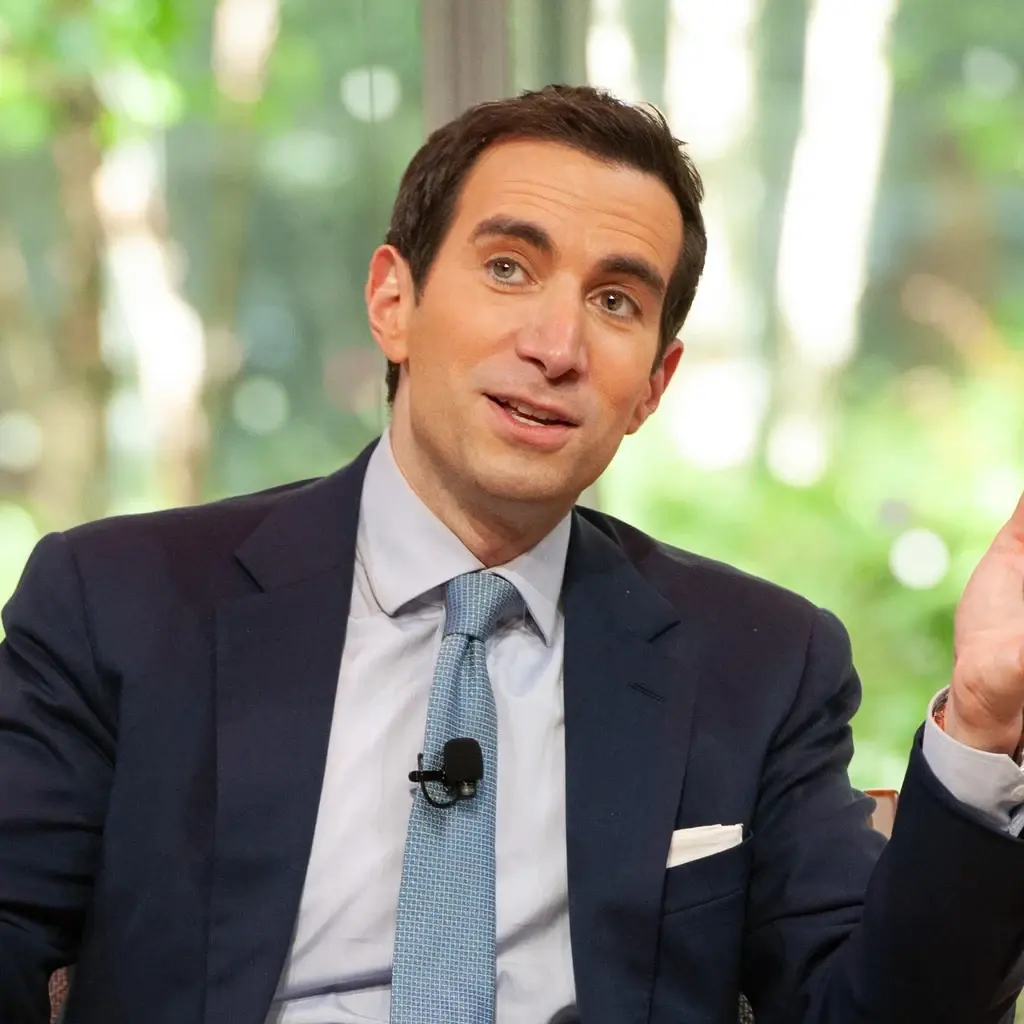
Andrew Ross Sorkin is an American journalist and author. “1929” explores how credit-fueled speculation and contested decisions carried Wall Street into the crash of 1929.
Explore more books by Andrew Ross Sorkin