What you'll learn
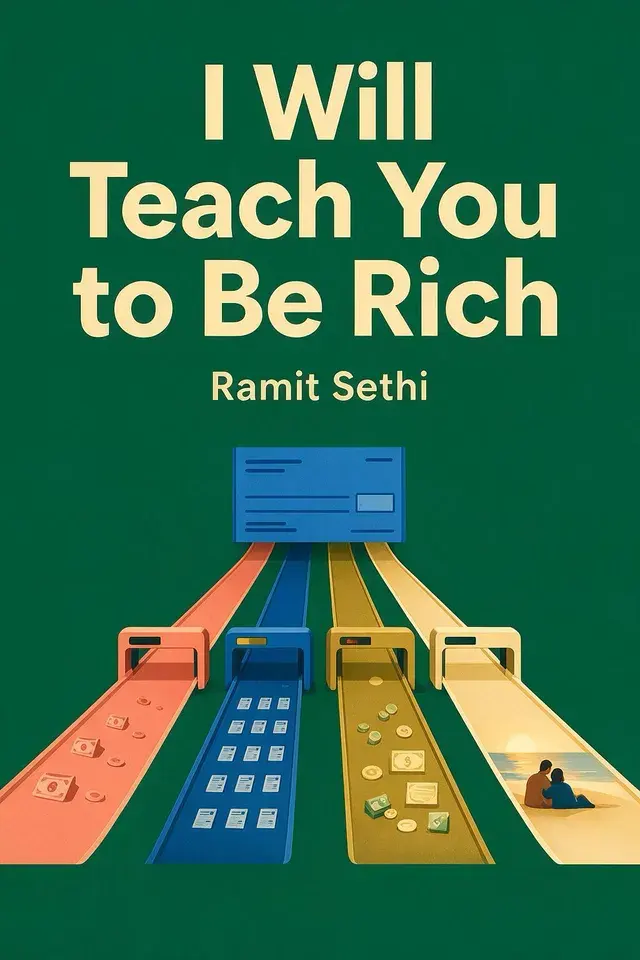
Key ideas from I Will Teach You to Be Rich
These ideas compress the book's argument without treating the author's view as settled fact. Use them as an orientation before reading the full work or listening in Wiseley.
Wealth is defined by the life money supports, including autonomy, family, valued experiences, and generosity, rather than by status or financial vocabulary.
Debt repayment begins with a complete debt picture, current minimums, and one deliberate target for extra payments.
The Ladder of Personal Finance prioritizes the employer match, high-interest debt, a Roth IRA, additional 401(k) saving, and taxable investing.
A Conscious Spending Plan assigns take-home pay to fixed costs, long-term investments, named savings goals, and guilt-free spending before the month unfolds.
The Automatic Money Flow routes pay, saving, investing, and bills by schedule while preserving buffers and periodic reviews.
Low-cost index funds are the default for simple finances; advisers remain reasonable for complexity or inaction when compensation and conflicts are clear.
A raise becomes wealth when most of its recurring take-home increase is automated toward debt, reserves, or investing.
How I Will Teach You to Be Rich builds its case
Follow how the book develops its argument. Each note is a brief orientation, not a replacement for the chapter.
Define Wealth, Then Act
Money becomes meaningful when it is attached to a life. The book opens by asking why you want to be rich and what you want your money to make possible.
Make Credit Work for You
Credit is one of the most overlooked levers in becoming rich. Sethi’s reasoning is practical: large purchases are often financed, and lenders price that borrowing according to perceived risk.
Escape the Debt Cycle
Debt is not merely a number on a statement. The book presents it as both a mathematical drag and a behavioral cycle.
Build Low-Fee Banking Infrastructure
After organizing credit cards in Week One, the book turns in Week Two to the infrastructure beneath everyday money: bank accounts. The author expects the setup to take only a few hours, then run largely by itself.
Climb the Investing Ladder
Saving and investing solve different problems. The book treats saving as protection for short- and medium-term goals, while investing puts long-term money to work.
Spend on What Matters
Traditional daily budgeting can sound like the responsible answer, yet the author rejects it as overwhelming and difficult to sustain. Tracking every purchase can turn spending into a constant source of guilt, and many people abandon detailed budgets quickly.
Automate Every Dollar
Conscious spending becomes durable when it stops being a monthly argument with yourself. The point is not to inspect every purchase forever.
Ignore the Financial Theater
With the basic money system working, the book asks you to ignore a different kind of noise: the theater of financial expertise. Credentials, confident forecasts, star ratings, and high compensation can make someone look capable, but they do not prove an investment approach works.
Build a Resilient Portfolio
Investing here is not a contest to find a killer stock. It is a portfolio-construction problem: choose a simple investment, make it easy to maintain, and keep contributing.
Maintain Wealth, Expand Freedom
Once your financial system is built, the next phase is maintenance. In this book, maintenance is not a call to tinker with every account.
Navigate Money Together
Money may begin as a personal system, but it becomes relational when student loans, parents, partners, and weddings enter the picture. The author treats these moments as tests of judgment and communication.
Turn Work Into Wealth
Financial progress does not come only from trimming small expenses. The author argues that work and major purchases are stronger levers because one decision can affect years of earnings.
Buy Homes With Clear Eyes
Buying a home is often presented as an automatic step into adulthood: own a house, raise a family, and retire. This chapter treats that script as a poor substitute for analysis.